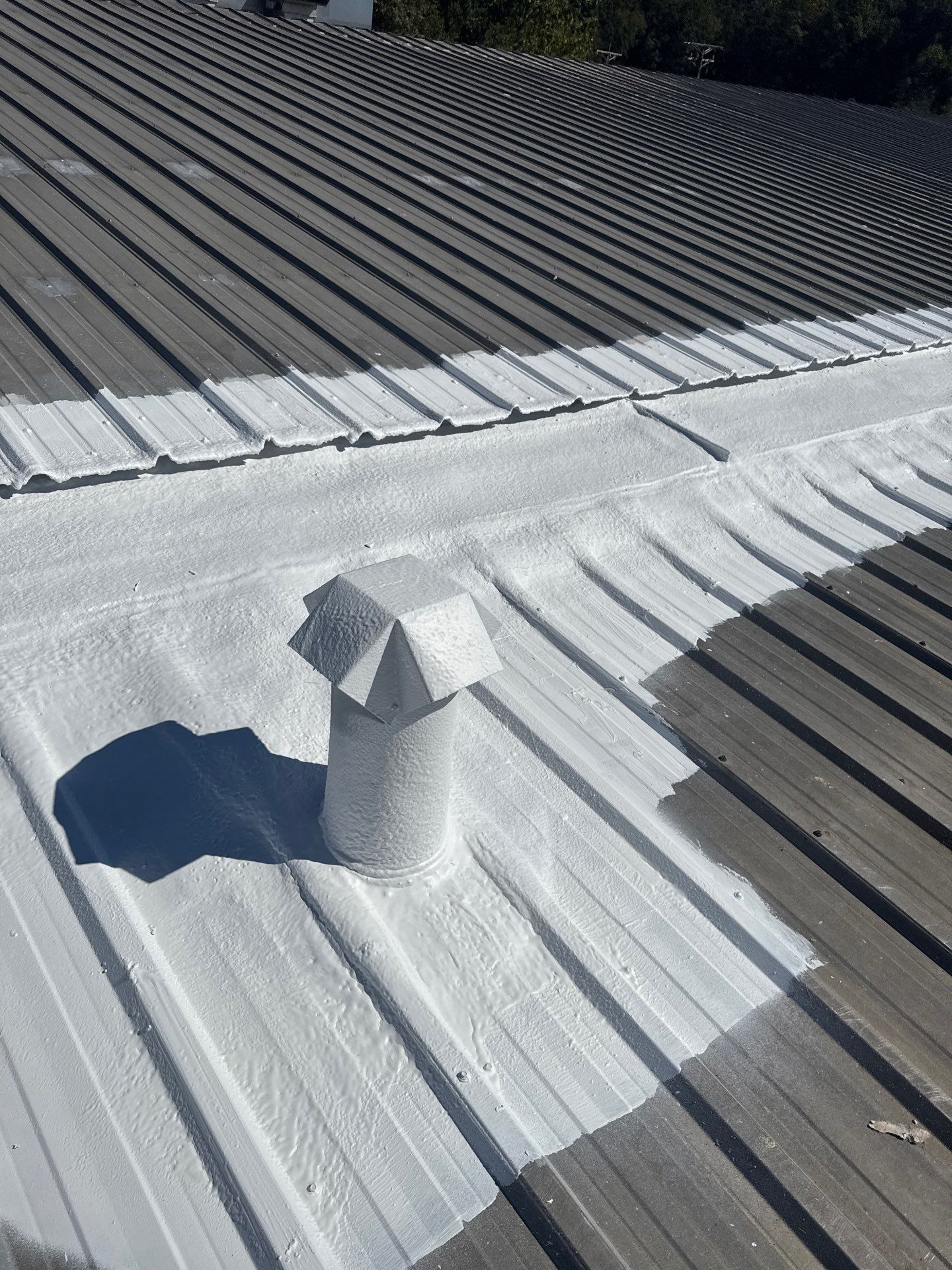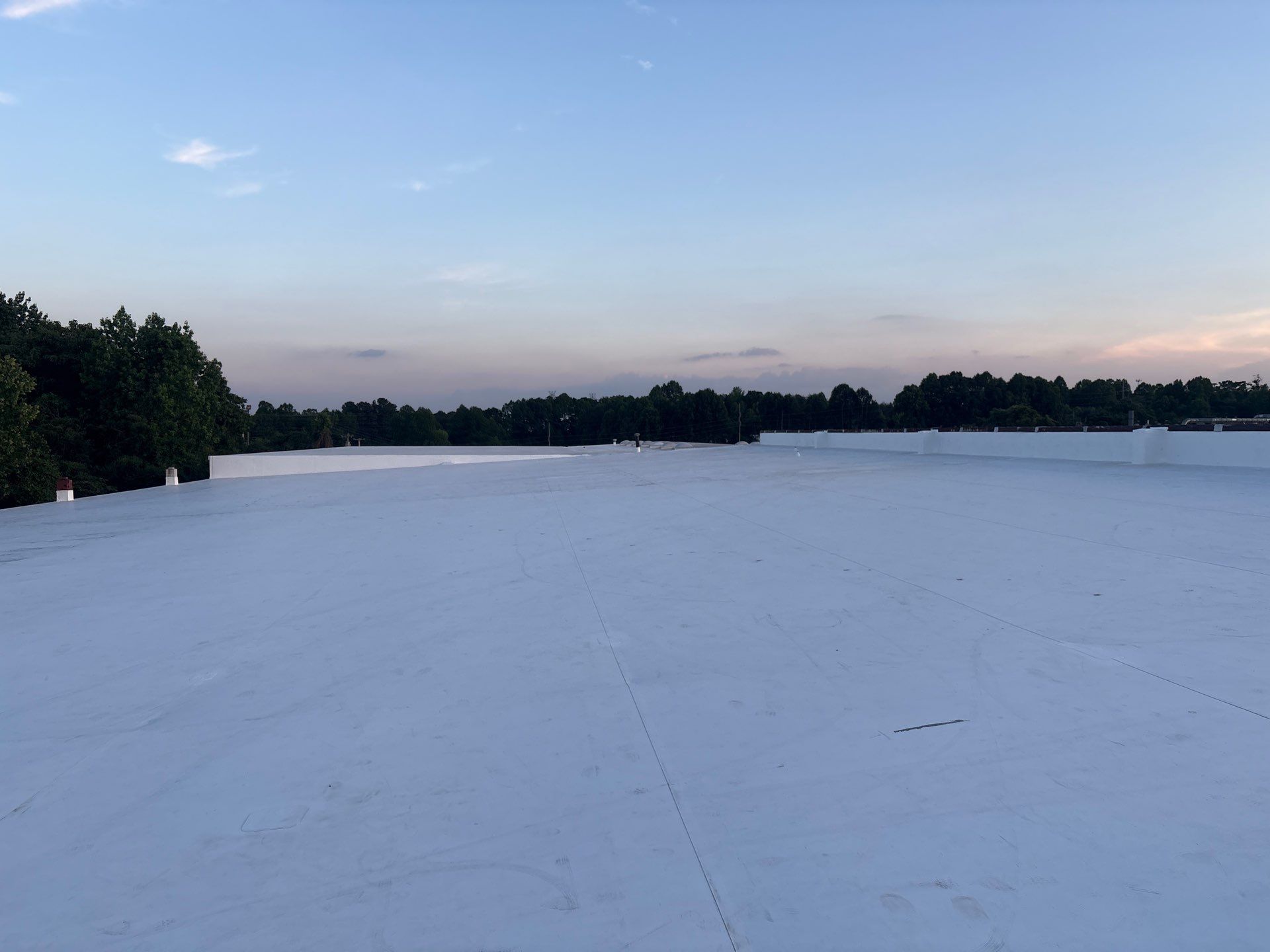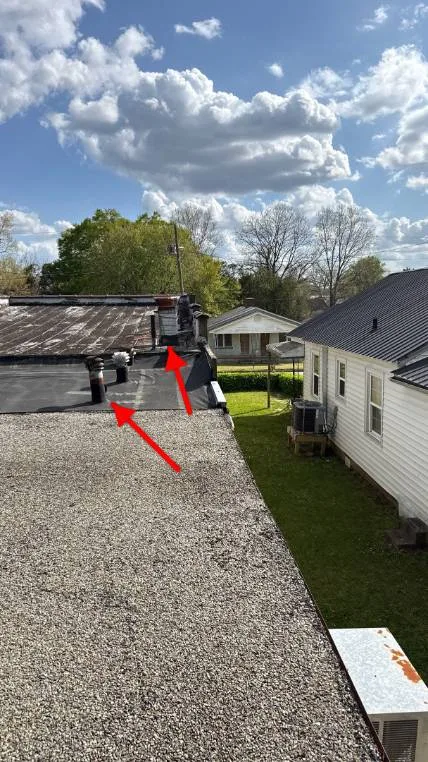

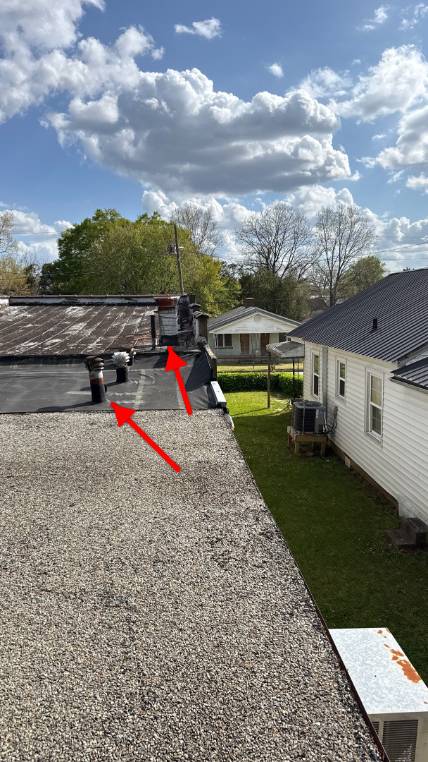
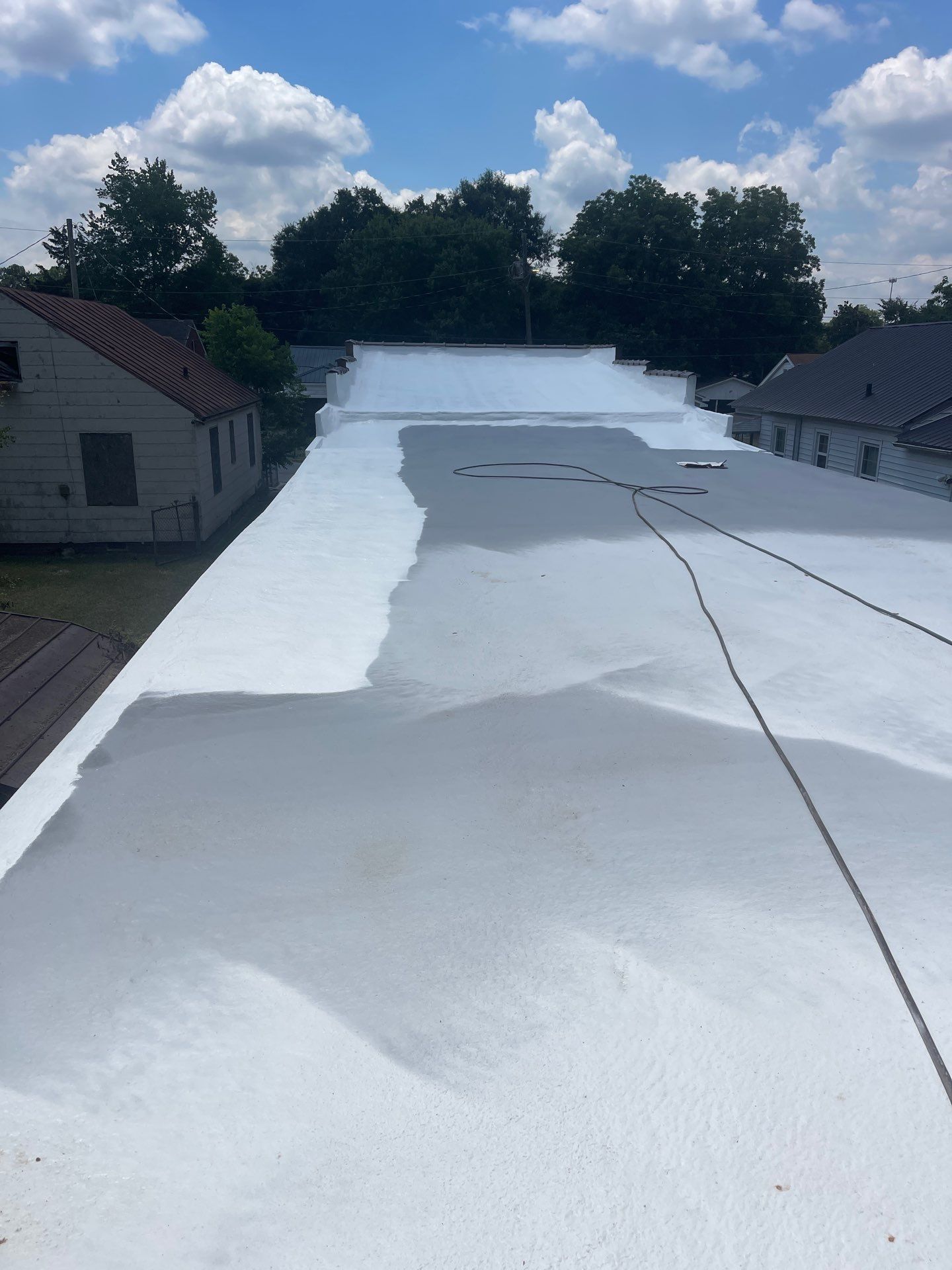
We just finished a spray foam project in Kingston that reminds me why proper prep work makes or breaks these jobs. If you’re considering spray foam in Thomasville, NC or anywhere in the Triad, you need to understand something: the application itself is maybe thirty percent of the work. The other seventy percent? That’s all prep. Removing old penetrations, replacing rotted wood, installing proper flashing and trim. Skip those steps and you’re just spraying expensive foam over problems that’ll come back to haunt you.
\n\n
What We Found on This Kingston Roof
\n\n
The existing roof had lived a long life. Old chimneys that hadn’t been used in years. Abandoned pipes sticking up through the deck. Sections of wood decking around the perimeter that had gone soft from years of water intrusion. The building owner knew the roof needed more than a patch job, but he wasn’t sure what spray foam actually involved.
\n\n
I walked him through it. We’d remove everything that didn’t need to be there anymore. Cut out and replace any compromised wood. Install new trim where the roof met the walls. Flash everything properly before we ever pulled out a spray rig.
\n\n
That’s the reality of commercial Spray Foam services. You’re not just adding a waterproof layer. You’re creating a complete roof system that has to last twenty years or more.
\n\n
The Prep Work That Makes Spray Foam in Thomasville NC Last
\n\n
Here’s what proper preparation looks like:
\n\n
First, we removed the old chimneys. These weren’t decorative. They were full masonry structures that hadn’t seen smoke in decades. Leaving them would mean flashing around irregular surfaces and creating potential leak points. We took them down to the deck and patched the openings properly.
\n\n
Next came the abandoned pipes. Every warehouse and manufacturing building we work on has them. Old vent stacks, unused plumbing penetrations, conduit that used to go somewhere. Each one is a hole in your roof. Each one has flashing that’s probably forty years old and failing. We removed them, sealed the penetrations, and reinforced the deck.
\n\n
Then we inspected every inch of wood decking. You can’t spray foam over rotted wood and expect it to hold. We found soft spots around the perimeter where water had been wicking in for years. Cut it out. Replaced it with new sheathing. Made sure every fastener had solid wood behind it.
\n\n
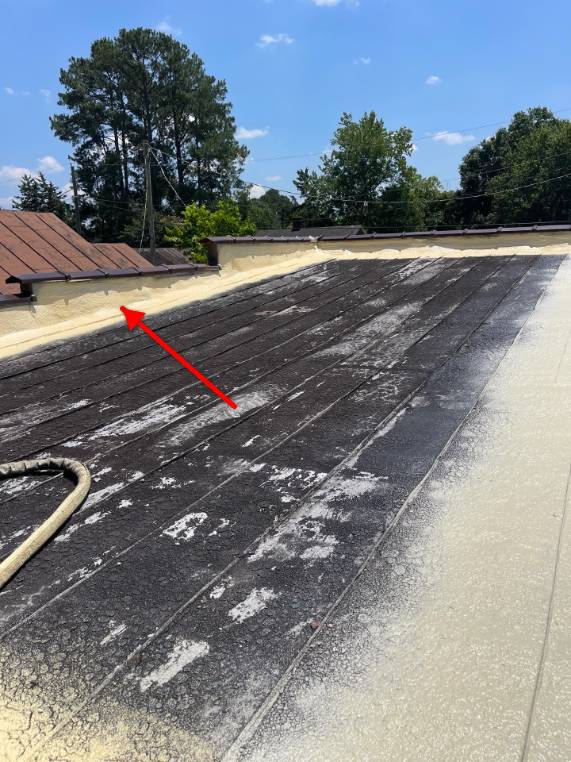
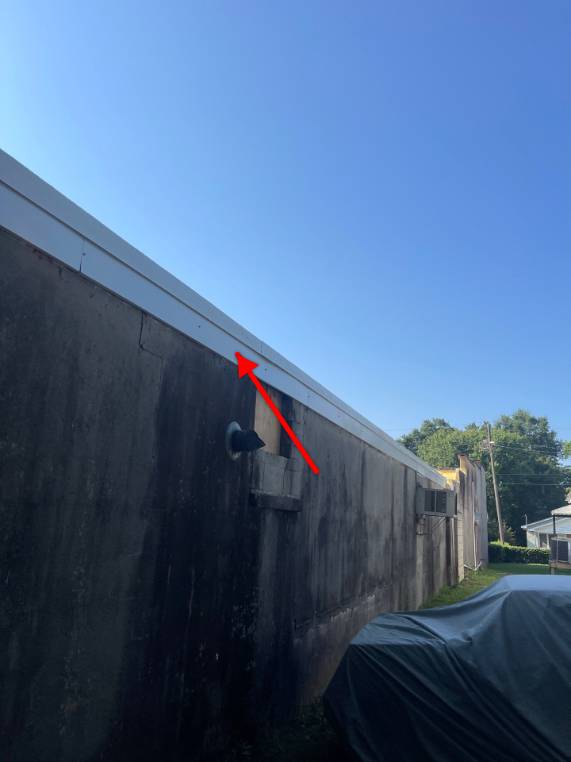
The trim work came next. Where the roof meets the walls, you need proper metal trim installed before foam application. This isn’t cosmetic. The trim creates a clean termination point for the foam and provides flashing that directs water away from the wall. We fabricated custom trim pieces for the irregular sections and installed everything with the right overlap and sealant.
\n\n
Wall flashing is critical. We installed step flashing where needed and made sure every transition between roof and vertical surface was watertight. Spray foam is seamless, but it still needs proper detailing at these vulnerable points.
\n\n
Only after all of that did we start spraying foam.
\n\n
Why This Prep Work Matters for Thomasville and Triad Area Buildings
\n\n
North Carolina weather is hard on commercial roofs. We get hot, humid summers that cook flat roofs. We get freeze-thaw cycles in winter. We get heavy rains and the occasional ice storm. Your roof expands and contracts with every temperature swing.
\n\n
Spray foam handles that movement better than almost any other roofing system. It’s flexible. It’s seamless. It insulates better than anything else you can put up there. But it can’t fix structural problems underneath. It can’t compensate for improper flashing. It won’t stop leaks if you’ve still got holes from old penetrations.
\n\n
I’ve seen spray foam jobs where contractors skipped the prep work. They sprayed right over old chimneys. Left abandoned pipes sticking through. Didn’t replace the rotted wood. Those roofs leaked within a year. The foam itself was fine. The substrate underneath failed.
\n\n
Building owners in Thomasville, Archdale, Salisbury, and across the area need to understand this: spray foam is an investment. It’s more cost-effective than full roof replacement, especially if your deck is still good. It’ll outlast most single-ply membranes. But you have to do it right.
\n\n
The Complete Process We Follow for Spray Foam Jobs
\n\n
Here’s how we approach every spray foam project:
\n\n
Initial Assessment: We inspect the entire roof surface and document every penetration, every transition, every potential problem area. We check the deck for soft spots. We look at drainage. We identify what needs to be removed or replaced.
\n\n
Removal Phase: Out come the old chimneys, abandoned pipes, failed skylights, and anything else that doesn’t belong. We cut clean openings and save the surrounding deck material when possible.
\n\n
Wood Replacement: Any rotted or compromised decking gets replaced. We don’t patch over problems. New sheathing goes in with proper fastening. This is not the time to cut corners.
\n\n
Trim and Flashing Installation: We fabricate and install metal trim around the perimeter. We flash all wall transitions. We make sure every edge detail is correct. Spray foam will seal to these surfaces, so they need to be clean, dry, and properly positioned.
\n\n
Surface Preparation: The existing roof surface gets cleaned and prepped. Any loose material comes off. We want the foam bonding to solid substrate.
\n\n
Foam Application: We spray multiple passes to build up the required thickness. The foam goes on in lifts, each one bonding to the previous layer. We maintain consistent thickness and make sure coverage is complete.
\n\n
Top Coating: The final step is a protective coating that shields the foam from UV degradation. This coating is what you see when you look at the finished roof. It’s typically white to reflect heat.
\n\n
Final Inspection: We walk the entire roof and check every detail. Thickness measurements. Edge details. Penetrations. Everything gets documented.
\n\n
On the Kingston job, this process took several days. We didn’t rush it. The building owner appreciated that we kept him informed at each stage and explained what we were finding as we went.
\n\n
Signs Your Commercial Building Needs Spray Foam Roofing
\n\n
Here’s what to watch for:
\n\n
- \n
- Multiple repairs adding up: If you’re calling someone out every year to patch leaks, spray foam might be smarter than continuing to patch
- Energy costs climbing: Spray foam adds significant R-value to your roof. We see buildings cut cooling costs substantially after installation
- Aging single-ply membrane with good deck: If your TPO or EPDM is shot but the structure underneath is solid, spray foam can go right over it
- Metal roof with seam problems: Old metal roofs with opened seams and fastener issues are good candidates for spray foam restoration
- Complex roof geometry: Lots of penetrations, transitions, and detail work? Spray foam handles complexity better than seamed systems
- Building temperature problems: Hot in summer, cold in winter? The insulation value of spray foam makes a real difference
- Planning to own the building long-term: Spray foam is a twenty-plus-year solution. It makes sense when you’re investing in the property
\n
\n
\n
\n
\n
\n
\n
\n\n
Building owners in Asheboro, Kannapolis, Concord, and throughout Davidson County ask us about spray foam when they’re tired of repeated leak calls and want something that’ll last.
\n\n
Why Choose Spray Foam in Thomasville NC from Sunny Sky Roofing LLC
\n\n
We’ve been doing spray foam installations across the Triad for years. We don’t cut corners on prep work because we know that’s what determines whether the roof lasts twenty years or starts failing in two.
\n\n
Every member of our crew understands proper flashing details. We know how to flash a parapet wall, how to terminate foam at a roof edge, how to handle complex penetrations. That knowledge comes from experience, not from watching a training video.
\n\n
We’re part of the National Roofing Contractors Association, which means we stay current on industry best practices and installation standards. Spray foam technology evolves. Installation techniques improve. We keep up.
\n\n
We serve commercial buildings throughout the area, from Burlington to Kernersville and everywhere between. We understand the specific challenges that North Carolina weather presents. We know how buildings in this region are constructed. That local knowledge matters when you’re detailing a roof system.
\n\n
Most importantly, we’ll tell you if spray foam isn’t the right answer for your building. Sometimes it’s not. If your deck is too far gone, if the structure can’t support the weight, if your roof geometry makes installation impractical, we’ll say so. We’d rather recommend the right solution than sell you something that won’t work.
\n\n
How Long Does a Spray Foam Roof Last?
\n\n
Done right, twenty-five years or more. The foam itself is incredibly durable. It doesn’t shrink. It doesn’t develop seams that can open up. It moves with the building as temperatures change.
\n\n
The protective top coating needs maintenance. We recommend annual roof inspections to check the coating condition and catch any small issues before they become big ones. Every ten to fifteen years, you might need to recoat the foam. That’s not a failure. That’s just maintaining the UV protection.
\n\n
Compare that to a typical single-ply membrane. You’re looking at fifteen to twenty years if you’re lucky, and those systems develop leaks at the seams long before the membrane material itself fails.
\n\n
Metal roofs last a long time too, but the seams and fasteners give you problems. You end up doing ongoing maintenance to keep them sealed. Spray foam eliminates those vulnerable points.
\n\n
What About Maintenance After Installation?
\n\n
Spray foam roofs need less maintenance than most systems, but they still need attention. We recommend annual inspections at minimum. During that inspection, we’re looking at coating condition, checking for any physical damage, making sure drainage is still working properly, and inspecting penetrations.
\n\n
If you’ve got heavy tree coverage over your building, bump that up to twice a year. Leaves and debris won’t hurt the foam itself, but they can trap moisture and create conditions for mold growth on the coating surface.
\n\n
Sunny Sky Roofing LLC offers maintenance programs that take the guesswork out of this. We’ll put you on a regular inspection schedule and catch small issues before they turn into leak calls. Proactive maintenance is always smarter than reactive repairs.
\n\n
We also provide maintenance and inspection services for commercial roofing in the surrounding area, so if you’ve got multiple locations across the region, we can service them all.
\n\n
Frequently Asked Questions About Spray Foam in Thomasville NC
\n\n
Can spray foam go over my existing roof?
\n\n
Usually, yes. That’s one of the big advantages. If your existing roof structure is sound, we can spray right over most single-ply membranes, modified bitumen, and metal roofs. This saves the cost and disruption of a complete tear-off. We still need to do all that prep work — removing old penetrations, replacing bad wood, installing proper trim and flashing. But we’re not hauling the entire old roof to a landfill.
\n\n
How thick does the spray foam need to be?
\n\n
That depends on your building’s needs and local code requirements. Most commercial applications end up between two and three inches of foam. Thicker foam gives you more insulation value but adds cost and weight. We’ll calculate what makes sense for your specific building based on its use, your energy goals, and structural capacity.
\n\n
What happens if the foam gets damaged?
\n\n
Small damage is easy to repair. We can patch punctures or gouges with additional foam and recoat the area. Unlike a membrane that can tear and require big sections to be replaced, spray foam repairs are localized and straightforward. That said, you don’t want people walking around on your roof unnecessarily. The foam itself is tough, but the protective coating can be damaged by foot traffic or dropped tools.
\n\n
Will spray foam make my building cooler in summer?
\n\n
Yes. The insulation value is substantial. Most building owners notice lower cooling costs the first summer after installation. The white coating also reflects solar heat instead of absorbing it like a dark membrane would. Between the insulation and the reflectivity, you’re reducing the heat load on your HVAC system significantly.
\n\n
Ready to Discuss Spray Foam for Your Thomasville Area Building?
\n\n
If you’re dealing with an aging commercial roof in Thomasville, Archdale, Salisbury, or anywhere across the Triad, let’s talk about whether spray foam makes sense for your building. We’ll come out, assess what you’ve got, and give you an honest opinion about your options.
\n\n
We’re not going to pressure you into a system that isn’t right for your situation. We’ll explain what proper installation involves, what the prep work entails, and what you can expect for longevity and maintenance.
\n\n
Call Sunny Sky Roofing LLC at (336) 523-2103 to schedule an inspection. We’ll look at your roof and talk through your options.