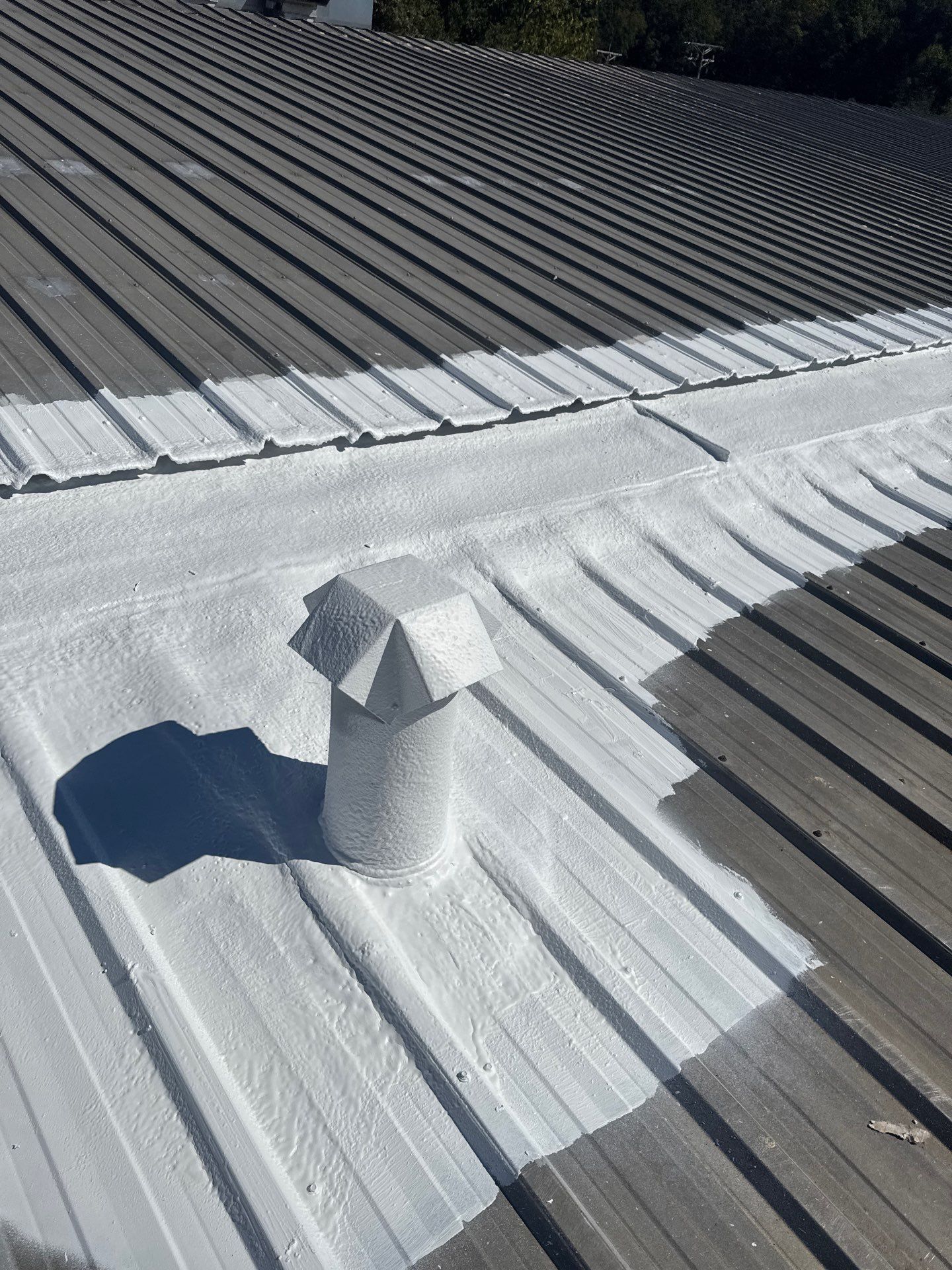
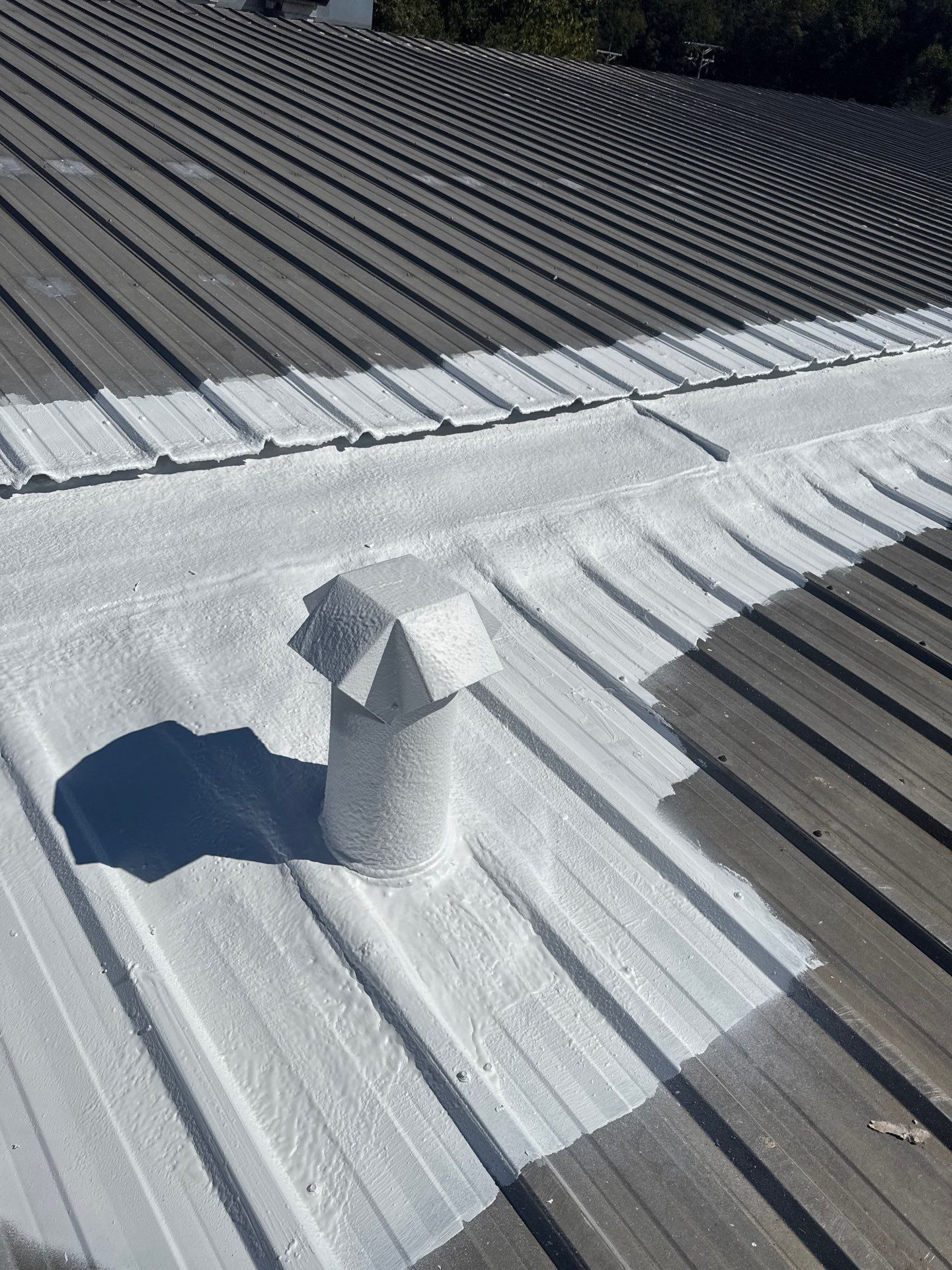
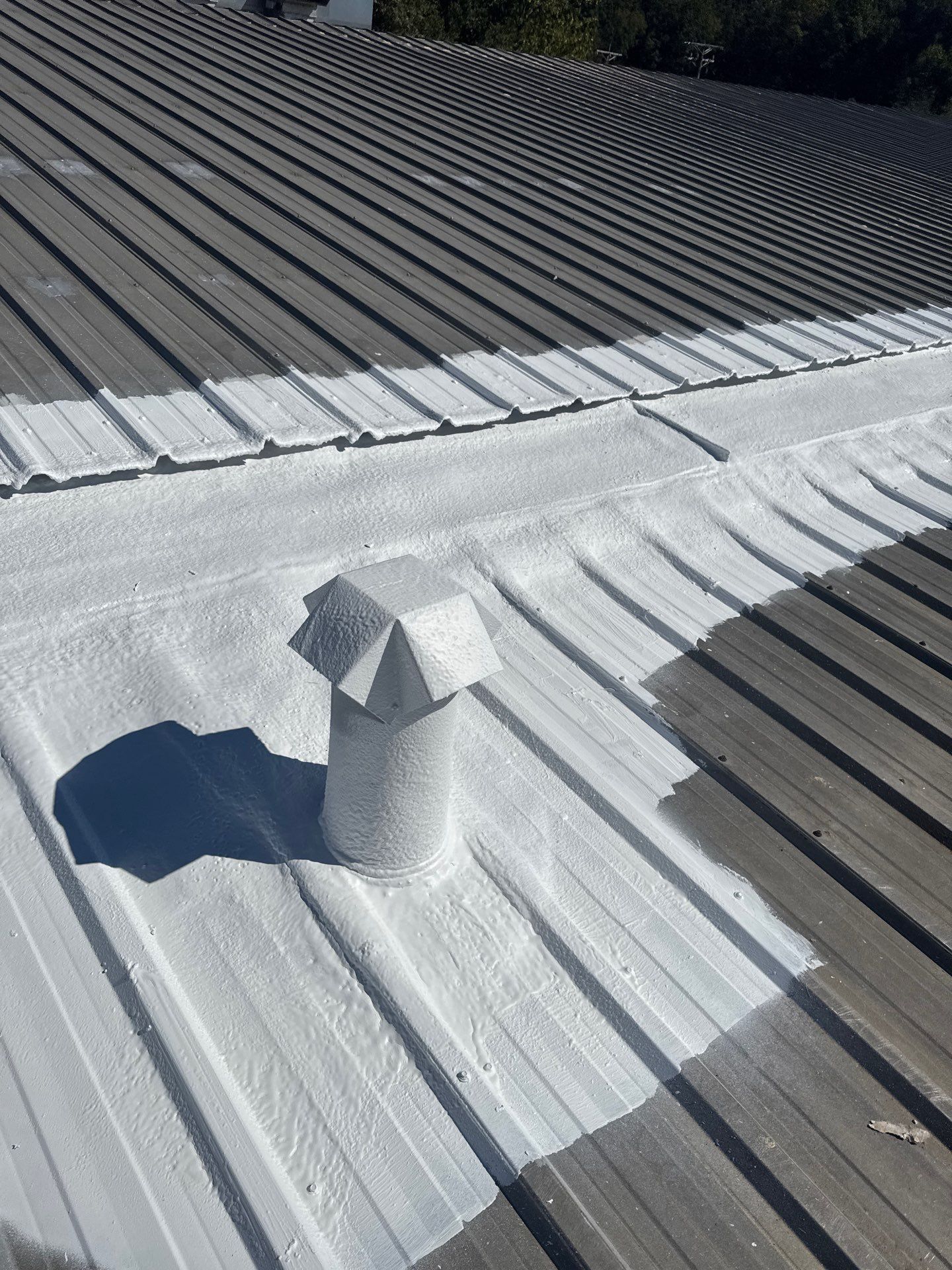
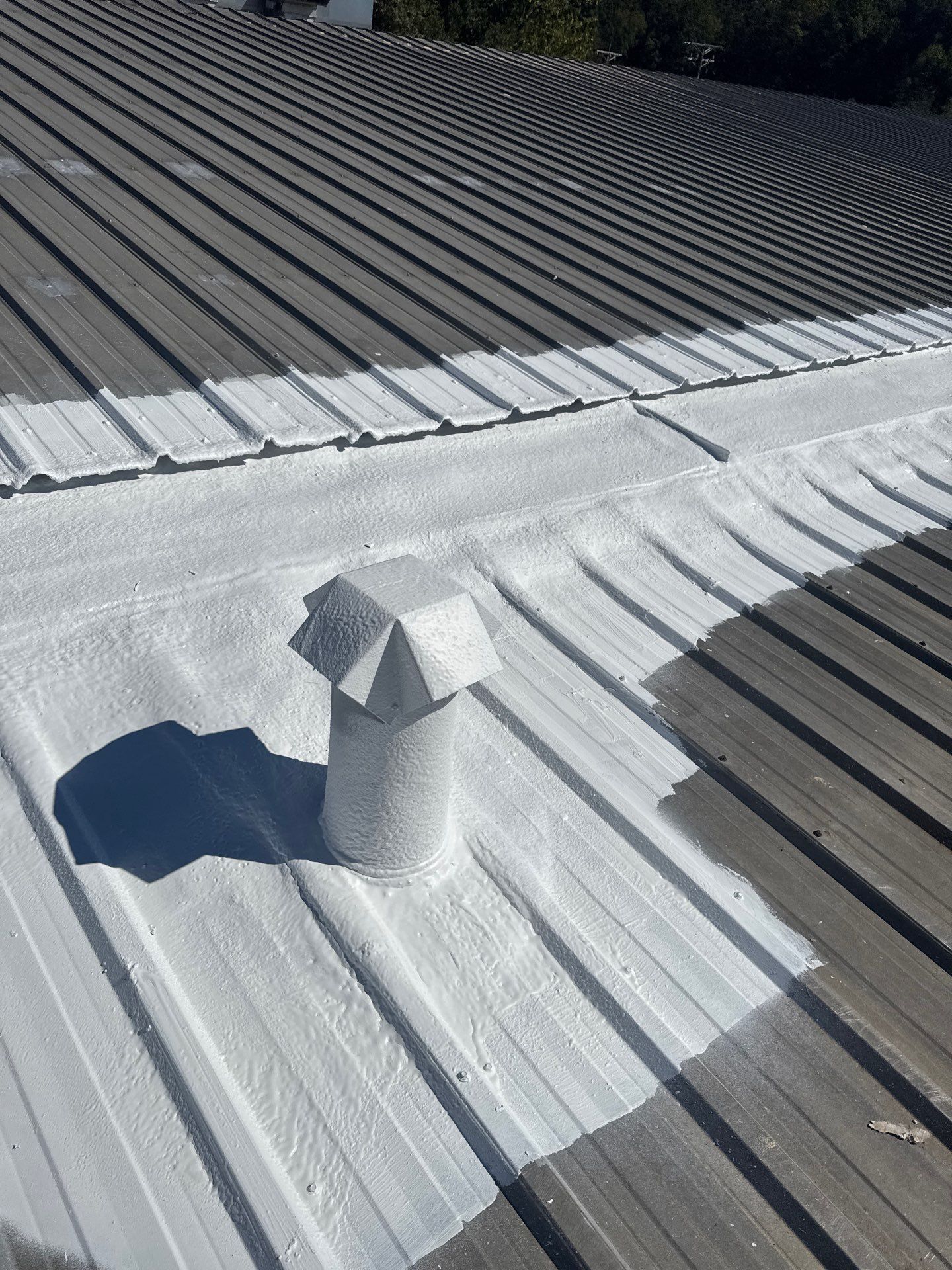
We just wrapped up a metal roof repair Thomasville NC project that perfectly shows what most commercial building owners don’t realize about metal roofing: the entire roof is moving, expanding, and contracting every single day. When you’ve got transitions between different roof sections or wall connections, that movement becomes a real problem. The leaks you’re dealing with? They’re not random. They’re the direct result of metal doing what metal does — expanding in the heat, contracting in the cold, and eventually working fasteners loose and opening seams at every connection point.
What We Found at This Statesville Area Metal Roof
The building owner called us because they had sporadic leaks that seemed to come and go. Some days heavy rain would cause problems, other times nothing. Classic sign of transition failure on a metal roof.
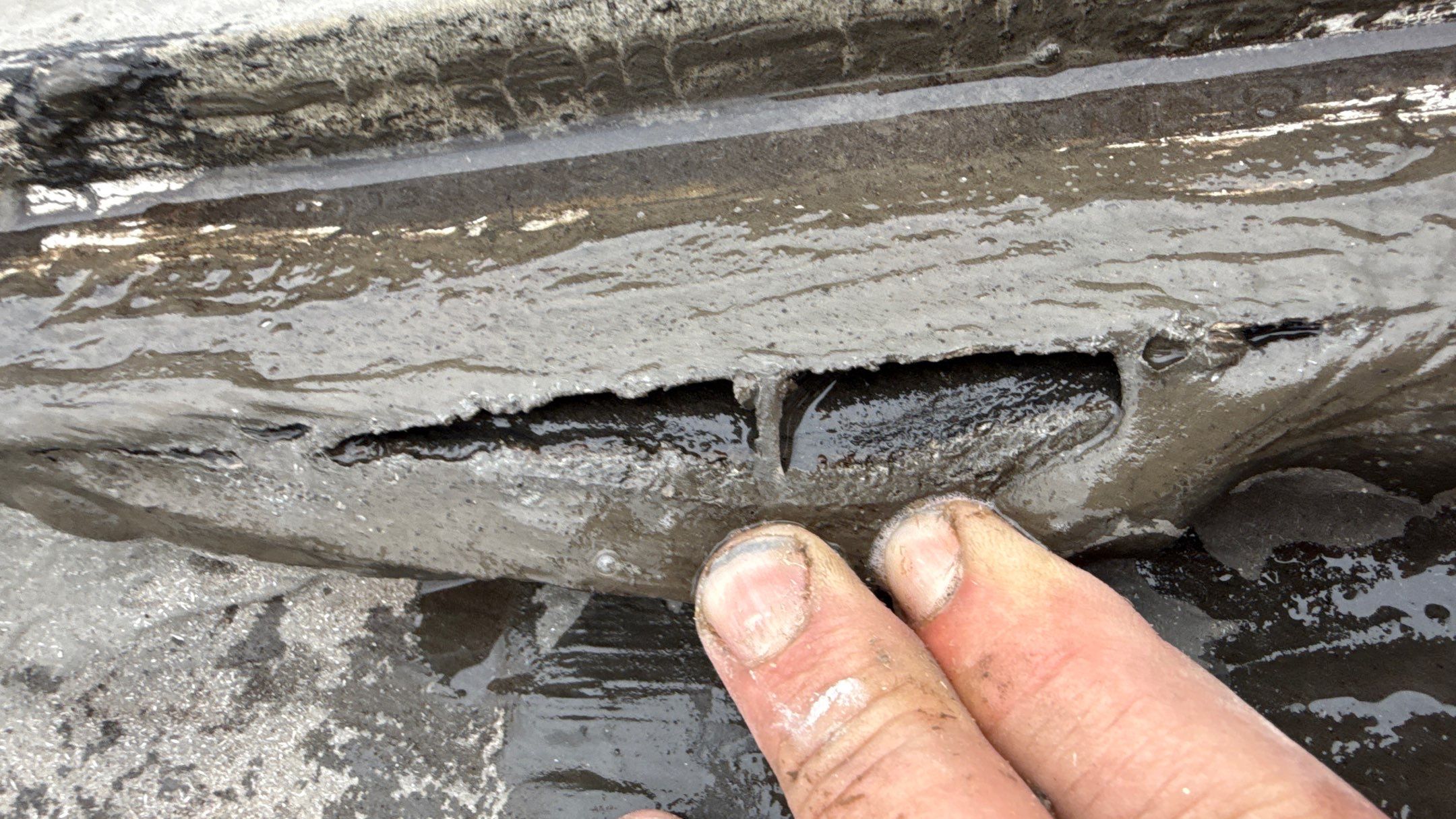
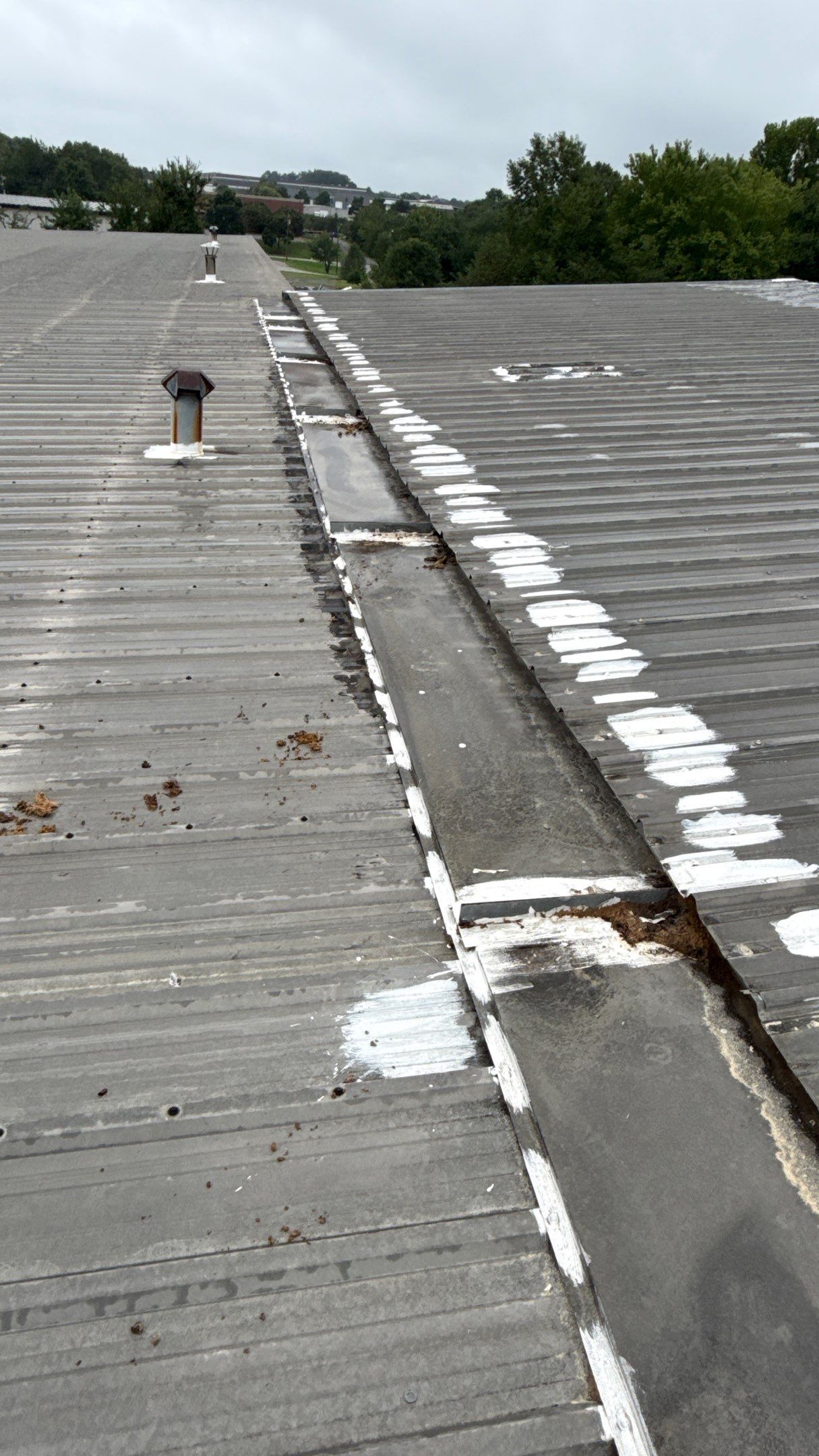
When we got up there, the story told itself. The transition areas where the metal roof met vertical walls showed failed closures. The metal had been moving for years, working against the closure pieces until gaps opened up. You could see where previous attempts at tar patching had failed — the tar had dried out, cracked, and actually made things worse by trapping moisture against the metal.
Here’s what most people don’t understand: metal roofing expands and contracts based on temperature. A dark metal roof in summer sun can easily hit 160-170 degrees. At night it might drop to 70. That’s nearly 100 degrees of temperature swing, and metal moves significantly with that kind of change. Every. Single. Day.
At transitions and terminations, that movement concentrates. The metal is pulling against fasteners, pushing against closure strips, and flexing at seams. Over time, even well-installed details start to fail. The leaking transition we found had clear evidence of this — the closure had separated, fasteners had backed out slightly, and water was finding its way in during wind-driven rain events.
The insulation underneath showed water staining. By the time you’re seeing active leaks inside, the roof has been letting moisture in for months or even years. The sporadic nature of the leaks? That’s because the gaps open and close with temperature changes. When the metal expands on a hot day, it might actually seal better. When it contracts, gaps open up.
Why Metal Roof Repair Thomasville NC Building Owners Can’t Ignore Transition Problems
We serve commercial buildings throughout Thomasville, Salisbury, Kannapolis, Concord, and Burlington, and we see this same pattern repeatedly. Metal roofs are excellent systems when they’re maintained, but transition failures create cascading problems fast.
First issue: insulation damage. The water that’s getting through those failed transitions doesn’t just drip straight down onto your inventory or equipment. It saturates the insulation first. Wet insulation loses R-value, which means your HVAC system works harder and your energy bills climb. Worse, that wet insulation creates the perfect environment for mold growth and metal deck corrosion from the inside.
Second issue: structural deck problems. If your building has a metal deck under that metal roof (common in commercial construction), water penetration leads to rust. Once the deck starts rusting, you’re looking at structural concerns that go way beyond roofing. We’ve seen buildings where neglected transition leaks led to deck replacement costs that were five times what early intervention would’ve cost.
Third issue: the problem spreads. A small gap at one transition point allows water in. That water follows the roof slope and can travel 20 or 30 feet before it finally drips through a ceiling tile. By then, you’ve got a much larger area of compromised insulation and potential deck damage. The leak you see inside is rarely directly below the actual roof failure point.
Metal roofs need annual inspections at minimum. If your building is in Archdale, Kernersville, Asheboro, or any area with significant tree coverage, bi-annual inspections make more sense. You want to catch these transition issues before they become leaks, not after.
The Spray Foam Repair Process We Used for This Metal Roof Repair
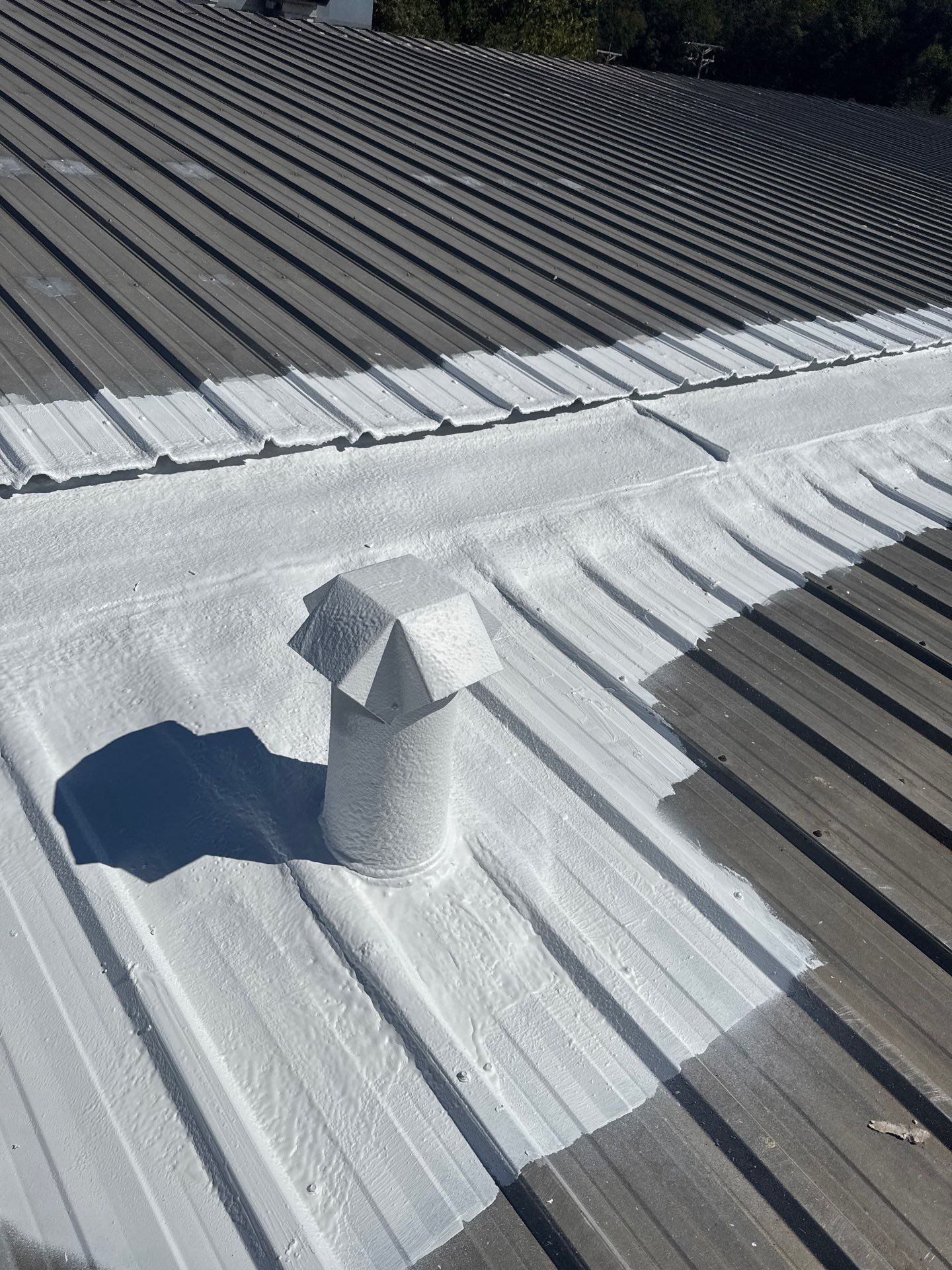
For this project, we used spray foam specifically designed for metal roof repairs and transitions. This isn’t the same foam you’d use for insulation in walls — this is a closed-cell roofing foam that bonds to metal, remains flexible, and handles the expansion and contraction cycle without cracking or separating.
We started by removing all the old failed tar patches and closure materials. You can’t just patch over failed repairs — you’ll trap moisture and create more problems. Everything came off down to clean metal.
Next, we cleaned and prepped all the metal surfaces. The foam needs a clean substrate to bond properly. Any rust, oxidation, or old sealant residue had to come off.
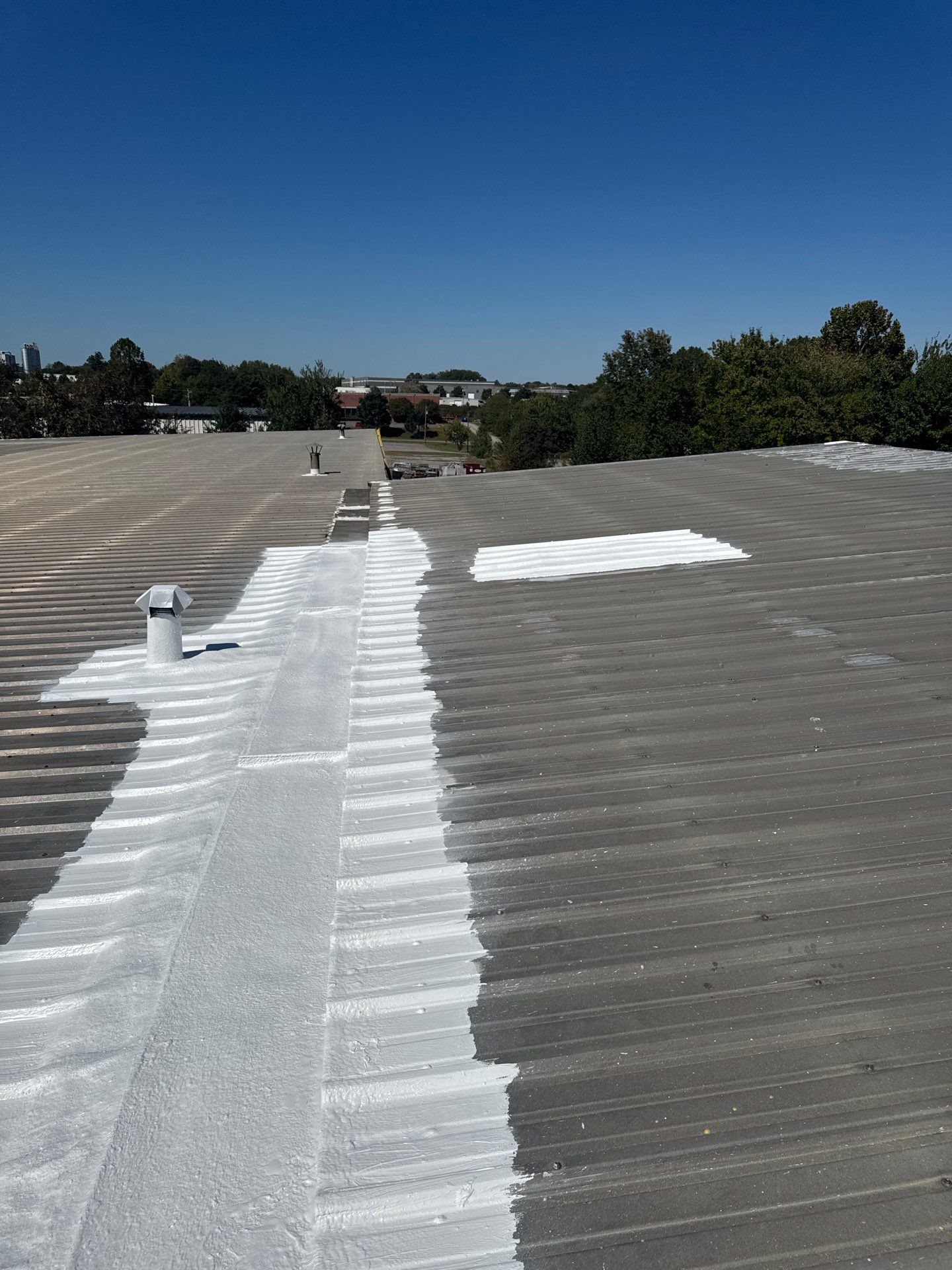
Then we applied the spray foam in a controlled way at both the failed closure areas and the leaking transitions. The foam creates a monolithic seal that moves with the metal. When the roof expands in summer heat, the foam stretches. When it contracts in winter cold, the foam compresses. That flexibility is what makes it work long-term where rigid materials fail.
The foam transition repair created a seamless connection between the horizontal metal roof and the vertical wall. No fasteners to back out, no separate closure pieces to work loose, just a continuous flexible seal that accommodates movement.
We also addressed the areas where fasteners had worked loose. The spray foam encapsulates and reinforces those connection points while remaining flexible enough to handle ongoing thermal movement.
Timeline for this type of work depends on how many transitions need attention and current weather conditions. You can’t apply spray foam in rain or on wet surfaces, and temperature matters for proper curing. This particular job took two days start to finish, including prep work and allowing proper cure time.
Signs Your Commercial Building Needs Metal Roof Repair in Thomasville NC or Surrounding Areas
Watch for these indicators that your metal roof transitions are failing:
- Sporadic or intermittent leaks — water shows up during some rain events but not others, or leaks seem to come and go seasonally
- Leaks that appear during wind-driven rain — transitions and terminations are most vulnerable when wind pushes water sideways
- Water stains on insulation or ceiling tiles — even if you’re not seeing active dripping, staining means moisture is getting through
- Visible gaps or separation at wall transitions — if you can see daylight or separation from the ground, it’s definitely leaking
- Previous tar patches that are cracking or pulling away — tar is always temporary, and when it fails, it accelerates deterioration
- Fasteners with rust staining or visible gaps around screw heads — backed-out fasteners are a clear sign of thermal movement problems
- Higher energy bills — wet insulation loses R-value, so your HVAC system runs longer to maintain temperature
- Rust streaks or oxidation below transitions — this tells you water has been running down from failed details above
Don’t wait until you can see daylight through the roof deck from inside. By the time you’re seeing daylight, the roof has been leaking for years and you’ve likely got significant insulation and deck damage already.
Our Metal Roof Repair services include thorough inspections that identify these issues before they become major problems.
Why Sunny Sky Roofing LLC for Your Metal Roof Repair Thomasville NC Project
We’ve been handling commercial roofing throughout the Piedmont Triad for years. Joe Yutzy started this company because he saw too many building owners getting sold full roof replacements when targeted repairs would solve the problem.
Metal roof transitions are a perfect example. A $3,000 spray foam repair can give you another 10-15 years of service from a roof that’s otherwise in good shape. That’s a smarter long-term investment than a full tear-off and replacement that might cost $150,000 or more.
We only recommend replacement when the roof is truly at end of life — when the metal itself is severely corroded, when the deck is compromised, or when you’ve got failures across the entire roof system. But transition problems? Fastener issues? Failed closures? Those are repairable conditions, and we’ll tell you that straight.
We serve the full region including Thomasville, Archdale, Salisbury, Asheboro, Kannapolis, Concord, Burlington, Kernersville, and the surrounding NC communities. That local presence means we understand how North Carolina weather patterns affect metal roofs — the thermal cycling, the ice and snow loading in winter, the UV exposure and heat in summer.
We’re also members of the National Roofing Contractors Association, which means we stay current on proper installation standards and repair techniques.
When we do an inspection, you’ll get photos of everything we find, clear explanations of what’s happening and why, and honest recommendations about your options. No pressure, no upselling, just the information you need to make a smart decision about your building.
We provide detailed documentation of all repairs, including photos before and after. You’ll know exactly what we did and what materials we used. That matters for your building maintenance records and for future roof work.
All our work is backed by material and workmanship warranties. The spray foam systems we use come with manufacturer warranties, and we warranty our installation work separately. You’re protected on both fronts.
How much does metal roof expansion and contraction actually affect leak problems?
Metal roofing can expand and contract significantly with temperature changes — a 100-foot section of metal roofing might move more than an inch between extreme temperatures. That movement is constant, happening daily as the roof heats and cools. At transition points, wall terminations, and penetrations, this movement works against fasteners and closure materials. Over years of thermal cycling, even properly installed details can work loose. That’s why transitions are the most common leak points on metal roofs — the movement concentrates at these connection points. Regular inspections catch these issues before small gaps become active leaks.
Can you just use tar or caulk to fix metal roof transition leaks?
Tar and caulk are temporary measures that typically fail within a year or two on metal roofs. Here’s why: the metal keeps moving with temperature changes, but tar becomes brittle as it dries out. When the metal flexes, the tar cracks. Water then gets underneath the tar patch and becomes trapped against the metal, which actually accelerates rust and corrosion. We’ve removed countless failed tar patches where the rust underneath was worse than areas that were never patched. Flexible spray foam systems designed specifically for metal roofing move with the metal and don’t trap moisture, which is why they provide long-term solutions instead of temporary fixes.
How often should commercial metal roofs be inspected in the Thomasville NC area?
Annual inspections are the minimum for any commercial metal roof. We recommend bi-annual inspections if your building has heavy tree coverage, is near trees that drop debris, or if you’ve had previous leak issues. North Carolina weather creates significant thermal cycling — hot summers and cold winters mean your metal roof is constantly expanding and contracting. Annual inspections catch fastener backup, seam separation, and transition problems before they become leaks. The cost of an inspection is minimal compared to the cost of interior damage, wet insulation replacement, or structural deck repairs that result from undetected leaks.
How long does spray foam metal roof repair last compared to traditional methods?
Properly applied spray foam repairs on metal roof transitions typically last 10-15 years or more because the foam remains flexible and moves with the metal. Traditional repairs using rigid sealants, closure strips, or tar patches often fail within 1-3 years because they can’t accommodate the constant thermal movement. The spray foam bonds to the metal, stretches when the metal expands in heat, and compresses when it contracts in cold. That flexibility is what makes the difference between a repair that lasts and one that fails quickly. The foam also creates a monolithic seal without additional fastener penetrations, which eliminates new potential leak points.
Get Your Metal Roof Inspected Today
If you’re seeing sporadic leaks, water stains, or you simply haven’t had your metal roof inspected in the last year, now’s the time to act. Those transition problems only get worse, and the interior damage only gets more expensive.
We’re Sunny Sky Roofing LLC, and we’ve been solving these exact problems for commercial building owners throughout Thomasville, Salisbury, Kannapolis, Concord, Burlington, Archdale, Asheboro, Kernersville, and the surrounding areas.
Call us at 336-523-2103 to schedule an inspection. We’ll get on your roof, document what’s happening, explain what you’re dealing with, and give you straight answers about your options. No pressure, no games, just honest information from people who know metal roofing.
You can also visit our commercial roofing in the surrounding area page to see the full region we serve, or contact us through the website if that’s easier.
Your building is a significant investment. Don’t let a repairable metal roof transition problem turn into a major structural issue. Let’s take a look and solve this the right way.