Greensboro’s weather swings hit commercial metal roofs hard. Summer heat can push metal panel temperatures past 150 degrees, then overnight lows drop 40 degrees or more. Those temperature cycles make metal expand and contract constantly, and if you’ve got transitions, penetrations, or seams on your roof, that movement eventually opens up pathways for water. We’ve handled metal roof repair Greensboro NC projects where business owners had no idea their roof was leaking until they spotted ceiling stains or damaged insulation — by then, the problem had been building for months.
What We Found on This Metal Roof Repair Job
We got called out to a commercial building in Statesville with sporadic leaks that only showed up during certain storms. The owner couldn’t pin down where the water was coming from, which is typical for metal roof issues.
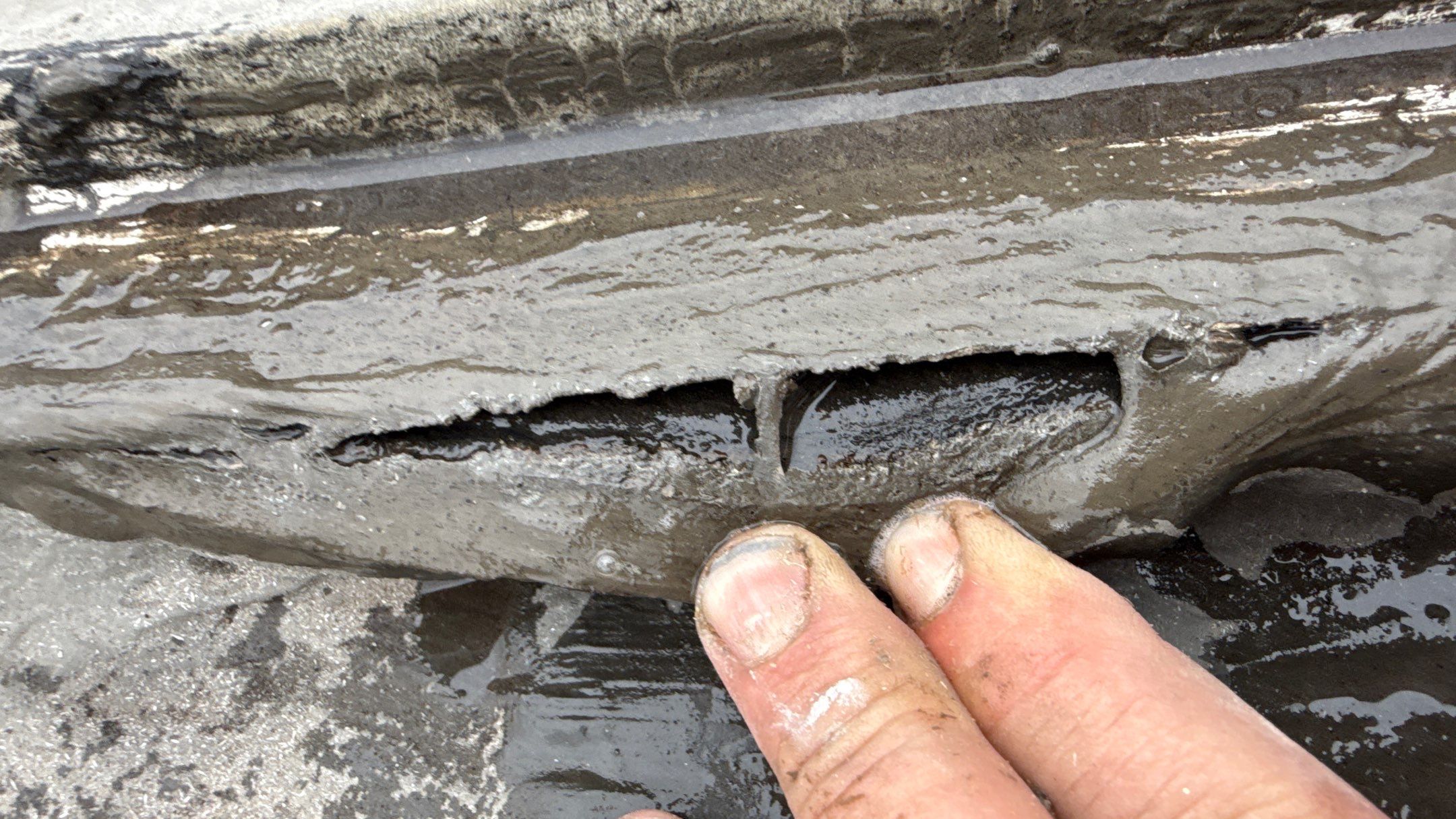
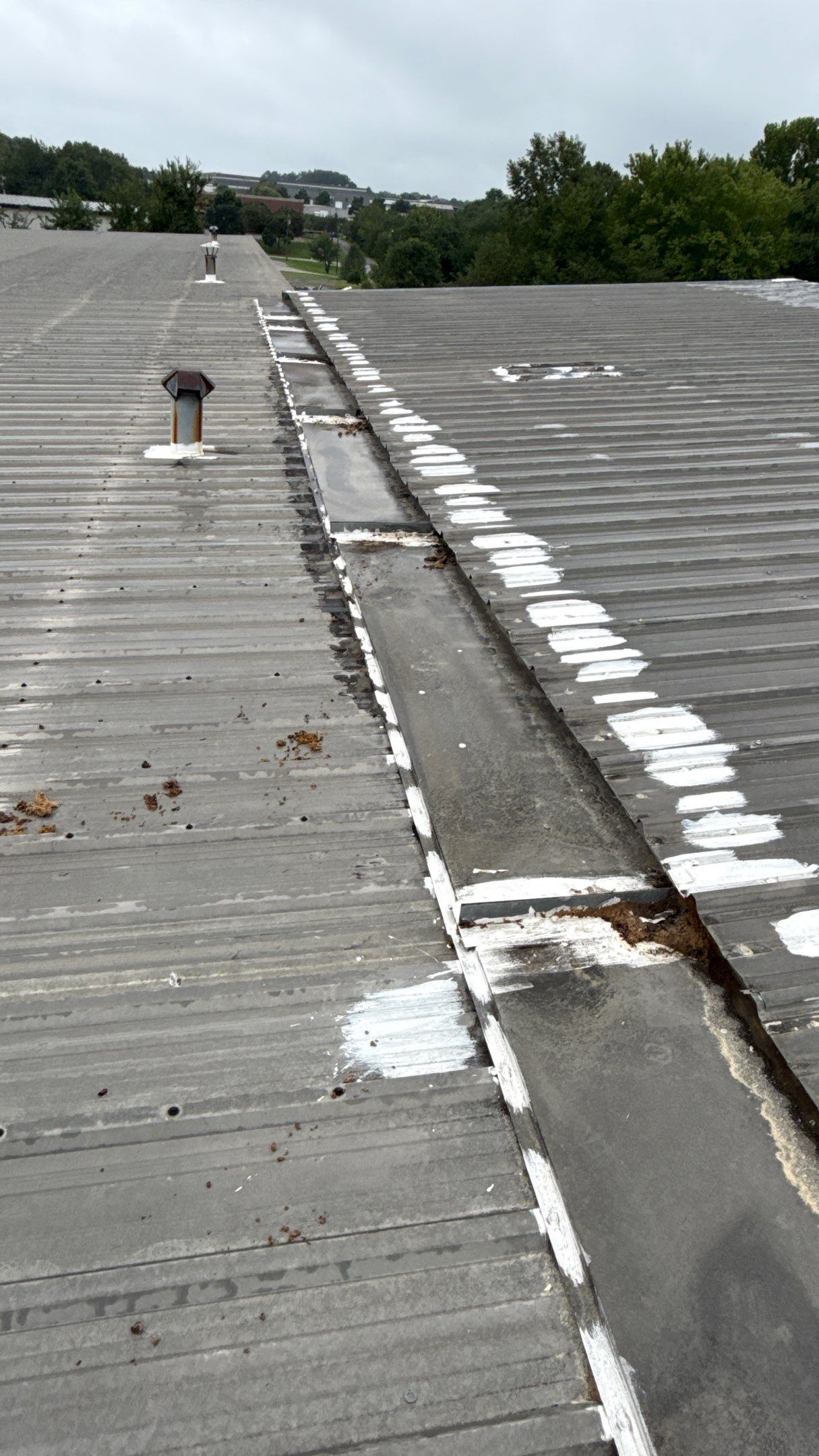
When we climbed up, the problem was obvious. The transition points where different roof planes met had opened up. Metal roofs move — panels expand in heat, contract in cold, and that movement is most dramatic at transitions and seams. Over years, fasteners back out slightly, sealants dry and crack, and closure strips lose their seal.
We documented failed closures and leaking transitions. Water was sneaking in during wind-driven rain, running along the panel ribs, and soaking insulation before it ever dripped through the ceiling. The insulation damage was more extensive than the visible water stains suggested.
Why Metal Roof Repair Greensboro NC Properties Need This Work
Greensboro sits right in that zone where you get serious summer heat, winter freezes, and plenty of rain year-round. Metal roofs here expand and contract more than they would in a stable climate.
Transitions are the weak points. When two roof planes meet at different angles, or where a metal roof meets a wall, you’ve got multiple pieces that all move at different rates. A flat panel in full sun expands more than a shaded vertical wall. The fasteners holding everything together are trying to accommodate movement in multiple directions.
Eventually, something gives. Maybe it’s the sealant. Maybe the closure strip compresses and doesn’t spring back. Maybe fasteners work loose just enough to let water wick under the panel edge.
The leaks are often sporadic because it takes specific conditions — wind direction, rain intensity, temperature — to push water through the gap. That’s why property owners think the leak is fixed when it doesn’t happen for a few months, then suddenly it’s back.
Wet insulation doesn’t dry out easily under a metal roof. It stays damp, loses R-value, adds weight, and can promote rust on the underside of your panels. We’ve seen situations where insulation damage cost more to remediate than the actual roof repair.
The Process: How We Repair Metal Roof Transitions
We don’t slap tar on problem areas and call it done. Tar on metal is a temporary band-aid — the metal keeps moving, the tar dries out and cracks, and water gets underneath where it accelerates rust. You end up worse off than before.
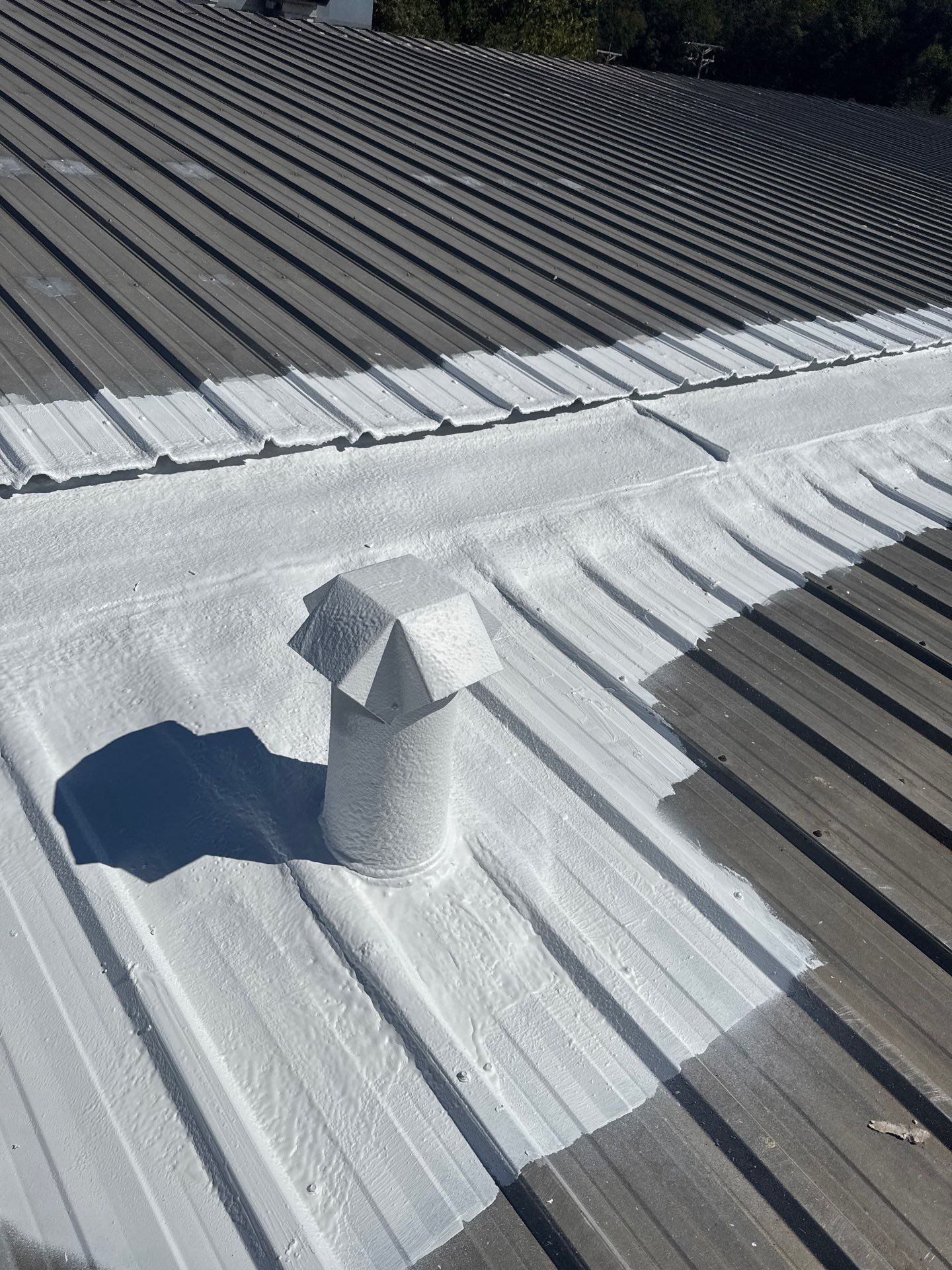
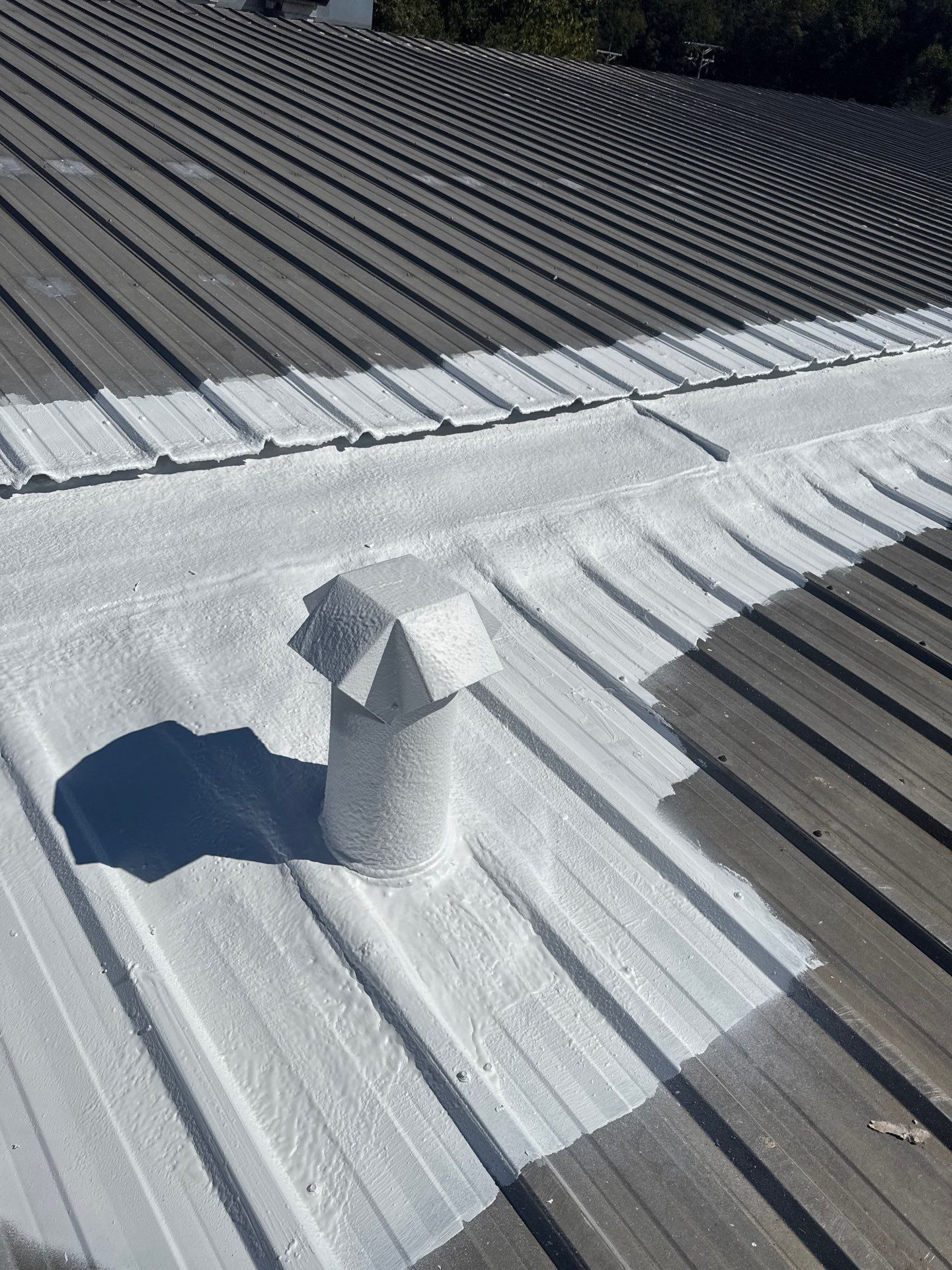
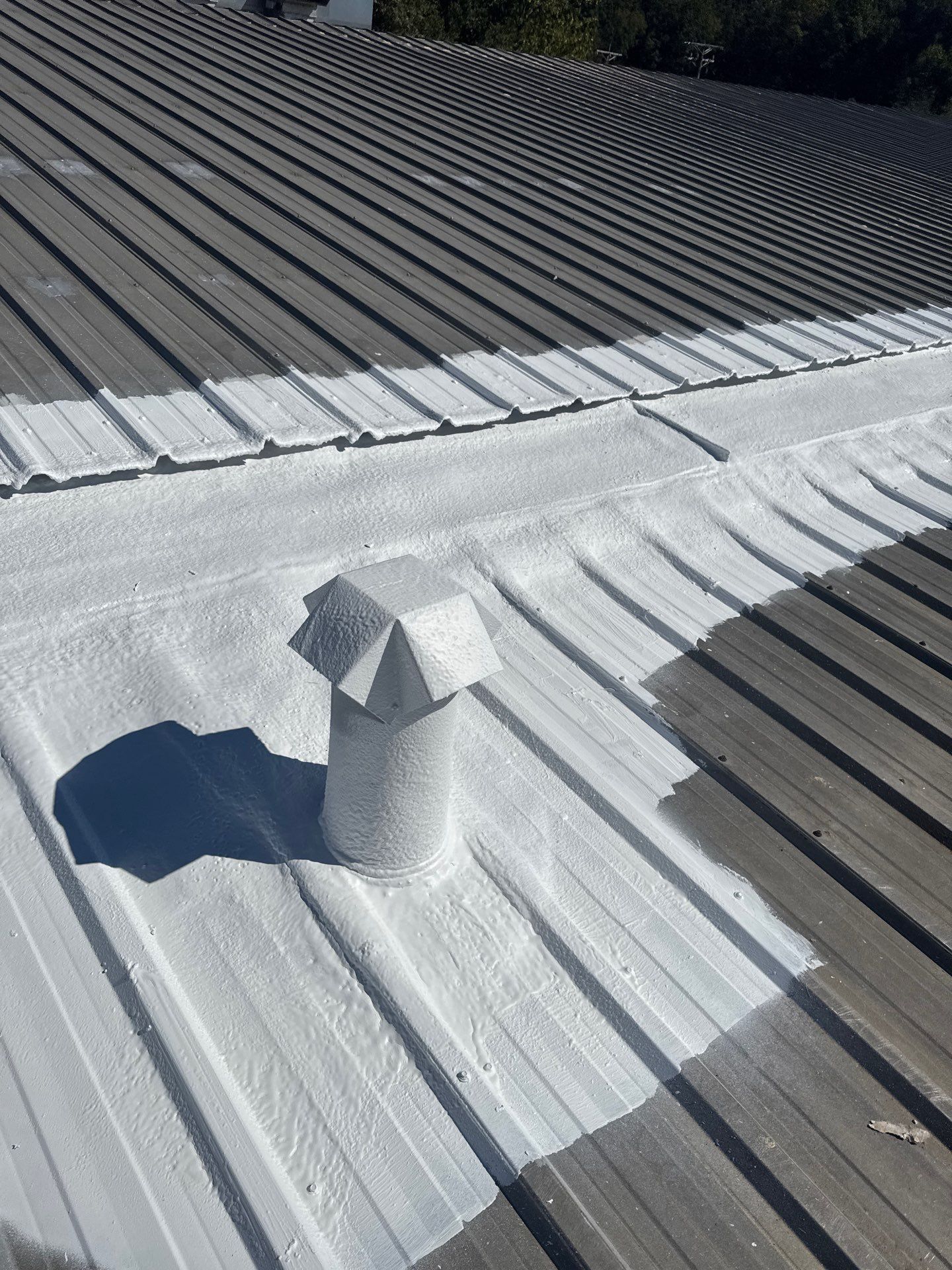
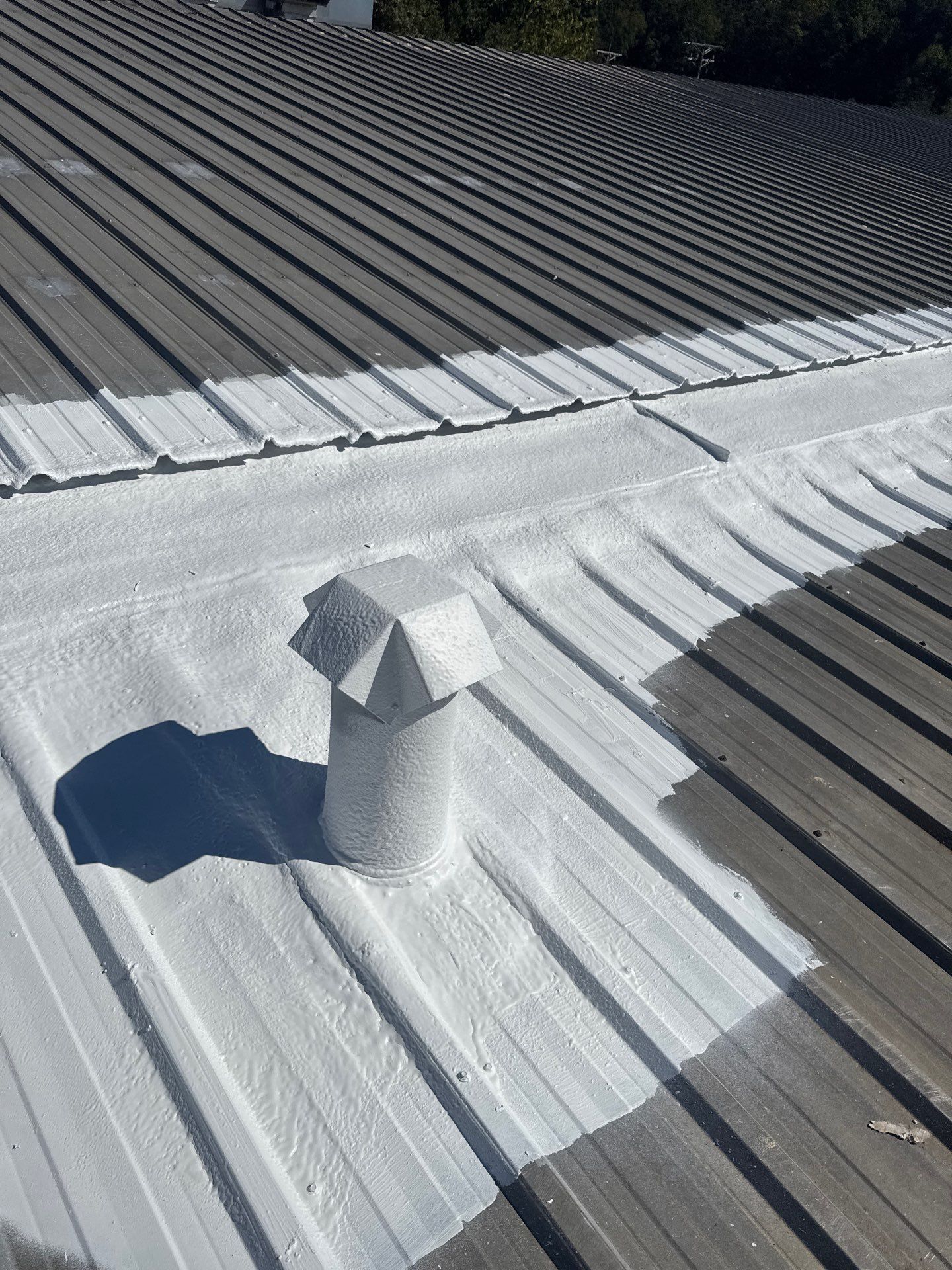
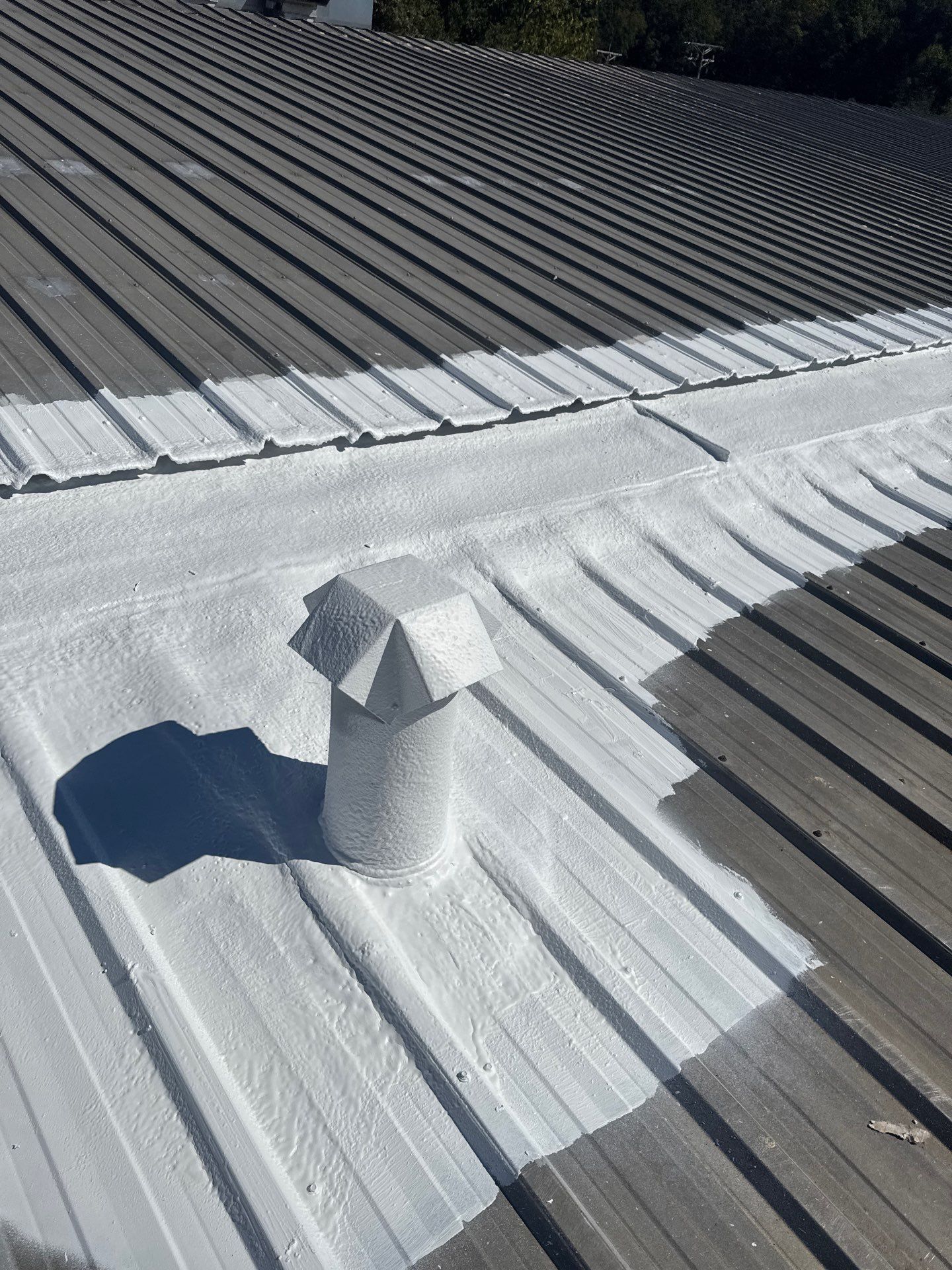
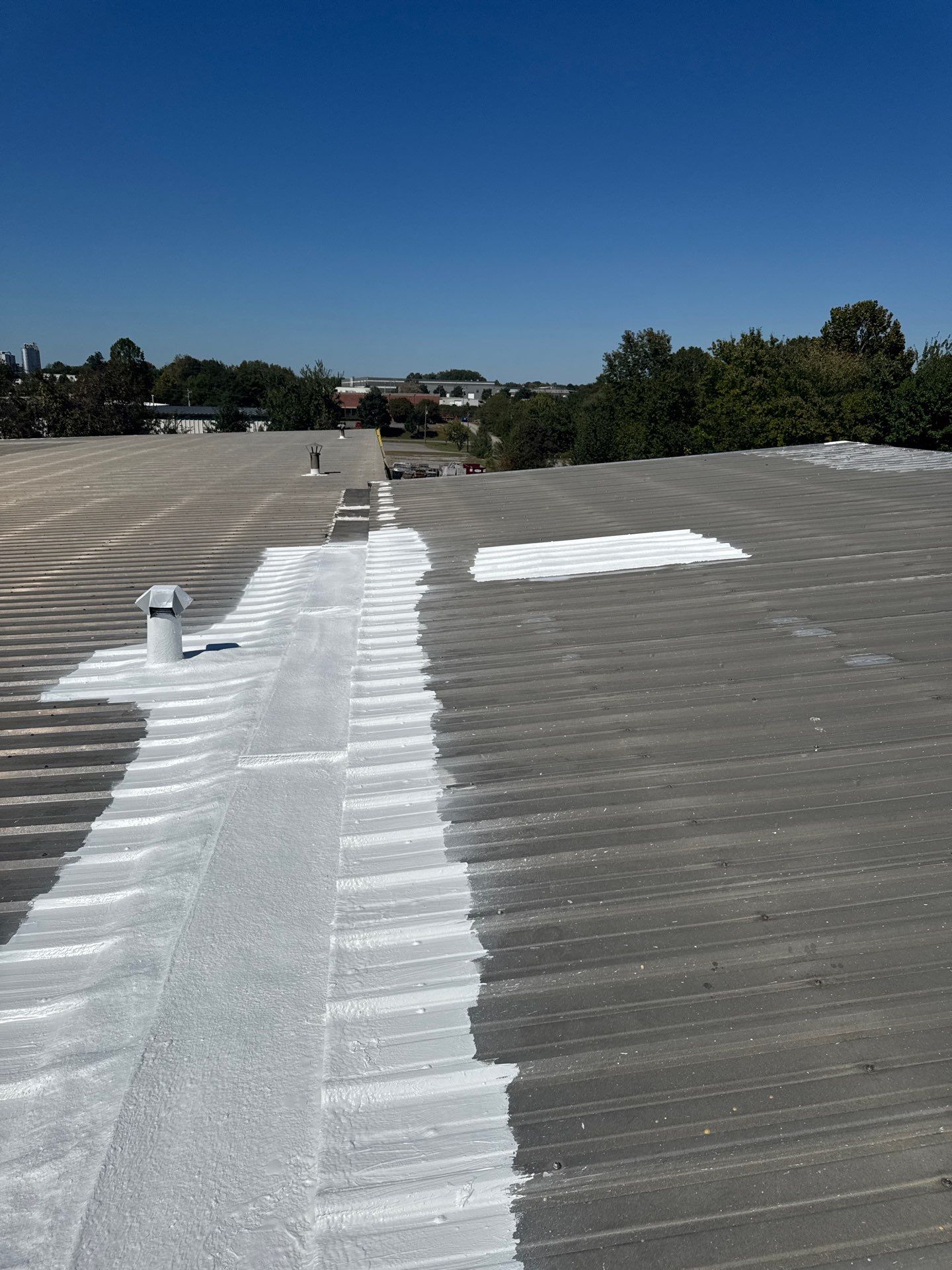
For this project, we used spray foam specifically engineered for metal roof repairs. This material moves with the roof. It’s flexible, waterproof, and bonds to metal without trapping moisture underneath.
We cleaned the transition areas thoroughly — no shortcuts here. Any old sealant or debris had to come off so the foam would bond properly. We applied the foam to seal the failed closures and the leaking transitions, building up layers to ensure complete coverage and proper slope for water runoff.
The foam cures quickly. We completed the repairs in one day, and the roof was watertight before we climbed down. The business didn’t need to shut down operations or move equipment.
This approach works because the foam accommodates thermal movement. When those panels expand in summer heat or contract on cold nights, the foam flexes instead of cracking. It’s a more cost-effective long-term solution than tearing off and replacing sections of metal roofing.
Signs You Need Metal Roof Repair in Greensboro NC
Don’t wait until water is pouring through your ceiling. Here’s what to watch for:
- Sporadic leaks that come and go: If you only see water during certain weather conditions, you’ve probably got a transition or seam issue
- Ceiling stains near roof transitions or walls: Water travels before it drips, but stains near transitions often point to movement-related failures
- Visible gaps at closures or ridge caps: If you can see daylight between your closure strips and the panels, water is definitely getting in
- Rust streaks on panels: Rust often starts where water is wicking under panel edges or pooling at fasteners
- Backed-out fasteners: Screws sitting higher than they should mean the metal has been moving and the seal is compromised
- Old tar patches that are cracking: If someone applied tar before, it’s drying out and the problem is coming back
- Damaged or compressed insulation: If you can access the underside and see wet or compressed insulation, the roof has been leaking longer than you think
One thing to understand: by the time you can see daylight from inside, the roof has been leaking for years. Daylight means the gap is significant, and water has been running in during every rain.
We recommend annual roof inspections at minimum for commercial metal roofs. If you’ve got HVAC units, skylights, or heavy tree coverage, make it twice a year. Catching transition problems early means a repair instead of a replacement.
Our Metal Roof Repair services include thorough inspections so we can spot movement-related damage before it turns into a major leak.
Why Choose Sunny Sky Roofing LLC for Your Greensboro Metal Roof Repair
Joe Yutzy started Sunny Sky Roofing LLC because he got tired of seeing building owners get sold full roof replacements when a targeted repair would solve the problem. We’re not in the business of overselling.
We specialize in commercial roofing. We understand how metal roofs behave, what causes failures, and how to fix them so they stay fixed. We’ve worked on enough metal roofs in North Carolina to know exactly how climate and thermal cycling impact these systems.
When we show up, we document everything with photos. You’ll see exactly what we found, why it’s failing, and what we’re going to do about it. No surprises, no upselling to services you don’t need.
We use materials engineered for metal roof applications — not generic products that might work. The spray foam we applied on this project is specifically formulated to bond to metal, remain flexible through thermal cycles, and provide a permanent waterproof seal.
We’ve been providing commercial roofing in Greensboro and the surrounding Piedmont Triad for years. We know the buildings, we know the weather patterns, and we know what works.
According to the National Roofing Contractors Association, proper maintenance and timely repairs can double the service life of a commercial roof. That’s not marketing talk — it’s building science. Fix problems when they’re small, and you avoid expensive emergencies.
Frequently Asked Questions About Metal Roof Repair
How long does spray foam repair last on a metal roof?
Spray foam repairs using proper metal roof materials typically last 10-20 years or more when applied correctly. The foam moves with the metal through thermal expansion and contraction, which is why it outlasts rigid sealants or tar patches that crack and fail. The longevity depends on the quality of surface prep, the specific foam product used, and ongoing roof maintenance. We’ve seen foam repairs we did a decade ago still performing perfectly because the material was engineered for metal roof movement.
Why do metal roof leaks only happen during certain storms?
Sporadic leaks happen because small gaps at transitions or seams only let water through under specific conditions — usually wind-driven rain from a particular direction. The gap might be tiny, so water needs wind pressure to force it through. Temperature also plays a role: metal contracts in cold weather, which can temporarily widen gaps. This is why you might see leaks during winter storms but not summer rains. The leak isn’t fixed just because it stops — the gap is still there waiting for the right conditions.
Should I repair or replace my leaking commercial metal roof?
If the leaks are isolated to transitions, seams, or penetrations, and the metal panels themselves are still in good shape, repair is almost always the smarter choice. We can repair specific problem areas for a fraction of replacement cost and get you another 10-20 years of service. Replacement makes sense when you’ve got widespread panel rust, structural deck damage, or the roof is past its expected service life. We’ll tell you honestly which approach makes sense for your building — we’re not in the business of selling replacements when a repair will do the job.
How often should I have my metal roof inspected in Greensboro?
Annual inspections at minimum for all commercial metal roofs. If your building has HVAC units, skylights, heavy tree coverage, or you’ve had previous leak issues, inspect twice a year — spring and fall. Greensboro’s temperature swings accelerate wear at transitions and fasteners, so regular inspections catch small problems before they turn into expensive water damage. An inspection costs a few hundred dollars. Replacing water-damaged insulation and ceiling materials costs thousands. The math is pretty simple.
Get Your Metal Roof Inspected Today
If you’ve noticed sporadic leaks, ceiling stains, or you just haven’t had your metal roof inspected in a while, don’t wait until the problem gets worse. Water damage compounds quickly, and wet insulation doesn’t fix itself.
Sunny Sky Roofing LLC provides thorough metal roof inspections and honest assessments for commercial properties throughout Greensboro. We’ll tell you exactly what’s wrong, what it’ll take to fix it, and what it’ll cost — no games, no pressure.
Call us at 336-523-2103 or contact us to schedule an inspection. We’ll get your Greensboro metal roof watertight and keep it that way.