
Lexington sits right in the heart of Davidson County, where historic barbecue joints share streets with modern manufacturing facilities, all under the same brutal North Carolina sun. If you own a metal building here—whether it’s a warehouse on Cotton Grove Road, a shop near the Davidson County Fairgrounds, or a facility out toward Tyro—you’ve probably dealt with those maddening intermittent leaks that show up one storm and disappear the next. That’s not your imagination. That’s what happens when commercial roofing in Lexington NC ages and the hidden butyl tape that seals your building starts to fail.
We just wrapped a metal roof restoration project in nearby Greensboro that perfectly illustrates what we’re seeing across the Piedmont Triad. The owner had been chasing leaks for months—sometimes near the ridge, sometimes at wall flashings, never in the same spot twice. The problem wasn’t visible from the ground, and it wasn’t something you could fix with another bucket of tar.
What We Found on This Commercial Roofing Project
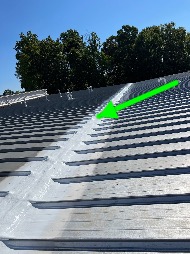
When we climbed up for the inspection, the metal panels themselves looked decent from a distance. The paint had oxidized and faded—typical for our climate—but the real story was happening underneath the trim pieces and at every panel overlap.
Metal buildings move. The summer heat in Lexington can push metal surface temperatures well above 150 degrees, then cool dramatically overnight. Winter brings the same cycle in reverse. Every season, every temperature swing, that metal expands and contracts. When the building was new, butyl tape underneath all the trim pieces, Z-closures, ridge caps, and panel overlaps created watertight seals. That tape is designed to stay pliable and maintain contact even as the metal moves.
Except it doesn’t stay pliable forever.
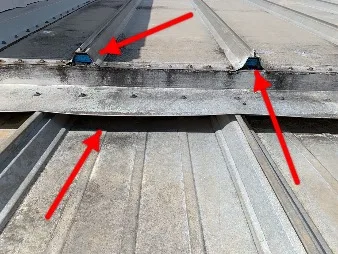
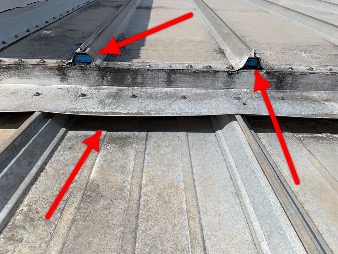
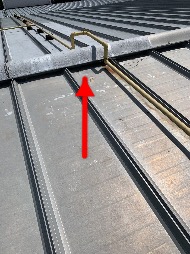
After years of UV exposure, temperature cycling, and seasonal movement, that butyl tape hardens, compresses, and works its way out from under the trim. We could see it on this job—little gray ribbons of dried-out tape peeking out from under ridge caps and sidewall flashings. Some spots had gaps you could slide a business card into. Others looked fine until you applied pressure and felt them shift.
This explains why the leaks were sporadic. When wind-driven rain hits the building from a certain direction, water finds those gaps. Next storm comes from a different angle, and that same spot stays dry while water finds a different failed seal. The building owner wasn’t dealing with one leak—he was dealing with dozens of potential entry points that opened and closed with temperature changes and wind pressure.
Why Metal Roof Butyl Tape Failure Matters for Lexington NC Properties
Our location in the central Piedmont creates specific challenges for commercial metal roofs. We’re far enough inland to avoid coastal hurricane winds, but we still get severe thunderstorms, occasional ice, and relentless humidity year-round.
When butyl tape starts failing, you don’t get one catastrophic leak that forces immediate action. You get slow, intermittent water intrusion that damages insulation, rusts the metal from the inside out, and creates conditions for mold growth. By the time you see water stains on interior walls or ceiling tiles, the insulation has likely been wet for months.
We see this pattern repeatedly in Lexington’s industrial corridor. A facility manager notices a small leak, throws some tar on what looks like the problem spot, and the leak stops. For a while. The tar itself becomes part of the problem—it dries out in our summer heat, cracks with thermal movement, and actually traps moisture against the metal underneath. Rust accelerates. The temporary fix makes the permanent problem worse.
The other factor specific to our area: oak pollen in spring and the sheer volume of organic debris that accumulates in valleys and behind parapet walls. When that debris stays wet and packed against failed butyl seals, water has constant contact with entry points. A roof that might shed water perfectly when clean will leak steadily when valleys are clogged.
The Commercial Roof Restoration Process We Used
This wasn’t a reroof. The existing metal panels had plenty of life left. We were restoring the weathertight envelope the building had when it was new—just with better materials and methods than the original construction.
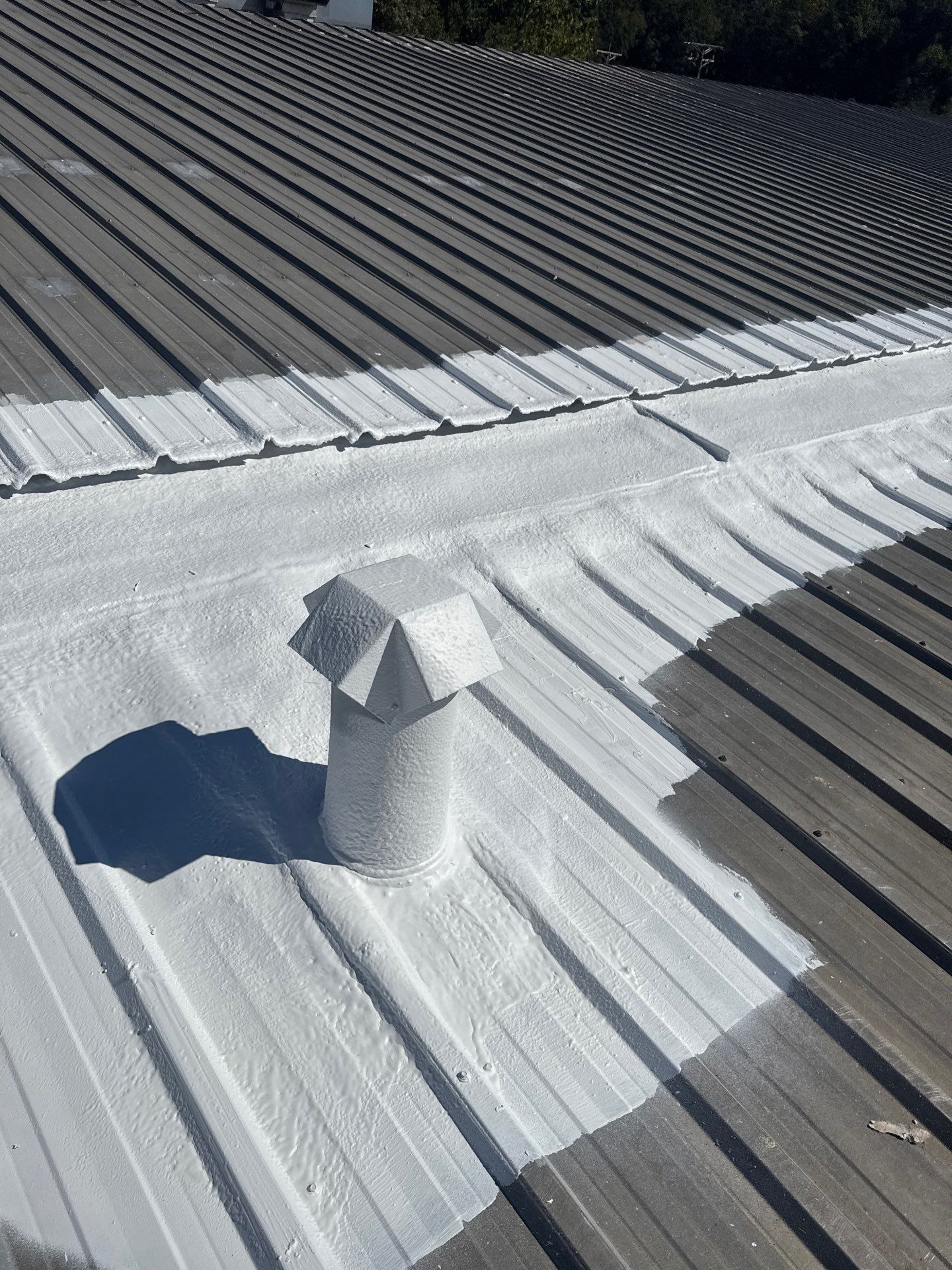
First, we cleaned the entire roof surface. Every valley, every transition, every spot where two decades of grime and oxidation had built up. You can’t seal over dirt and expect it to last.
Then we addressed every penetration, transition, and trim piece systematically. We removed ridge caps, rake trim, and Z-closures where butyl tape had failed. Cleaned the mating surfaces. Installed fresh butyl tape rated for the temperature extremes and UV exposure we get in North Carolina. Reinstalled the trim with proper compression to ensure full contact.
Where fasteners had backed out or developed rust halos, we replaced them with new fasteners positioned in solid material. Metal roofing screws don’t last forever—the neoprene washers compress and degrade, especially on the south and west exposures that take the brunt of afternoon sun.
We resealed all panel overlaps and endlaps. These are low-slope transitions where water moves slowly and has time to find any gap. Fresh sealant at every seam creates a continuous barrier.
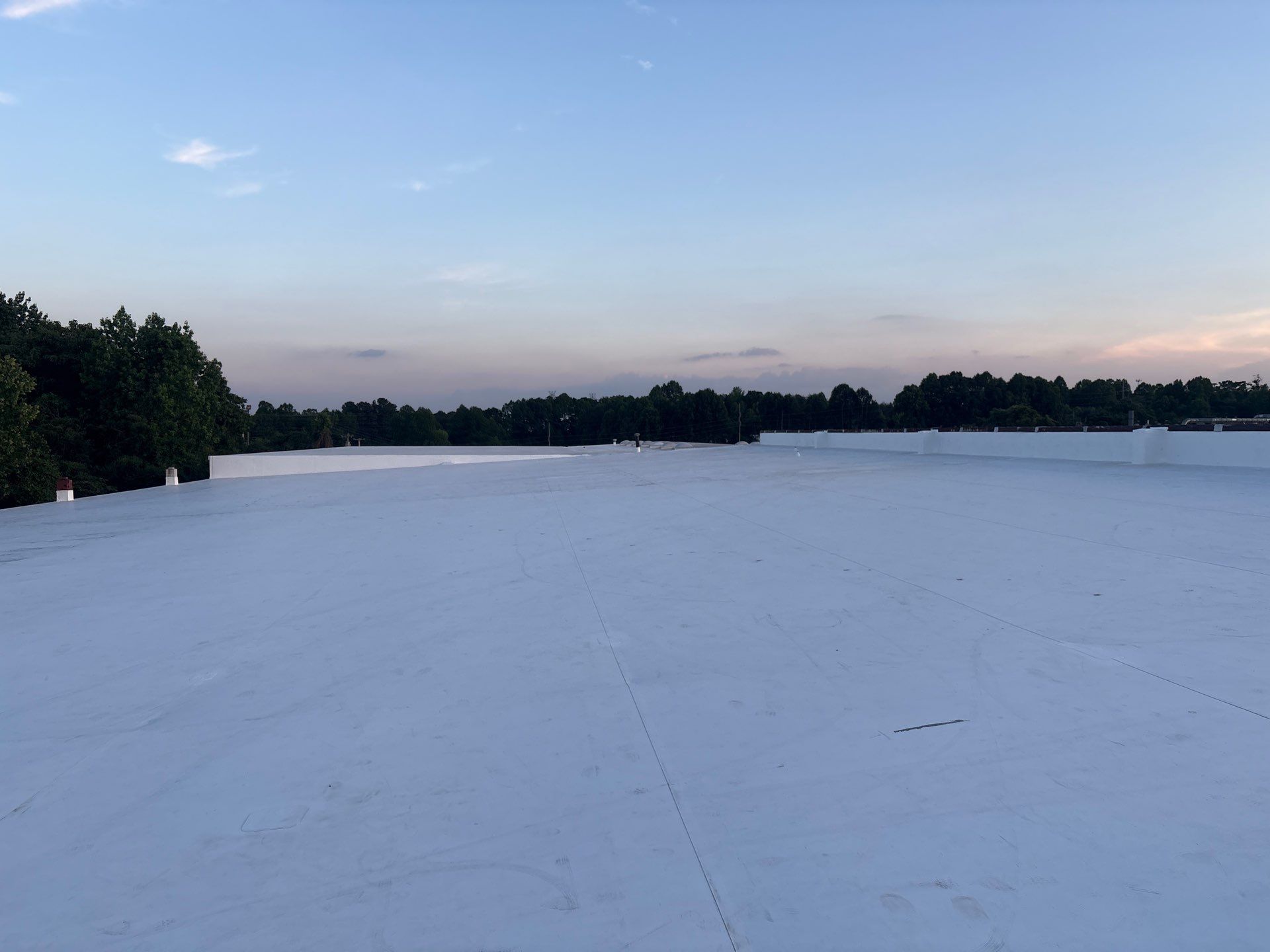
Finally, we applied a roof coating system over the entire surface. This does two things: it reflects UV and heat, reducing the thermal cycling that caused the butyl tape to fail in the first place, and it creates a monolithic membrane over the entire roof surface, bridging fasteners and seams. The coating we used carries a manufacturer warranty and is specifically formulated for metal substrates in our climate.
Timeline was about a week, working around weather. We don’t coat in rain or extreme heat—the application window matters for proper adhesion and cure.
Our Commercial Roofing services include detailed inspections that identify these hidden failures before they become emergency leaks.
Signs Your Lexington Commercial Roofing Needs Attention
Here’s what to watch for if you own a metal building in Lexington or anywhere in Davidson County:
- Intermittent leaks that change location — This is the classic butyl tape failure pattern. If your maintenance crew can’t pin down where water is entering, the problem is likely at multiple seal points, not one damaged panel.
- Visible rust streaks below trim or fasteners — Rust running down the panel face means water is getting under something above that point. Could be failed tape under trim, could be a compromised fastener.
- Daylight visible from inside — If you can see light through your roof deck, that roof has been leaking for years. This isn’t an early warning sign; it’s evidence of long-term neglect. The water damage is already extensive.
- Previous tar patches that have cracked or pulled away — Tar is always a temporary fix. If your roof has black patches visible from the ground, those are failing or will fail soon. Tar dries out, the metal underneath continues to move, and the tar cracks. Water gets under it and accelerates rust.
- Fasteners with neoprene washers that look cracked or compressed flat — Those washers are supposed to maintain a seal. When they’re hardened and brittle, every fastener is a potential leak point.
- White or gray residue along trim edges — That’s the old butyl tape extruding out from thermal cycling. It’s done. The seal is compromised.
- Water stains on insulation or interior walls after storms — By the time you see interior evidence, the leak has been active long enough to saturate insulation. That insulation loses R-value when wet and may never fully dry if the leak source isn’t properly fixed.
Don’t wait for multiple interior leak points before calling someone. Annual roof inspections catch butyl tape failure and fastener issues before they cause interior damage. For roofs with heavy tree coverage or buildings near wooded areas around Lexington—common out toward Silver Valley or Cotton Grove—we recommend bi-annual inspections because debris accumulation accelerates seal failures.
Why Property Owners Choose Sunny Sky Roofing LLC for Commercial Roofing Lexington NC
Joe Yutzy started Sunny Sky Roofing because he got tired of seeing building owners get sold full reroofs when restoration would have solved the problem for a fraction of the cost. Not every aging metal roof needs replacement. Most need proper maintenance and targeted restoration.
We know the Piedmont Triad. We work in Lexington, Thomasville, Winston-Salem, Greensboro, and throughout Davidson County regularly. We understand what NC heat and humidity do to commercial roofing systems. We know the difference between a roof that needs restoration and one that’s truly at end of life.
When we give you an assessment, it’s based on what we actually found on your roof, not what we wish we’d found to justify a bigger project. If your metal panels are sound and the problem is sealant and tape failure, we’ll tell you that. Restoration is more cost-effective than full replacement and extends roof life by decades when done properly.
We use materials rated for our climate. The butyl tape, sealants, and coating systems we install are selected specifically for the UV exposure, temperature swings, and humidity levels we experience in central North Carolina. We don’t use the same products you’d spec for a building in Arizona or Michigan—our conditions are different.
Every project gets a detailed scope of work before we start. You’ll know what we’re doing, why we’re doing it, and what to expect for longevity. We don’t hide behind vague proposals.
We’re also part of this community. When we tell a Lexington business owner their roof will last another fifteen years with proper restoration, our reputation depends on that assessment being accurate. We’ll be here in fifteen years, and we want you calling us for the next project.
The National Roofing Contractors Association has published extensive research on metal roof restoration and the role of proper sealant maintenance—their technical bulletins align with everything we’re describing here. You can find their resources at NRCA.net if you want the technical deep dive.
Frequently Asked Questions About Commercial Metal Roof Restoration in Lexington
How long does butyl tape last on a metal roof in North Carolina?
Butyl tape typically lasts 15-20 years in our climate before thermal cycling, UV exposure, and seasonal expansion/contraction cause it to harden and lose adhesion. Buildings with darker metal panels or significant south/west exposure may see tape failure on the earlier end of that range because surface temperatures run higher. The tape doesn’t fail all at once—it degrades gradually, which is why leaks start intermittent and become more frequent over time. Annual inspections catch tape failure before it causes interior damage.
Can you fix sporadic leaks without replacing my entire metal roof?
Absolutely. Most intermittent leak issues on metal roofs are caused by failed sealants, degraded butyl tape, or backed-out fasteners—not failed panels. We restore the weathertight envelope by replacing tape and sealants at all trim and transition points, addressing fastener issues, and applying a coating system over the existing metal. This approach is more cost-effective than full replacement and can extend your roof life by 20+ years when the underlying panels are still structurally sound. We’ll give you an honest assessment of whether your roof is a candidate for restoration.
Why do my metal roof leaks seem to move around after storms?
This happens when butyl tape under trim pieces and at panel overlaps has worked its way out due to thermal expansion and contraction. The metal building moves with temperature changes—expanding in heat, contracting in cold—and that movement gradually pushes degraded tape out from under seams. You end up with multiple small gaps rather than one obvious hole. Depending on wind direction, rain intensity, and which way the metal has shifted with recent temperature swings, water finds different entry points. It’s not one leak moving—it’s many potential leak points that activate under different conditions.
How often should I have my Lexington commercial metal roof inspected?
We recommend annual inspections at minimum for all commercial metal roofs. If your building is near wooded areas or has significant tree coverage—common in parts of Lexington like Cotton Grove or around the Yadkin River corridor—bi-annual inspections make sense because debris accumulation and organic material on the roof accelerate seal failures. An inspection catches butyl tape degradation, fastener issues, and sealant breakdown before they cause interior leaks. Catching these issues early means smaller repair costs and no business interruption from water damage.
Professional Commercial Roofing in Lexington NC
If you’re dealing with intermittent leaks, visible rust, or you simply can’t remember the last time someone actually inspected your commercial roof, let’s take a look before minor sealant issues become major problems.
Sunny Sky Roofing LLC provides honest assessments and practical solutions for commercial metal roofs throughout Lexington and Davidson County. We’ll tell you whether you need restoration, targeted repairs, or if it’s genuinely time for replacement—and we’ll explain exactly why we’re recommending what we’re recommending.
Call us at 336-523-2103 to schedule an inspection, or visit our commercial roofing in Lexington page to learn more about our services in your area. You can also contact us through our website with photos of your roof concerns—sometimes we can give you preliminary feedback before we even schedule a site visit.
Your metal building has years of life left. Let’s make sure the envelope stays watertight so it reaches that potential.