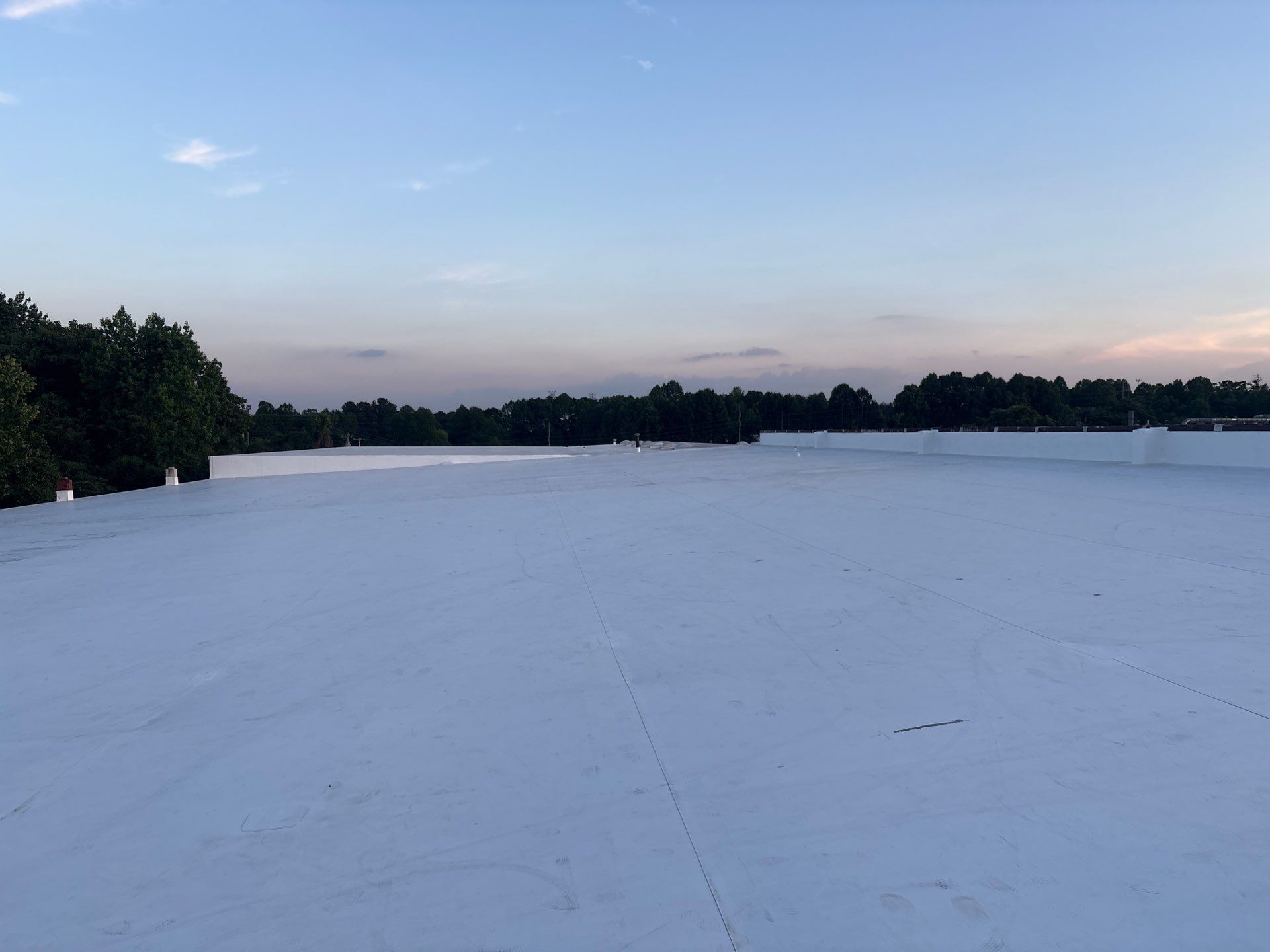
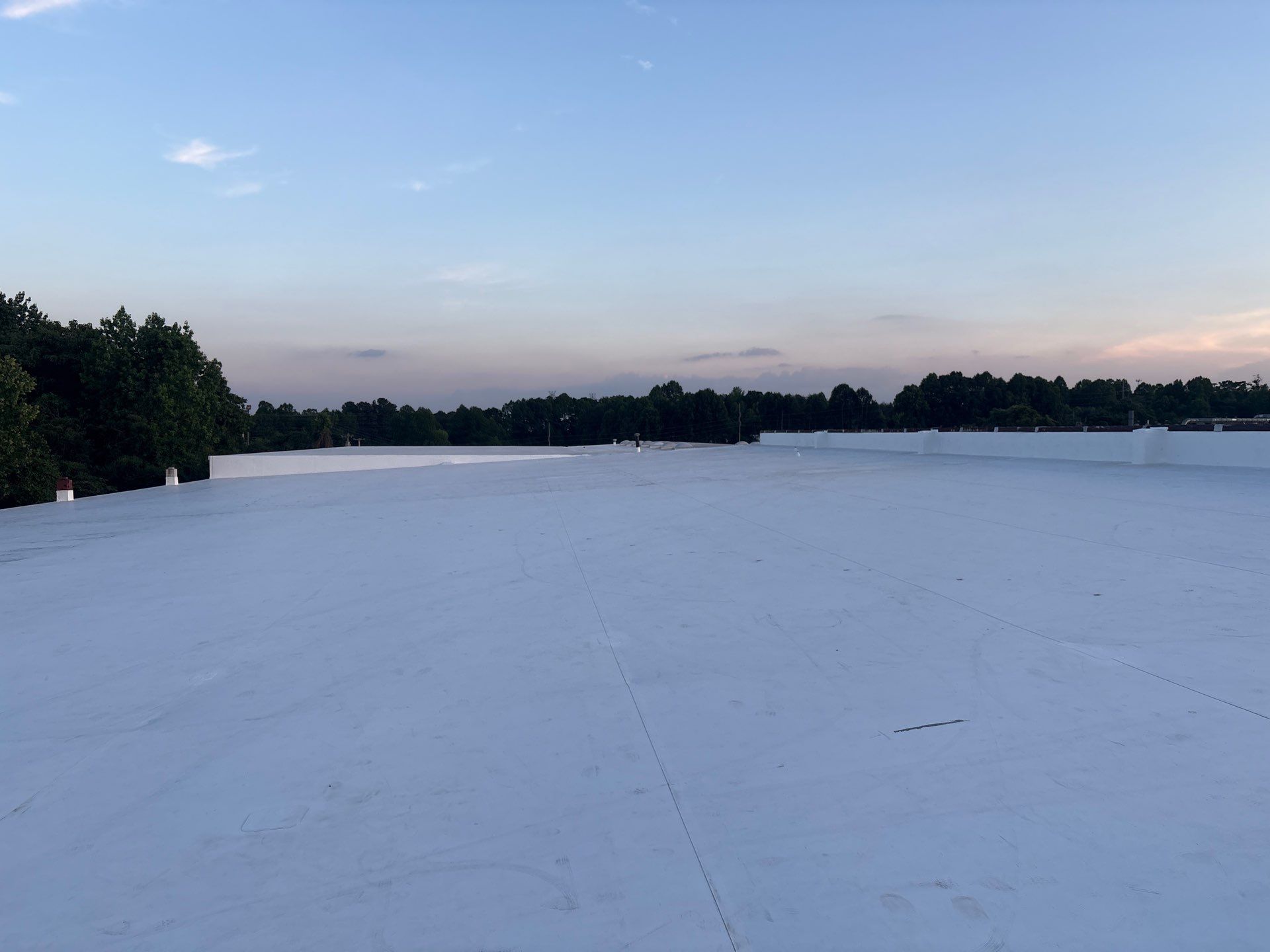
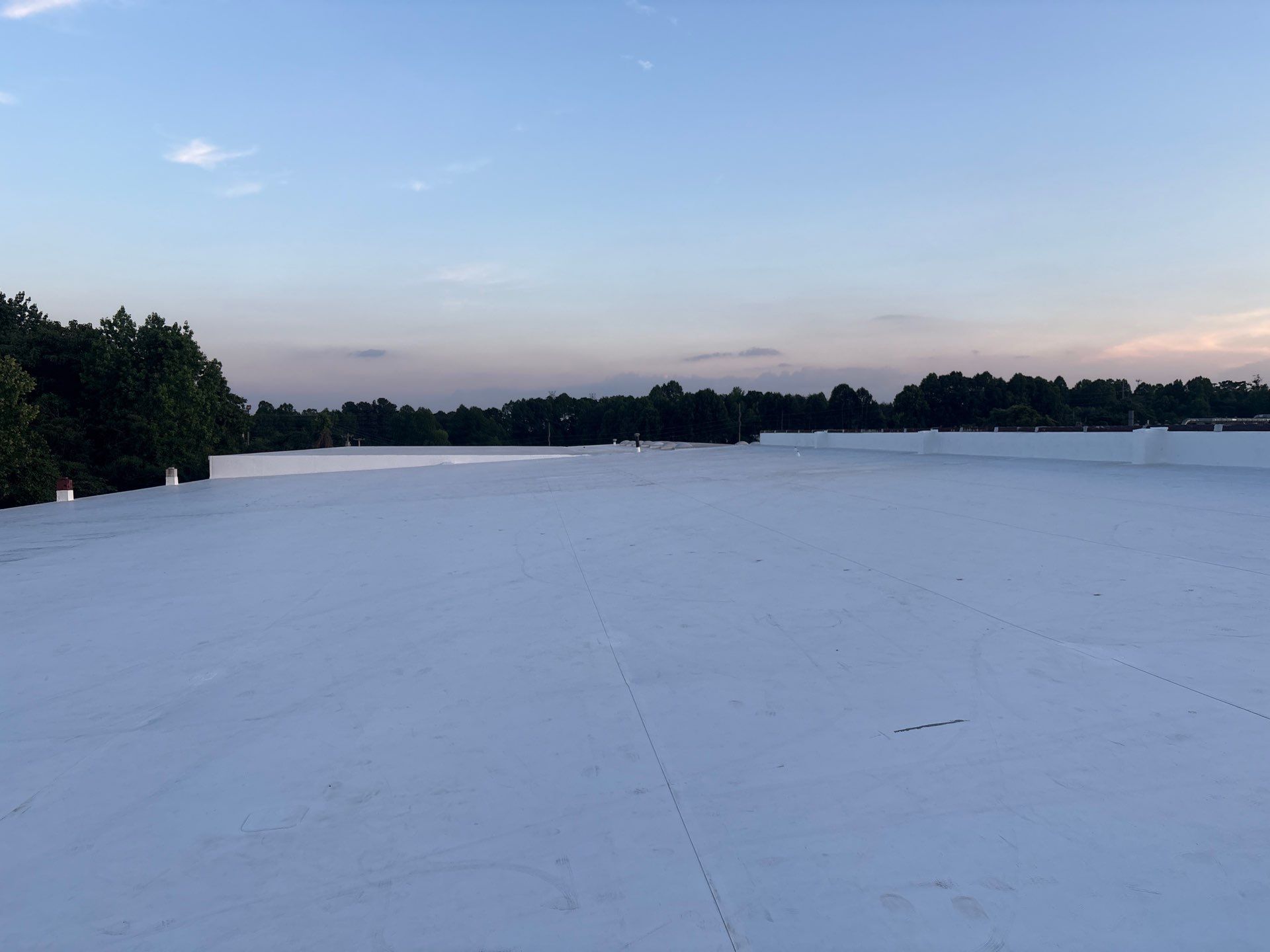
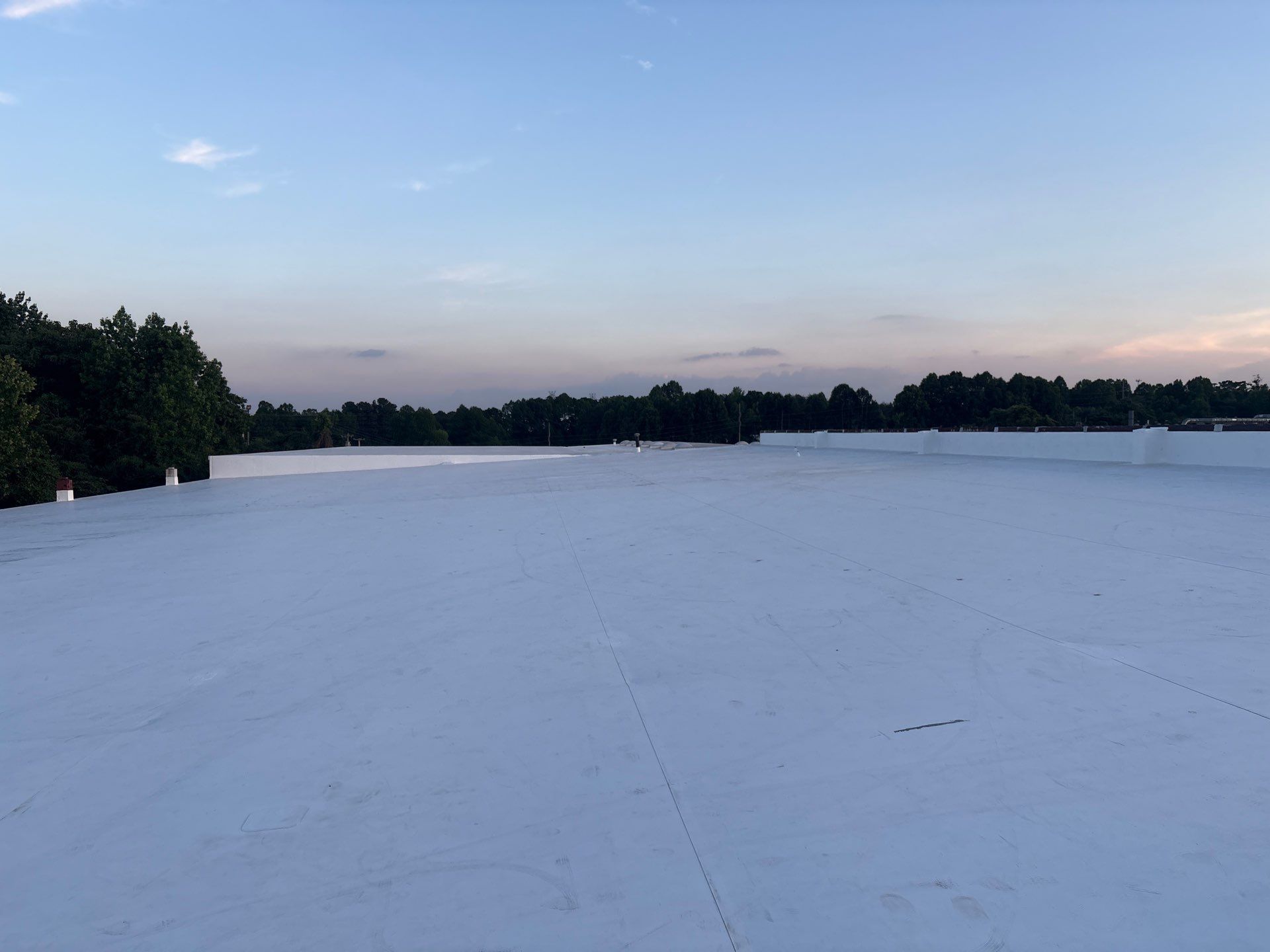
Lexington’s mix of historic downtown buildings and modern distribution centers creates a unique landscape for commercial roofing. We’ve worked on metal roofs across Davidson County, from the older industrial buildings near the rail lines to the newer facilities along I-85. What surprises most property owners here is how much a metal roof actually moves — and why that movement turns minor issues into major metal roof repair problems. If you’re dealing with sporadic leaks that seem to come and go, thermal expansion is probably the culprit.
The Statesville Job That Shows How Metal Roofs Move
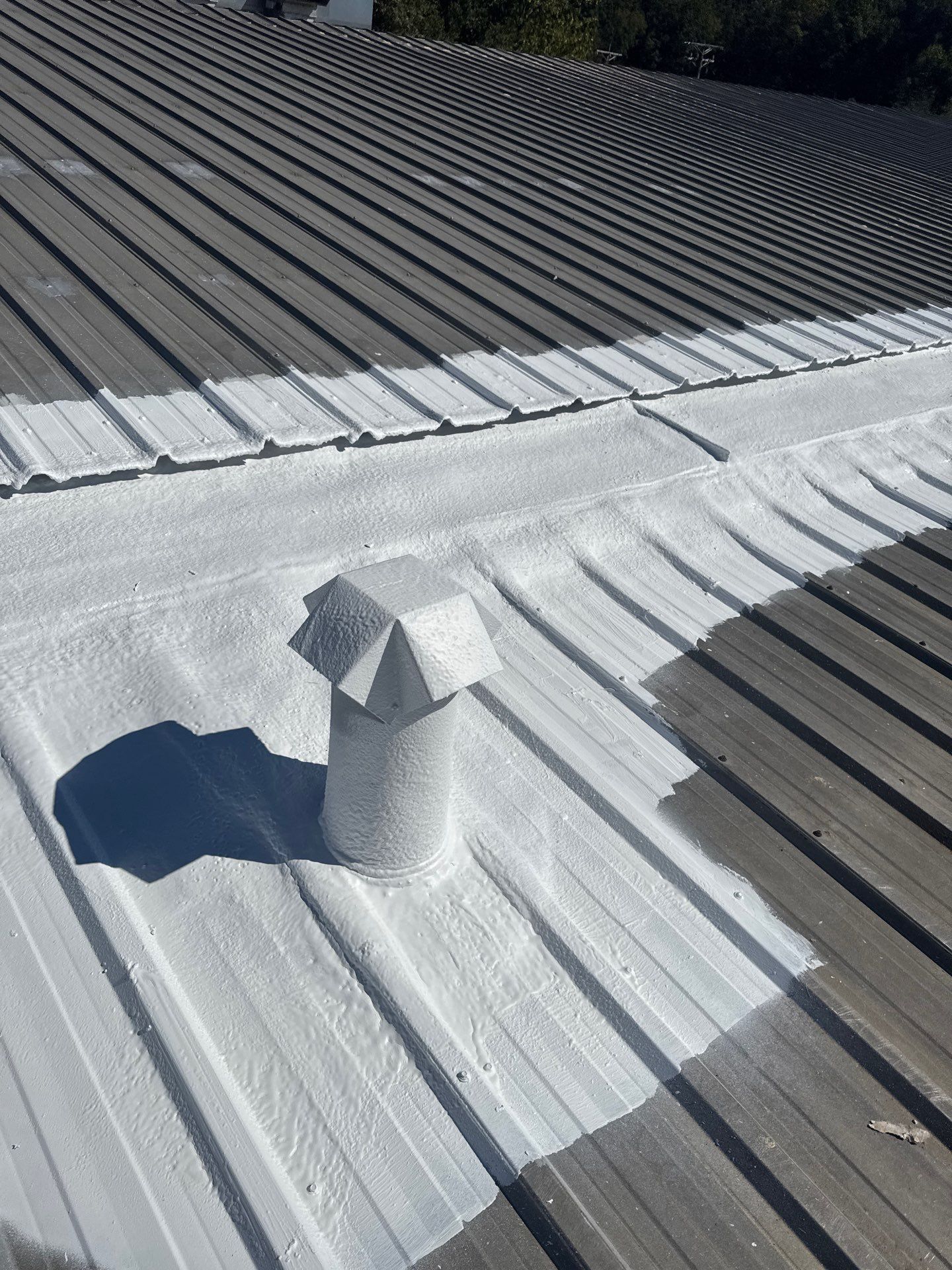
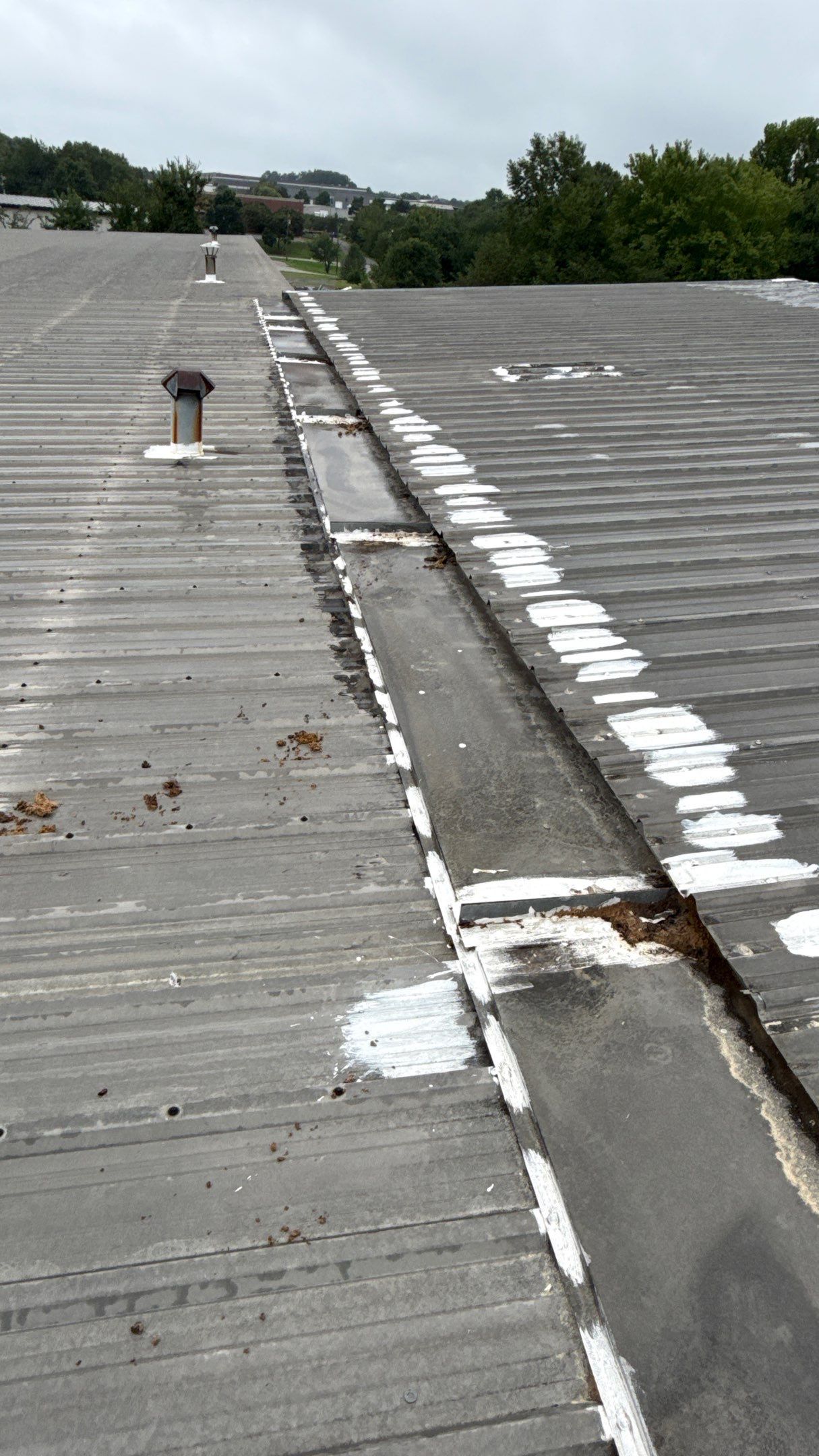
\p>We recently completed a metal roof repair in Statesville that perfectly demonstrates what happens at transitions when thermal movement isn’t properly addressed. The building owner called us after noticing water stains on the ceiling near an HVAC unit — but only after certain weather events. Some rainstorms caused leaks, others didn’t. That’s the classic signature of a movement-related failure.
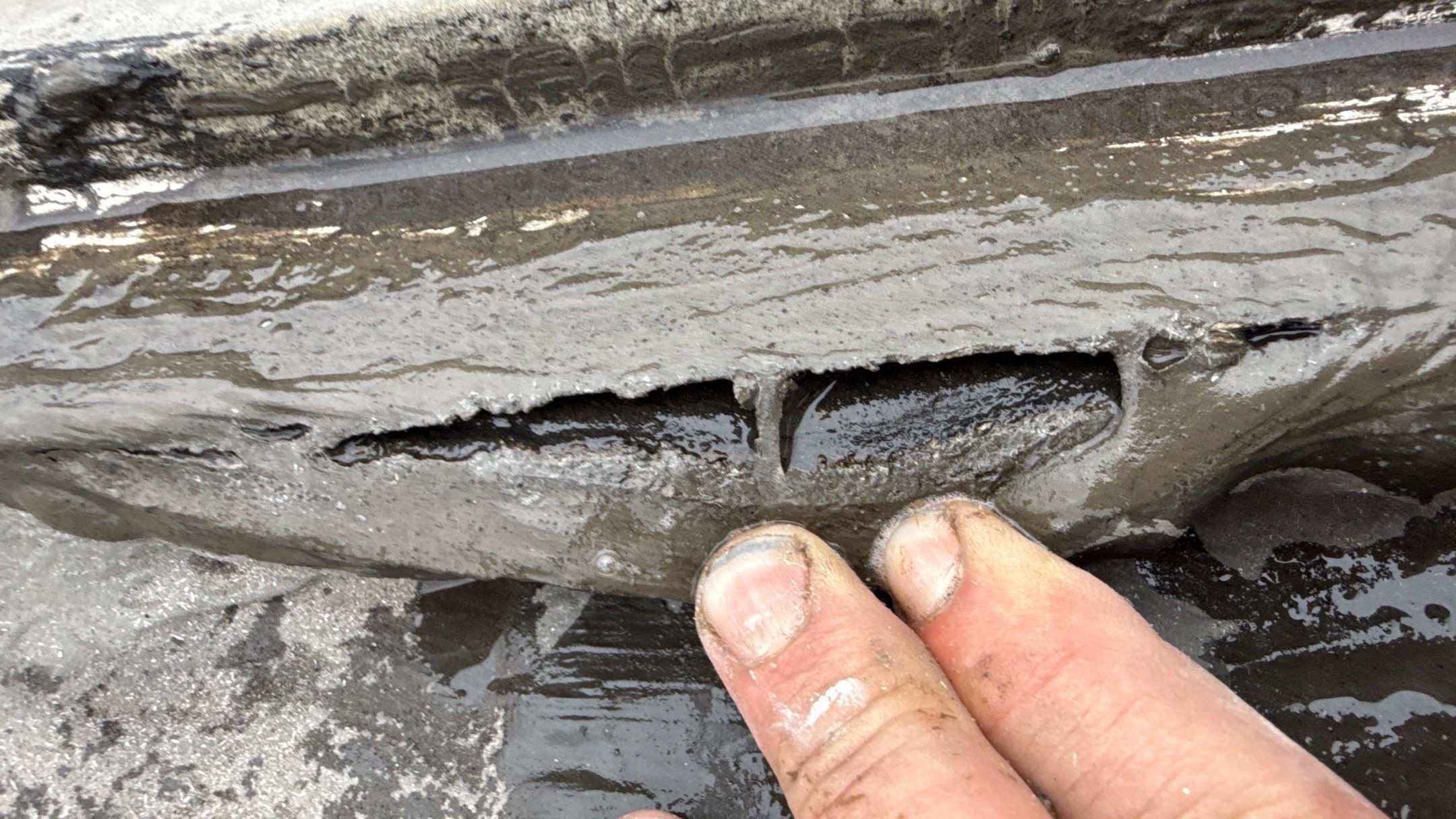
When we got up there, we found exactly what we expected. The transition flashing where the metal roof met the HVAC curb had failed completely. The closure strips had deteriorated. The sealant had cracked and pulled away. Every time the metal roof heated up in the sun and expanded, then cooled at night and contracted, it moved against that transition point. Over months and years, that constant push-and-pull motion destroyed the seal.
Water wasn’t just sitting on top either. It had been wicking under the flashing, saturating the insulation underneath, and creating a perfect environment for rust. By the time the owner noticed the ceiling stains, the insulation had been wet for who knows how long.
Why Metal Roof Repair in Lexington NC Properties Face Thermal Stress
North Carolina gives us the perfect storm for thermal movement problems. Summer days hit 90-plus degrees, heating that metal roof to 150 or higher in direct sun. Night temps drop 30 degrees or more. Spring and fall bring even bigger temperature swings — a 40-degree day can turn into a 75-degree afternoon.
Metal expands when it heats up and contracts when it cools down. That’s just physics. A 100-foot-long metal panel can move over an inch between winter and summer. Doesn’t sound like much until you think about what that does to every penetration, every transition, every seam.
The weak points are always the same:
- HVAC curb transitions
- Pipe boot penetrations
- Roof-to-wall transitions
- Ridge caps and eave trim
- Any spot where metal meets something that doesn’t move the same way
Lexington sits in that humid Piedmont climate zone where we get plenty of rain — about 45 inches a year according to the National Weather Service. That means every little crack, every separated seam, every failed closure gets tested regularly. The metal moves, the seal breaks, water finds its way in, and the insulation acts like a sponge.
The insulation damage is often worse than the roof damage. Wet insulation doesn’t dry out easily when it’s sandwiched between metal panels and a roof deck. It stays damp, compresses, loses R-value, and creates rust on the metal from underneath. We’ve pulled back metal panels and found insulation that’s completely matted down and discolored, even when the leak seemed minor from inside.
The Repair Process: Spray Foam for Movement-Tolerant Seals
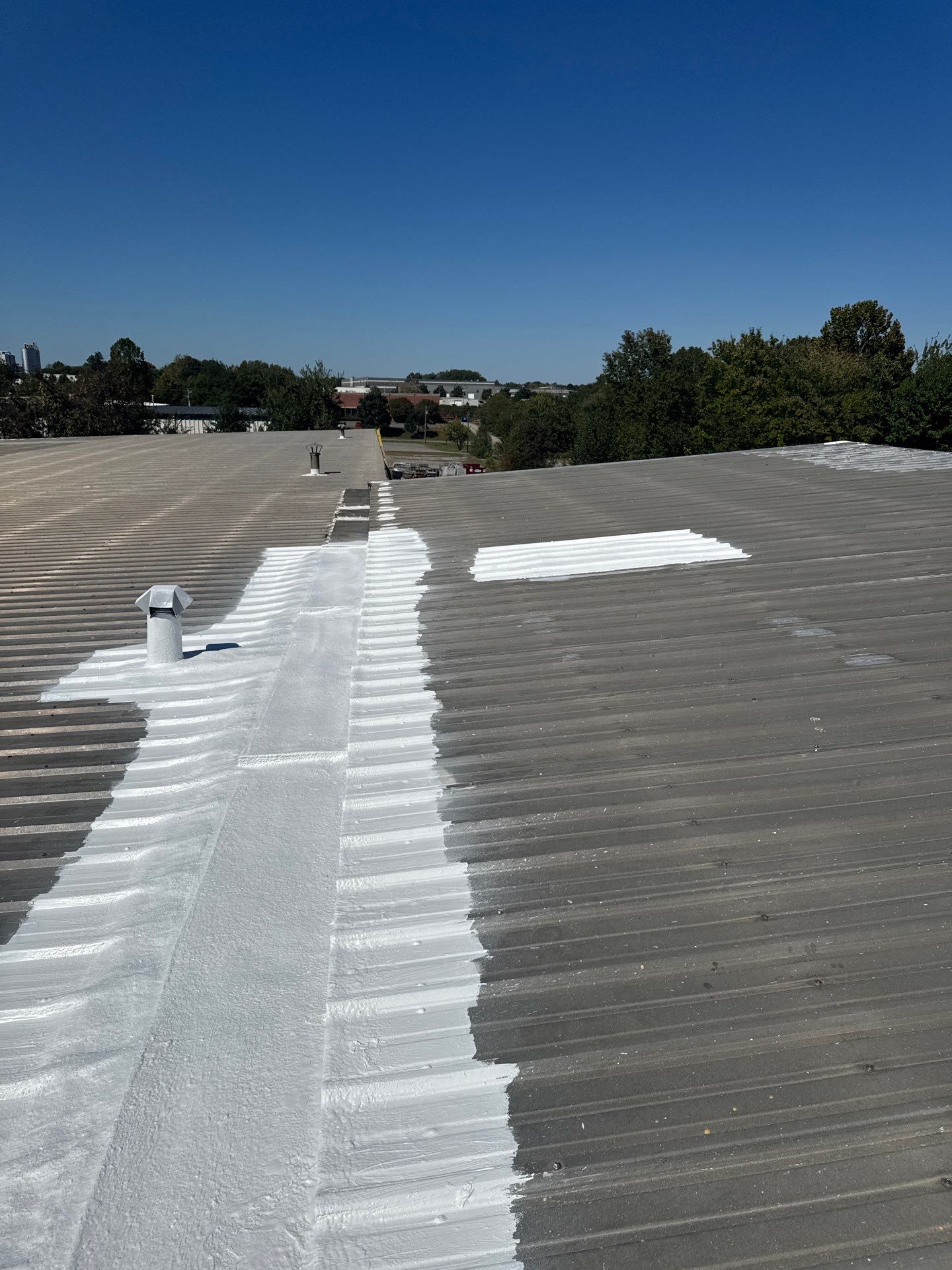
For the Statesville project, we used spray foam to create a repair that could handle the constant thermal movement. This isn’t the expanding foam you buy in a can at the hardware store. We’re talking about closed-cell polyurethane foam applied with professional equipment.
Here’s why spray foam works for these transition repairs:
First, it adheres to both metal and the adjacent materials — whether that’s wood, concrete, or other metal. It creates a continuous seal with no gaps or fastener penetrations that can become new leak points.
Second, it has some give to it. When the metal expands and contracts, the foam can flex slightly without cracking or separating. Compare that to caulk or tar, which dry hard and brittle. Tar especially is a terrible long-term solution on metal roofs. It dries out, the metal moves seasonally, the tar cracks, water gets under it, and rust accelerates underneath. We see failed tar patches on almost every older metal roof we inspect.
Third, spray foam adds structural stability to the transition itself. At that Statesville job, we removed the failed closure strips and deteriorated material, cleaned and prepped the metal and curb surfaces, then built up the foam transition in layers. The result is a sealed, reinforced transition that moves with the roof.
The foam transition repair also replaced sections where water had already caused damage. We cut out compromised insulation, let everything dry completely, then sealed it all back up with the foam system. The whole repair was done in a day once weather cooperated — we need dry conditions for proper foam adhesion.
We topped the foam with a reflective coating to protect it from UV degradation. Foam breaks down in direct sunlight, so that top coating is critical for longevity.
Signs Your Lexington Building Needs Metal Roof Repair
Don’t wait until you’ve got obvious water damage inside. Catch these problems early and you’ll save money and prevent insulation deterioration. Here’s your checklist:
- Sporadic leaks that don’t happen every rain: If water only appears after certain weather events, you’ve got a movement-related seal failure
- Stains near roof penetrations: HVAC units, vents, pipes — anywhere something comes through the roof is a high-risk zone
- Visible gaps at transitions: Walk the roof and look at anywhere metal meets something else — gaps mean the seal has failed
- Cracked or missing caulk: If you can see dried-out sealant pulling away from metal, water can definitely see it too
- Rust streaks below transitions: Water tracks show you exactly where leaks originate
- Soft spots or sagging near roof edges: This means water has saturated insulation or even damaged roof decking
- Backed-out fasteners: Screws that have worked loose from thermal cycling create penetrations where water enters
- Old tar patches: If someone’s been up there with a bucket of tar, you’ve got temporary fixes that are failing or will fail soon
By the time you can see daylight through the roof deck from inside, the roof has been leaking for years. That’s not something to watch for as an early warning — that’s a sign of serious neglect and extensive hidden damage.
Why Property Owners Choose Sunny Sky Roofing LLC for Metal Roof Repair Lexington NC Projects
Joe Yutzy started Sunny Sky Roofing LLC to do commercial roofing the right way — which means fixing problems correctly, not just slapping tar on them and hoping they hold until the next guy’s problem. We focus on commercial roofing in Lexington and across the Piedmont region because we understand the climate challenges here.
When we show up for a metal roof repair, we’re looking at the whole system, not just the obvious leak point. That transition leak you called about? We’re checking the fasteners around it, the condition of the metal panels nearby, the adjacent penetrations, and what’s happening with your insulation underneath. Movement-related failures rarely happen in isolation.
We’ll tell you what needs repair now and what you should watch. We’ll explain why we’re recommending spray foam or mechanical flashing or panel replacement for your specific situation. Every building is different. The 20-year-old through-fastened metal roof on your warehouse needs different repairs than the standing seam roof on your office building.
We carry proper insurance, we use quality materials, and we stand behind our work. Our Metal Roof Repair services cover everything from small transition fixes to large-scale restoration projects.
Most importantly, we recommend annual roof inspections so you catch these problems before they damage your insulation and building interior. An inspection costs a fraction of what you’ll spend fixing water damage to ceilings, inventory, or equipment.
Frequently Asked Questions About Metal Roof Repair
How much does a metal roof move with temperature changes?
Metal roofing can expand and contract over an inch per 100 feet of length between summer heat and winter cold. That’s why transitions, penetrations, and seams are the most common failure points — the constant movement breaks seals that can’t flex with the metal. In Lexington’s climate with temperature swings from the 20s in winter to 90s in summer, your metal roof is constantly moving. Proper installation and maintenance accounts for this movement with expansion joints, flexible sealants, and inspection of high-stress areas.
Why do metal roof leaks seem to come and go?
Sporadic leaks are the signature of movement-related seal failures. When temperatures are moderate, the failed seal might overlap just enough to keep water out. When the metal expands in heat or contracts in cold, that gap opens up and water gets through. Wind direction matters too — wind-driven rain hits transitions from different angles than straight-down rain. This is why you might see leaks after some storms but not others, even when it rains harder during the non-leak events.
How often should I have my metal roof inspected?
We recommend annual roof inspections at minimum for all commercial metal roofs. If your building has heavy tree coverage, frequent debris, or multiple rooftop units, bi-annual inspections make more sense. These inspections catch small problems like backed-out fasteners, cracked sealant, or early rust before they turn into leaks and insulation damage. The cost of an inspection is minimal compared to repairing water damage inside your building or replacing saturated insulation.
Is spray foam better than traditional flashing repairs?
Spray foam excels at transitions and penetrations where movement is the problem, because it creates a continuous seal that can flex slightly with thermal expansion and contraction. Traditional mechanical flashing is still the right solution for many applications, especially large areas and primary roofing systems. We choose the repair method based on what’s failing and why. For transitions between metal roofs and HVAC curbs, pipe boots, or wall junctions where movement has broken previous seals, spray foam often provides the most durable long-term solution.
Get Your Lexington Metal Roof Inspected Today
Don’t let thermal movement destroy your roof system from the inside out. Those sporadic leaks are telling you something important — your metal roof’s transitions are failing and your insulation is probably already compromised.
Sunny Sky Roofing LLC provides expert metal roof repair throughout Lexington and Davidson County. We’ll inspect your roof, identify movement-related failures, and give you a straight answer about what needs repair and why. No pressure, no inflated quotes, just honest assessment from experienced commercial roofers.
Call us at 336-523-2103 or contact us to schedule your inspection. Let’s catch those problems before they turn into expensive interior damage.