
Lexington’s manufacturing and industrial corridor has some of the hardest-working commercial buildings in Davidson County. From furniture plants to distribution centers along Business 85, these facilities depend on their roofs to keep production moving. When we get called to Lexington for commercial roofing Lexington NC jobs, it’s usually a metal roof that’s been patched too many times and finally given up. We’ve seen it all: tar patches cracking in the summer heat, fasteners backing out after decades of thermal cycling, and seams that opened up just enough to drip on inventory below.
What We Found on This Commercial Roofing Lexington NC Project
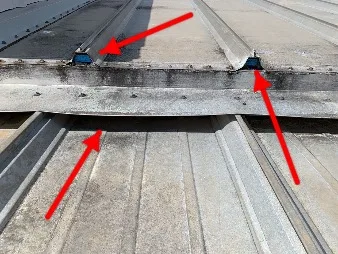
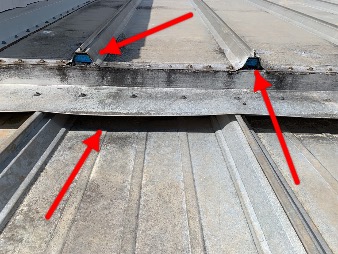
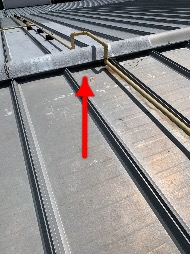
\p>The building owner called us after years of chasing leaks with tar and caulk. The metal roof had served them well, but age catches up. We found opened seams where the metal panels had pulled apart over time, backed-out fasteners that no longer held tight, and several areas where previous tar patches had dried out and cracked. The metal paint was oxidized but the panels themselves were still structurally sound — this was a perfect candidate for restoration rather than full replacement.
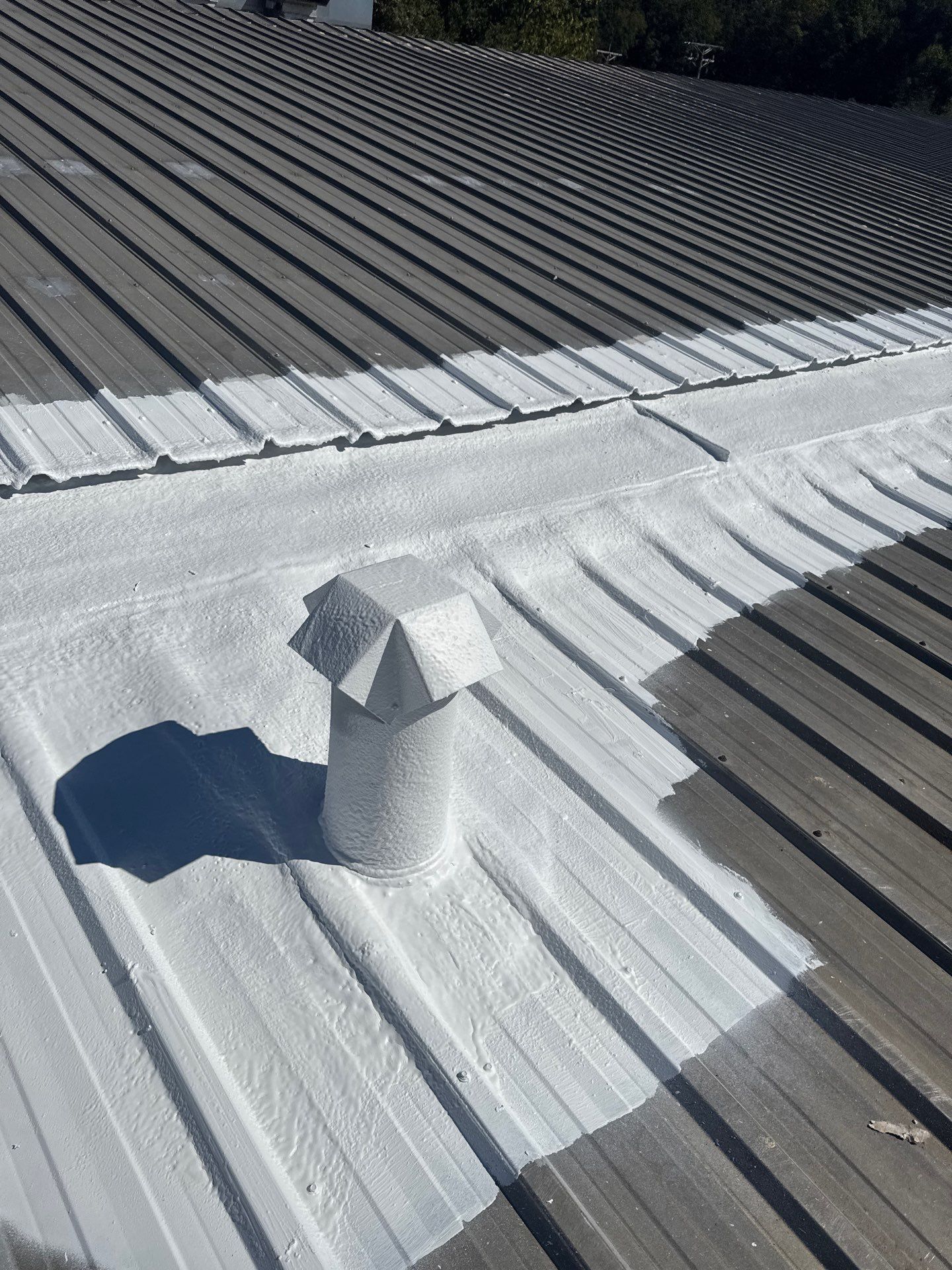
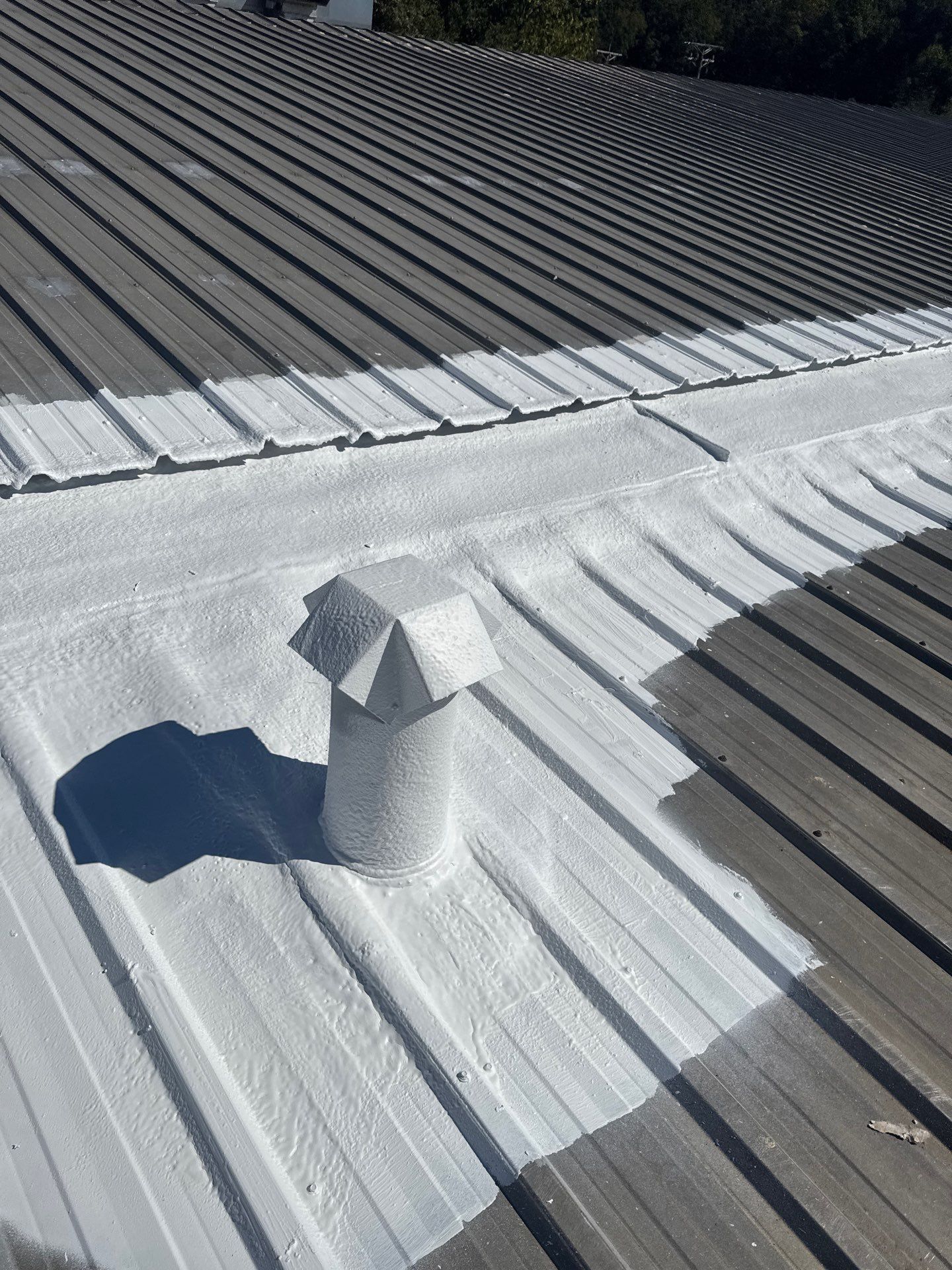
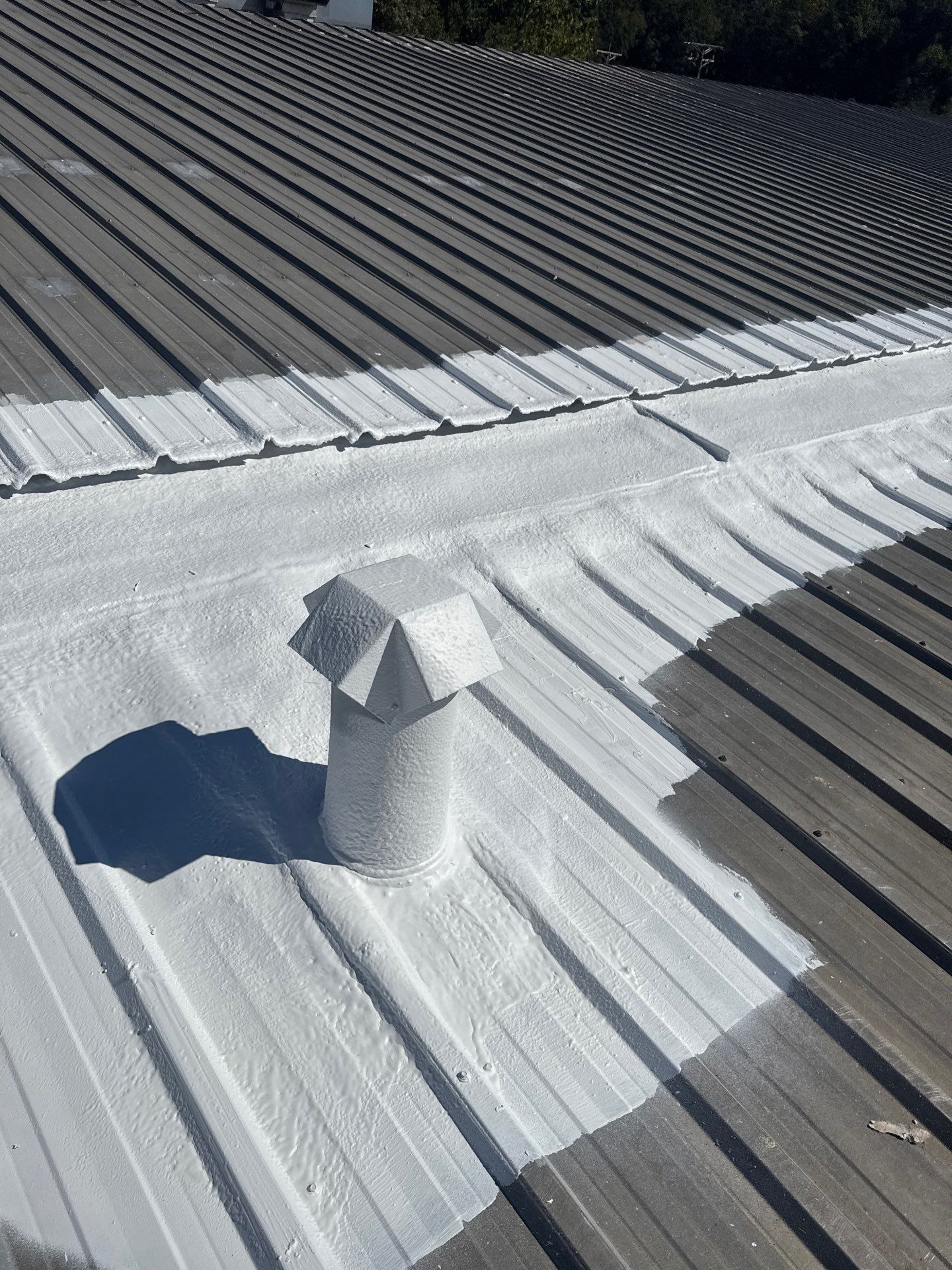
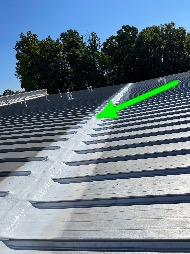
We focused on the trim details, particularly the ridge cap. Ridge caps take a beating from weather, and they move with temperature swings. The key was creating a seal that could handle that movement without cracking. We addressed every penetration, every seam, and every transition where two different roof planes met.
Why Ridge Cap Details Matter for Commercial Roofing Lexington NC Buildings
Most building owners never think about their ridge caps until water starts dripping inside. The ridge sits at the peak of the roof where two slopes meet, and it’s constantly expanding and contracting. Metal heats up in July, cools down at night, freezes in January. That constant movement is hard on static sealants.
We used spray foam on pieces of trim like the ridge cap, then applied fabric on top to allow it to move. The foam creates an air and water seal. The fabric reinforcement layer bonds into the coating system and flexes with the metal as it expands and contracts. This approach gives you a watertight seal that doesn’t crack when the metal moves — which is exactly what failed on the old tar patches.
This same principle applies to any roof penetration, pipe boot, or transition detail. The materials have to move together or they’ll separate. That’s why tar fails on metal roofs: the metal expands and contracts, the tar stays rigid, cracks form, water gets underneath, and rust starts. Once water is under a tar patch, it’s worse than if you’d done nothing at all.
The Restoration Process We Used
We started with a thorough cleaning to remove dirt, oxidation, and old sealant residue. Clean metal is critical — coatings and foam won’t bond to dirt or rust.
Next we addressed all the mechanical issues. We replaced backed-out fasteners, tightened down loose panels, and cleaned out seams. You can’t just coat over problems and expect them to go away. The roof has to be mechanically sound first.
Then we applied spray foam to all the critical details: ridge caps, transitions, penetrations, and seams. Spray foam fills gaps, creates an insulating layer, and provides the foundation for the coating system. We embedded fabric into the coating over these high-movement areas. The fabric reinforces the coating so it can handle the stress of thermal movement.
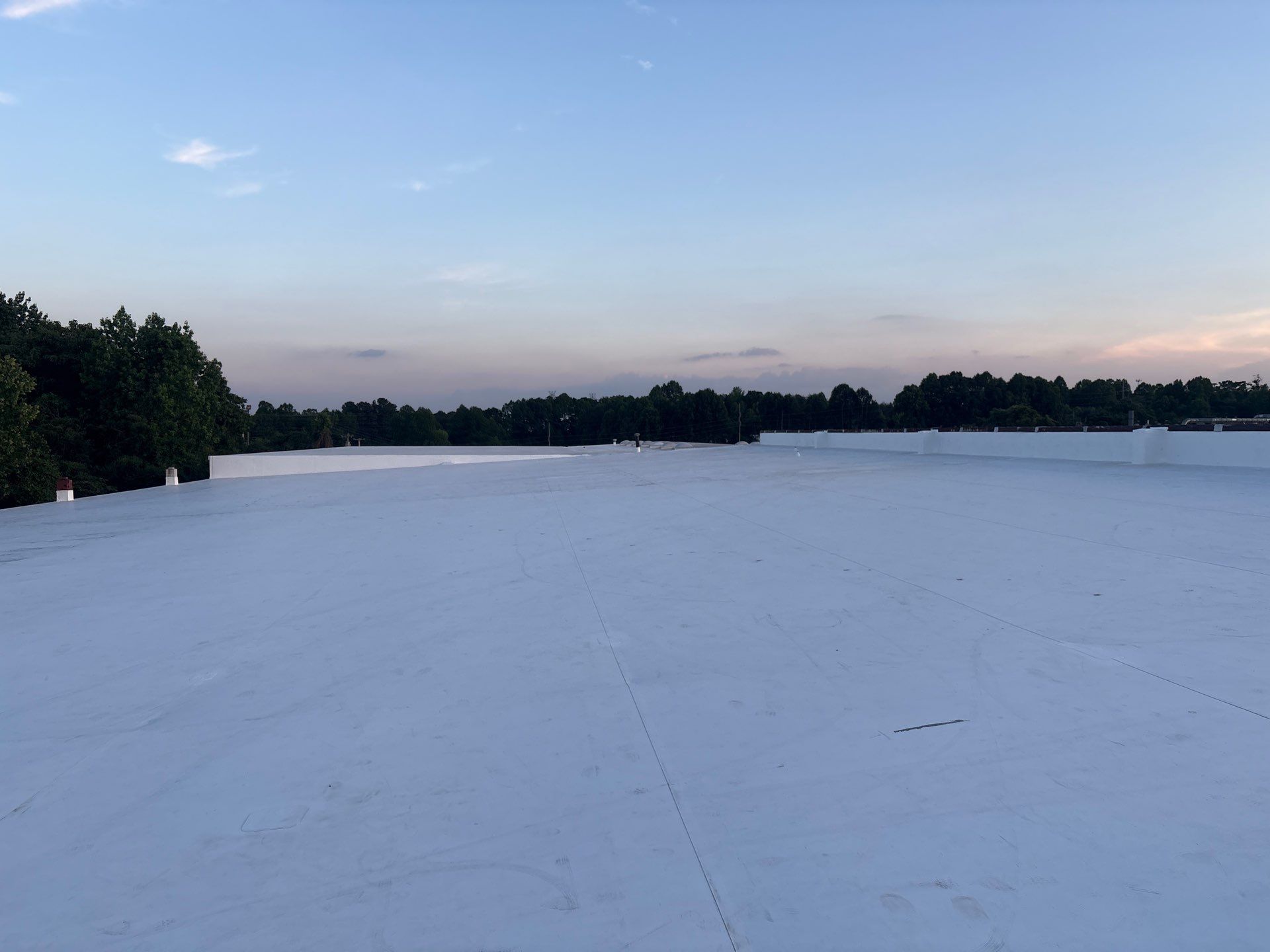
Finally, we applied the coating system over the entire roof. This creates a seamless, monolithic membrane that reflects UV rays, sheds water, and protects the metal underneath. The coating is more cost-effective than full replacement and extends the life of the roof for years.
Our Commercial Roofing services include both emergency repairs and planned restoration work. We’d rather catch problems early during a routine inspection than get called out for an emergency leak over your production floor.
Signs Your Lexington Commercial Roof Needs Attention
Here’s what to watch for:
- Water stains on ceiling tiles or insulation — By the time you see this, the roof has been leaking for a while. Don’t wait.
- Visible rust streaks on metal panels — Surface rust can be addressed. Holes rusted through the metal cannot.
- Backed-out fastener heads — Walk the roof and look for screws that are sitting high. They’re not sealing anymore.
- Cracked or dried-out tar patches — Tar is a temporary fix. If it’s cracking, it’s failing.
- Opened seams between panels — You might see daylight through the gap, or just notice the seam isn’t tight anymore.
- Puddling water that doesn’t drain within 48 hours — Standing water accelerates roof degradation.
- Increased energy bills — A failing roof loses its insulating value and reflectivity.
Schedule annual roof inspections at minimum. If your building has heavy tree coverage or collects debris, inspect twice a year. Catching small problems early saves you from emergency repairs during production hours.
Why Sunny Sky Roofing LLC for Commercial Roofing Lexington NC
We’re based in the Triad and we know commercial buildings in Davidson County. Joe Yutzy started Sunny Sky Roofing LLC to do restoration work the right way — not the fastest way or the cheapest way, but the way that actually lasts.
We don’t push full tear-offs when restoration makes sense. We also don’t suggest patching and praying when a building really needs a new roof. We’ll tell you what we’d do if it was our building, and we’ll explain why.
Our work is backed by manufacturer certifications and we follow NRCA guidelines for commercial roof restoration. We’ve worked on manufacturing facilities, warehouses, office buildings, and retail centers throughout the Piedmont. We understand that downtime costs you money, so we plan our work to minimize disruption.
You can see examples of our completed projects and read what other commercial property owners have said about working with us. We serve commercial roofing in Lexington and throughout the greater Triad area.
How long does a commercial roof coating system last in Lexington?
A properly installed roof coating system typically lasts 10 to 20 years, depending on the substrate condition, coating type, and maintenance. We recommend annual inspections to catch minor issues before they become major problems. Buildings with HVAC equipment, heavy foot traffic, or debris accumulation may need more frequent inspections. The key is maintaining the coating — a small repair costs far less than letting damage spread.
Can you restore a metal roof that’s already rusting?
It depends on how much rust and where it is. Surface oxidation and light rust can be cleaned, treated, and coated. Panels that are rusted through or structurally compromised need to be replaced first. We’ll inspect your roof and tell you honestly whether restoration makes sense or whether you’re better off with a replacement. Not every roof is a good candidate for coating, and we won’t sell you a system that won’t last.
What’s the difference between roof coating and roof replacement?
Roof coating is a restoration process. We repair mechanical issues, clean the existing roof, and apply a seamless coating system over it. Replacement means tearing off the old roof and installing a completely new one. Coating is more cost-effective than replacement when the roof structure and decking are sound. It also avoids the disruption of a full tear-off and keeps the old roofing out of the landfill. Replacement is necessary when the decking is damaged, insulation is saturated, or the roof structure has failed.
How often should I have my commercial roof inspected in Lexington?
Annual inspections at minimum for all commercial roofs. We recommend bi-annual inspections if your building has heavy tree coverage, HVAC equipment, or other rooftop installations that create debris or wear points. You should also inspect after major storms. Most roof damage starts small — a loose fastener, a separated seam, a cracked boot. Catching these during an inspection costs almost nothing to fix. Waiting until water is dripping on your equipment or inventory costs thousands.
Let’s Talk About Your Lexington Commercial Roof
If your metal roof is showing its age, or if you’re tired of patching the same leaks every year, we can help. We’ll inspect your roof, explain what we find, and give you options that make sense for your building and your budget.
Sunny Sky Roofing LLC serves commercial properties throughout Lexington and Davidson County. Call us at 336-523-2103 or contact us to schedule an inspection. We’ll show you what’s happening on your roof and what it’ll take to fix it right.