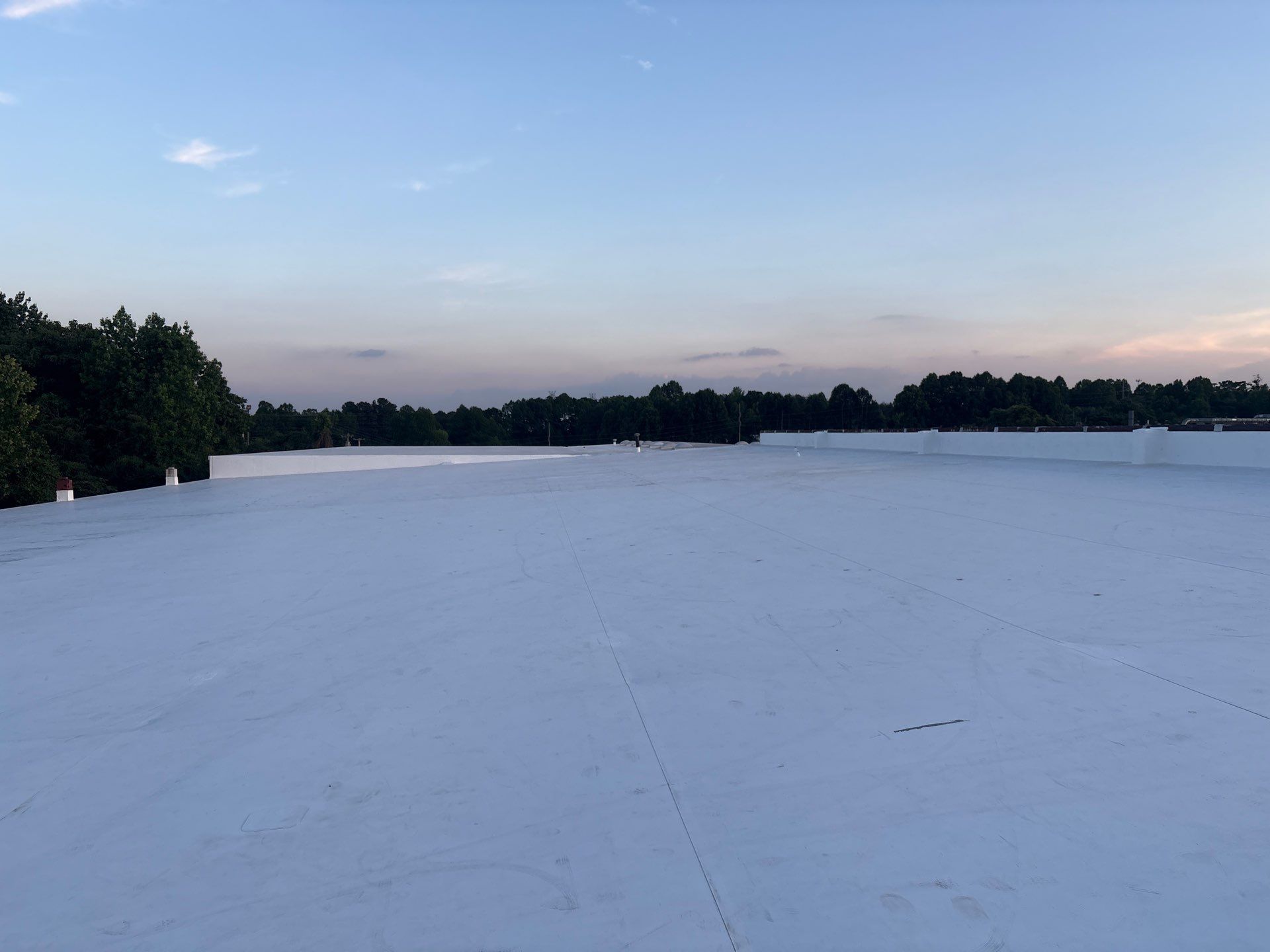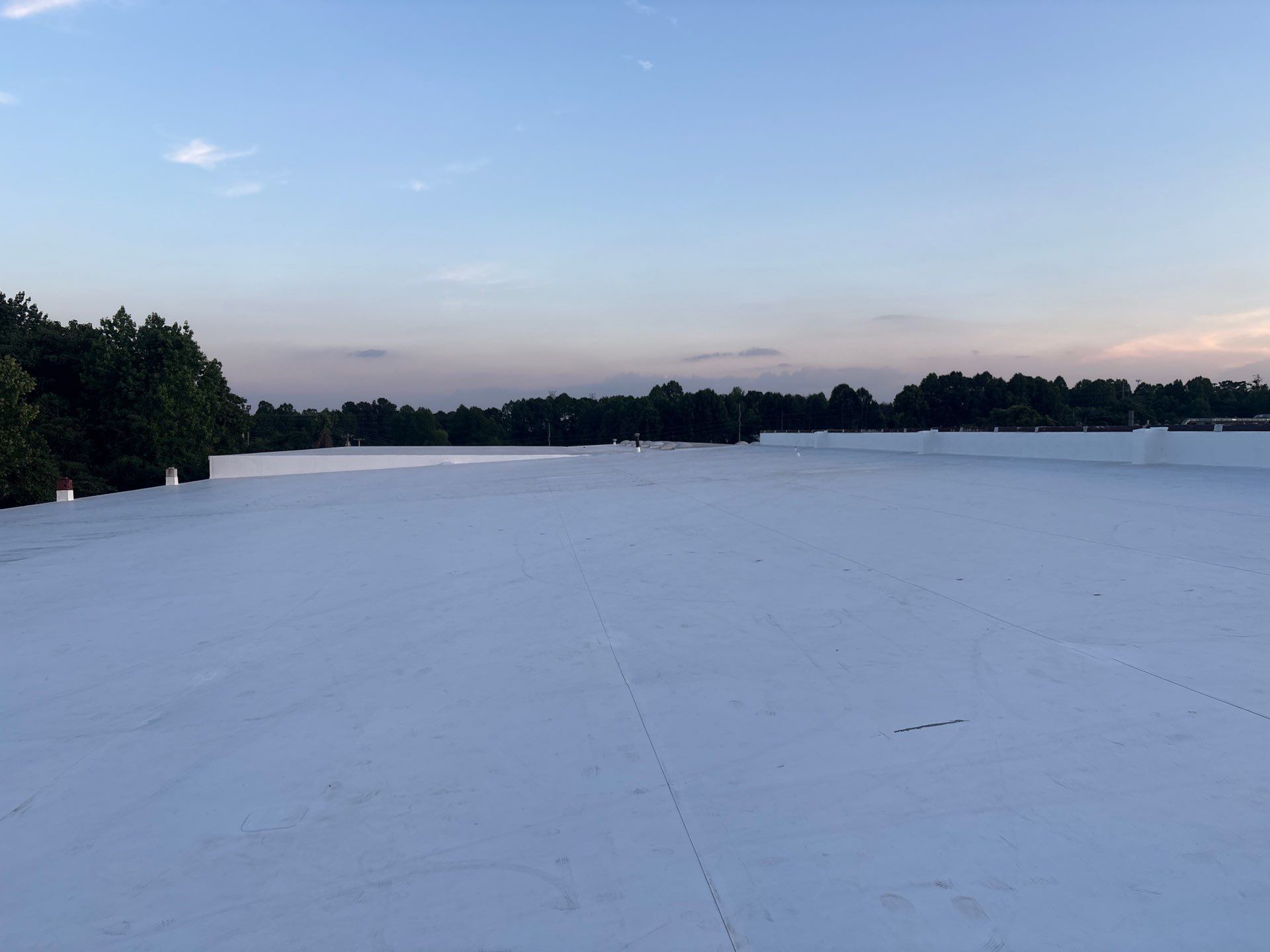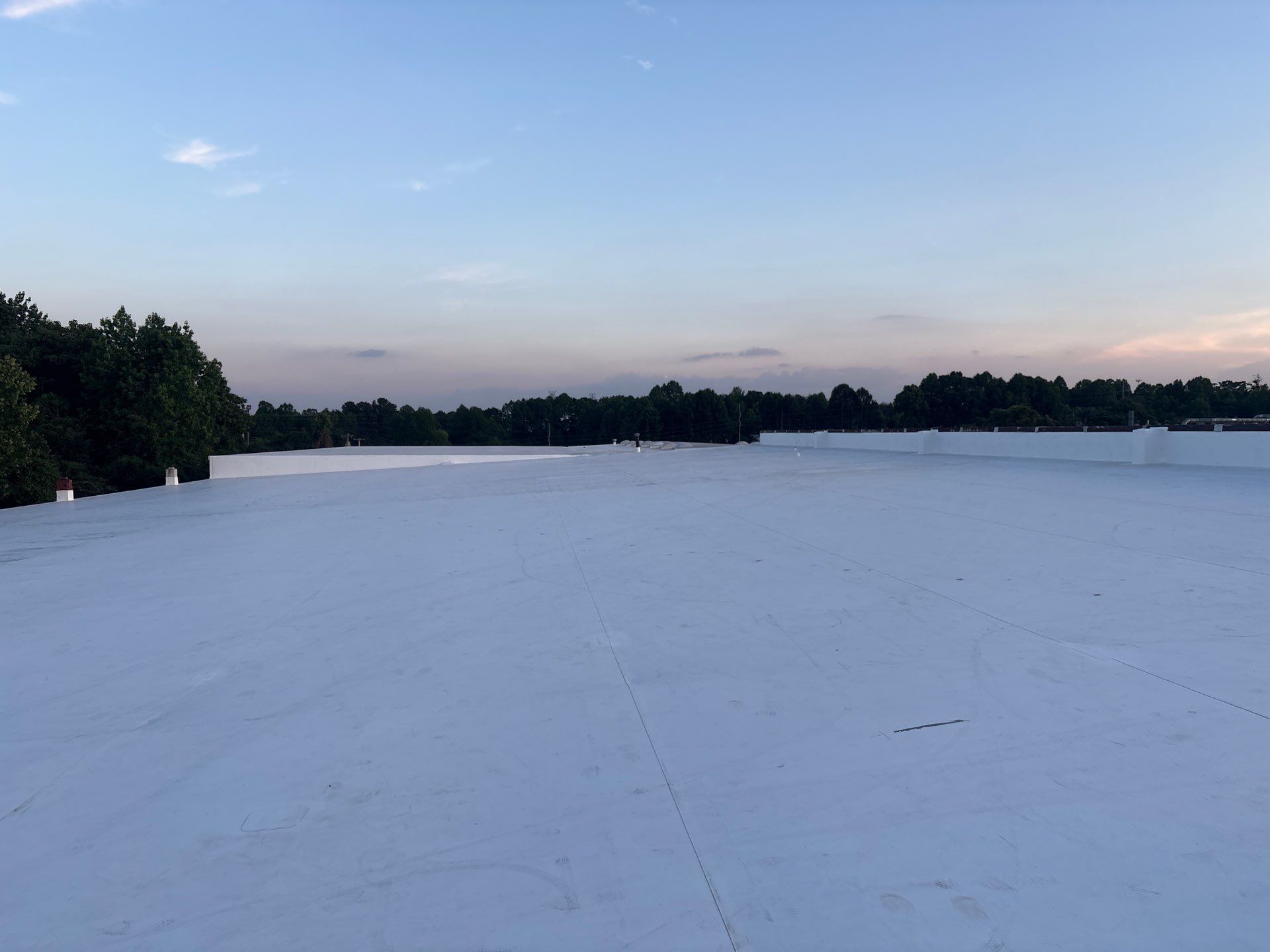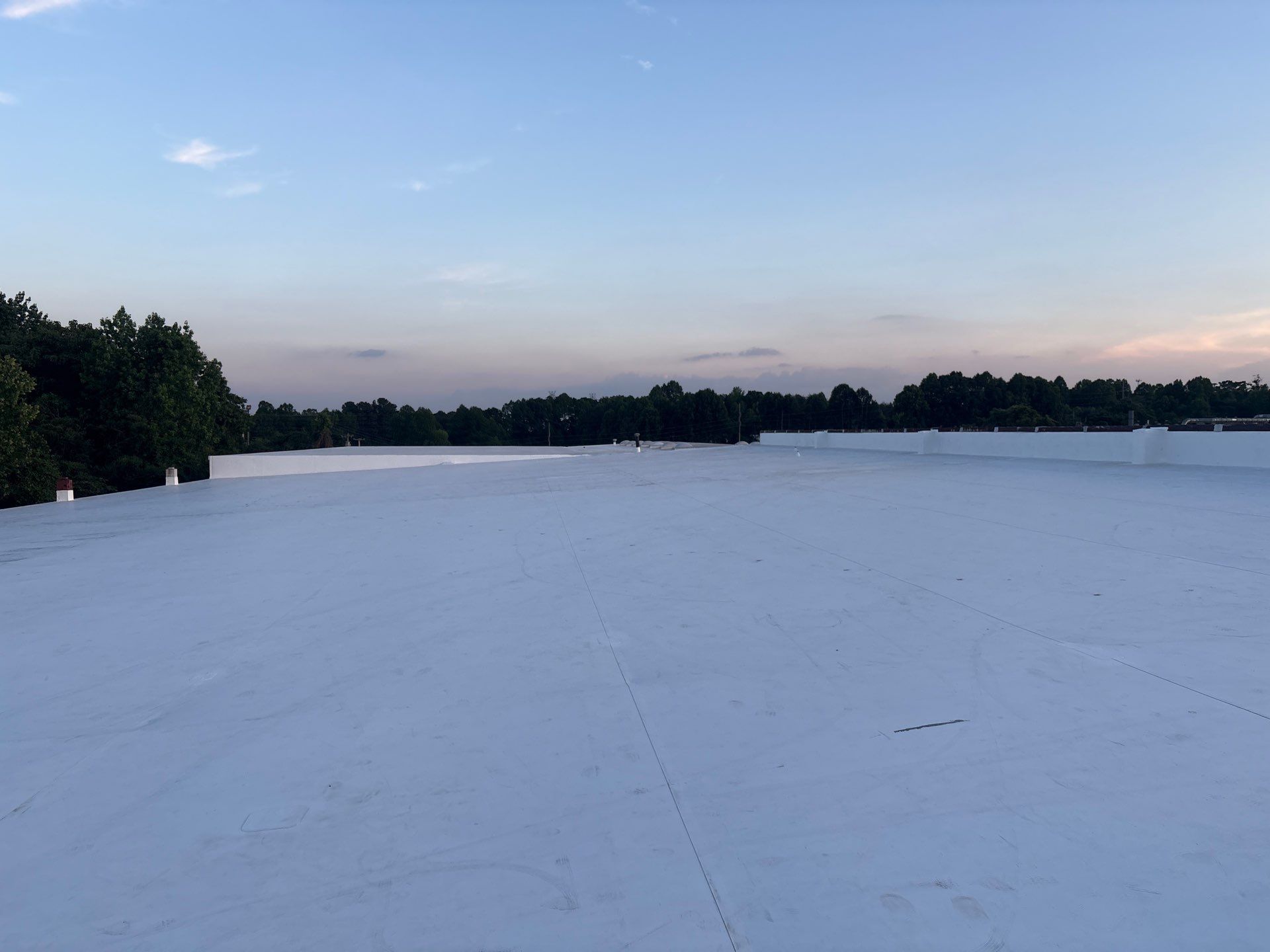

High Point’s furniture manufacturing legacy means industrial buildings with metal roofs everywhere — and most of those roofs have trim details that move with temperature changes. If you’re managing commercial property in High Point, you know those seasonal swings cause problems where metal meets metal. We handle commercial roofing High Point NC projects every week, and one technique we use regularly is spray foam with fabric reinforcement on metal trim like ridge caps. It sounds simple, but done right, it solves problems that tar patches and caulk can’t touch.
What We Found on This Greensboro Metal Roof
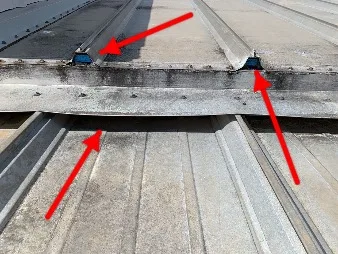
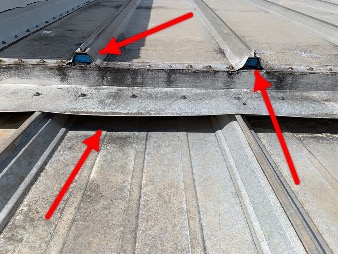
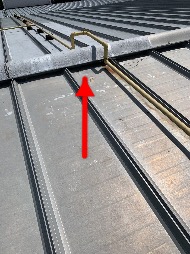
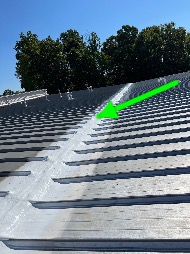
This building had ridge cap trim that was moving. Metal roofs expand and contract with temperature — summer heat makes metal grow, winter cold makes it shrink. That movement is constant, and it concentrates at seams and trim pieces.
The ridge cap had gaps where the pieces met. Previous repairs used tar and caulk. Both were failing. Tar dries out and cracks, especially when metal moves underneath it. Water gets under the cracked tar, sits there, and rust accelerates. Caulk doesn’t flex enough for the amount of movement metal roofs experience through a Carolina summer and winter cycle.
We needed a solution that seals completely but still allows for thermal movement. That’s where spray foam and fabric come in.
Why Spray Foam and Fabric Work for Commercial Roofing High Point NC Properties
Spray foam fills gaps and creates a waterproof seal. It expands into every void, bonds to the metal, and cures into a solid barrier. But foam alone can crack if the metal moves too much or if UV hits it directly.
That’s why we embed fabric into the foam. The fabric acts like rebar in concrete — it reinforces the foam and lets the whole assembly flex without breaking the seal. When the metal expands in July heat, the fabric-reinforced foam moves with it. When it contracts in January, same thing. No cracks, no leaks.
We use this technique on ridge caps, wall transitions, and anywhere two metal pieces meet with movement. It’s more reliable than tar, more durable than caulk, and it handles thermal cycling better than rigid sealants.
For business owners in High Point with metal buildings, this matters because your roof trim takes more abuse than you realize. Every sunny day followed by a cold night stresses those connections. Most leaks we find start at trim, not in the field of the roof.
The Process: How We Apply Spray Foam and Fabric to Metal Trim
First, we clean the metal. Any rust, old tar, or loose paint comes off. Foam won’t bond to contaminated surfaces, so we prep until we’re down to solid substrate.
Next, we apply the first layer of spray foam. We control the thickness — too thin and it won’t seal, too thick and it wastes material and creates problems with curing. The foam expands as it cures, filling gaps and bonding to the metal.
While the foam is still tacky, we embed the fabric. We press it into the foam, making sure it’s fully seated with no air pockets. The fabric needs to be in contact with the foam on all sides to do its job.
Then we apply a top coat of foam over the fabric. This encapsulates the fabric completely and creates a smooth, sealed surface. The fabric is now sandwiched between two layers of foam, reinforcing the whole assembly.
The foam cures quickly — usually within an hour, depending on temperature and humidity. Once cured, it’s waterproof, flexible, and UV-resistant if we’re using the right product for exposed applications.
This isn’t something you slap on in five minutes. It requires the right equipment, the right foam formulation, and experience knowing how thick to go and how to embed the fabric properly. We’ve done it on dozens of buildings across the Triad.
Our Commercial Roofing services include this type of specialized trim repair as part of comprehensive roof restoration work.
Signs You Need This Service on Your High Point Commercial Roof
Watch for these indicators that your metal roof trim needs attention:
- Visible gaps at ridge caps or wall transitions — you can see daylight or feel air movement
- Old tar patches that are cracking or peeling — tar fails predictably on metal roofs
- Water stains on interior walls near roof edges — trim leaks show up at perimeters first
- Rust streaks running down from trim pieces — means water is getting in and sitting
- Caulk that’s pulled away from the metal — caulk can’t handle the movement
- Multiple layers of different patch materials — when repairs are stacked on top of each other, it’s time for a real fix
- Backed-out or missing fasteners on trim — the metal is moving more than it should
If you can see daylight from inside where trim meets the roof, understand this: by the time you can see daylight, the roof has been leaking for years. You’re seeing the consequence of neglect, not an early warning sign.
We recommend annual roof inspections at minimum for commercial properties. If your building has HVAC units, heavy tree coverage, or a history of patch repairs, bi-annual inspections make more sense. Catching trim problems early means a focused repair instead of rot in the decking.
Why Choose Sunny Sky Roofing LLC for Commercial Roofing High Point NC Projects
We’re not the only roofing company serving High Point, but we do this work differently. Joe Yutzy built this company on the idea that commercial roofs need specialized knowledge, not just a crew with ladders.
We understand metal roof movement. We know which foam products work for exposed trim and which ones don’t. We’ve seen every type of failed patch — tar, caulk, mastic, butyl tape — and we know why they failed and what works instead.
We document everything. You get photos of conditions before we start, during the work, and after completion. If you’re managing property for someone else, you can show exactly what was done and why it mattered.
We don’t oversell. If your trim needs fabric-reinforced foam, we’ll explain why and show you the problem areas. If a simpler repair will hold, we’ll tell you that too. Our goal is solving the problem correctly, not maximizing the invoice.
The National Roofing Contractors Association (NRCA) publishes detailed guidelines for metal roof maintenance and repair. We follow those standards because they’re based on decades of field experience across every climate. You can review their metal roofing resources at https://www.nrca.net/ if you want to understand best practices.
We’ve worked on furniture factories, warehouses, distribution centers, and office buildings across the Triad. High Point’s industrial building stock needs contractors who understand older metal roofs and how to extend their service life without unnecessary tear-offs.
Restoration with techniques like spray foam and fabric reinforcement is more cost-effective than full replacement when the roof structure is still sound. We’re not pushing you toward the most expensive option — we’re finding the smartest long-term solution for your building.
How long does spray foam and fabric last on metal roof trim?
When applied correctly, fabric-reinforced spray foam on metal trim lasts 10-15 years or more. The key is proper surface prep and using the right foam formulation for exposed conditions. We’ve seen applications we did a decade ago still performing without cracks or leaks. The fabric reinforcement is what extends the life — it prevents the foam from cracking as the metal moves through thermal cycles.
Can I just use caulk or tar on my ridge cap instead?
You can, but it won’t last. Caulk doesn’t flex enough for the amount of thermal movement metal roofs experience — it pulls away within a year or two. Tar is even worse on metal. It dries out, cracks, and actually traps water underneath, which accelerates rust. We see failed tar patches on almost every older metal roof we inspect. If you want a repair that holds, fabric-reinforced foam is the better approach.
How often should I have my commercial metal roof inspected in High Point?
Annual inspections at minimum. If your building has heavy tree coverage, multiple HVAC units, or a history of repairs, bi-annual inspections make more sense. Metal roofs don’t fail suddenly — they give you warning signs like rust, backed-out fasteners, and small leaks at trim. Catching those early means a targeted repair instead of major damage. Most commercial property owners skip inspections and pay for it later with interior damage and emergency repairs.
Do you only do this type of repair in Greensboro, or do you service High Point too?
We service High Point and the entire Triad region. This particular project was in Greensboro, but we use the same spray foam and fabric technique on metal roofs throughout High Point, Winston-Salem, and surrounding areas. If you’ve got a metal roof with trim problems, we’ll come look at it and give you a straight assessment of what it needs.
Get Expert Commercial Roofing High Point NC Service
If you’re managing a commercial building in High Point with a metal roof, don’t wait until small trim leaks turn into big problems. We’ll inspect your roof, show you exactly what’s happening, and explain your options without the sales pitch.
Techniques like fabric-reinforced spray foam on ridge caps and trim might sound specialized, but they’re proven solutions we use regularly. They work because they’re designed for how metal roofs actually behave — not how we wish they’d behave.
Call Sunny Sky Roofing LLC at 336-523-2103 to schedule an inspection of your High Point commercial property. We’ll document conditions, explain what needs attention, and give you a clear plan. You can also reach our team through our contact us page or learn more about our service area at our commercial roofing in High Point page.
Your roof is protecting everything inside your building. Make sure it’s getting the attention it needs.