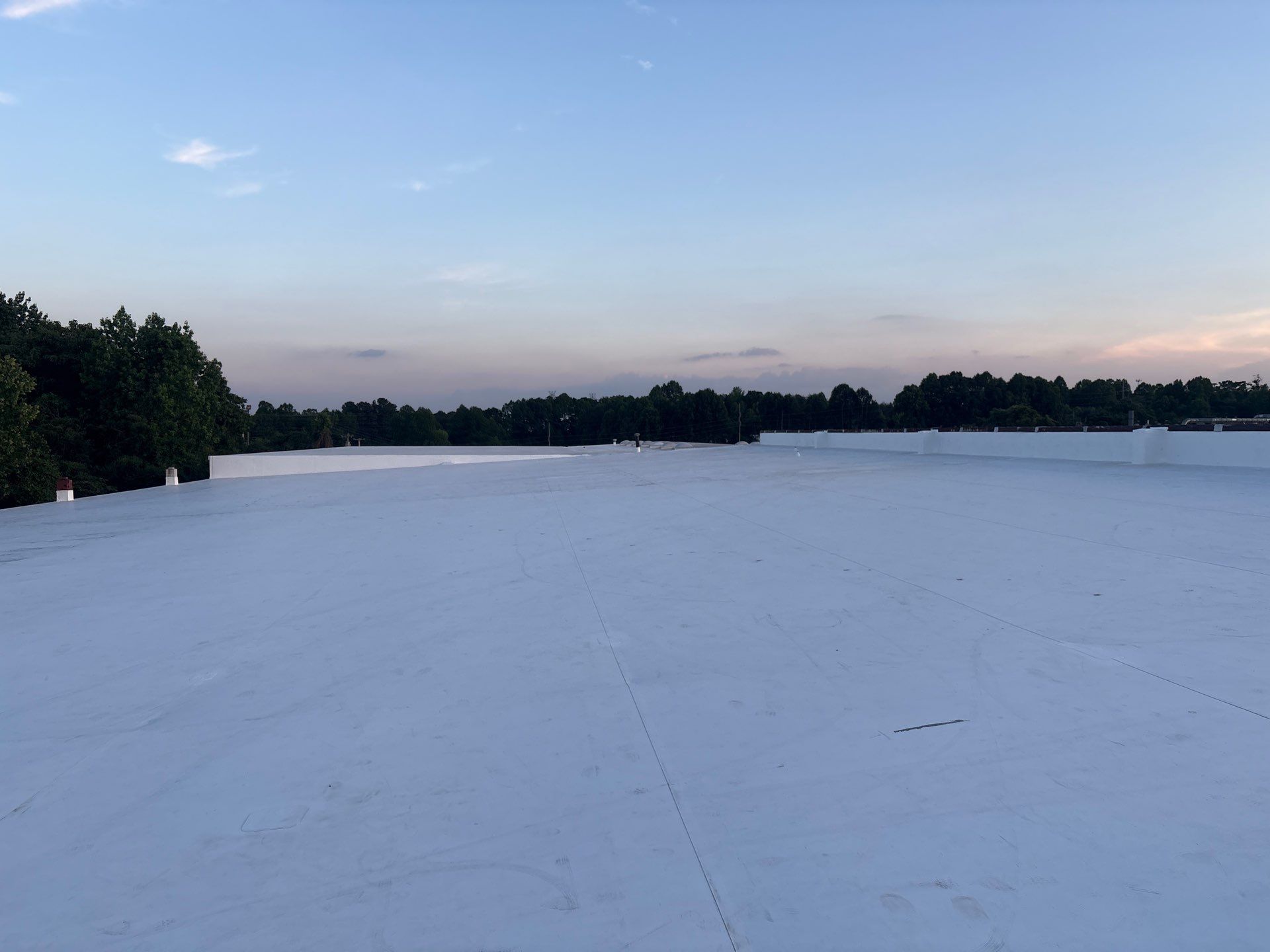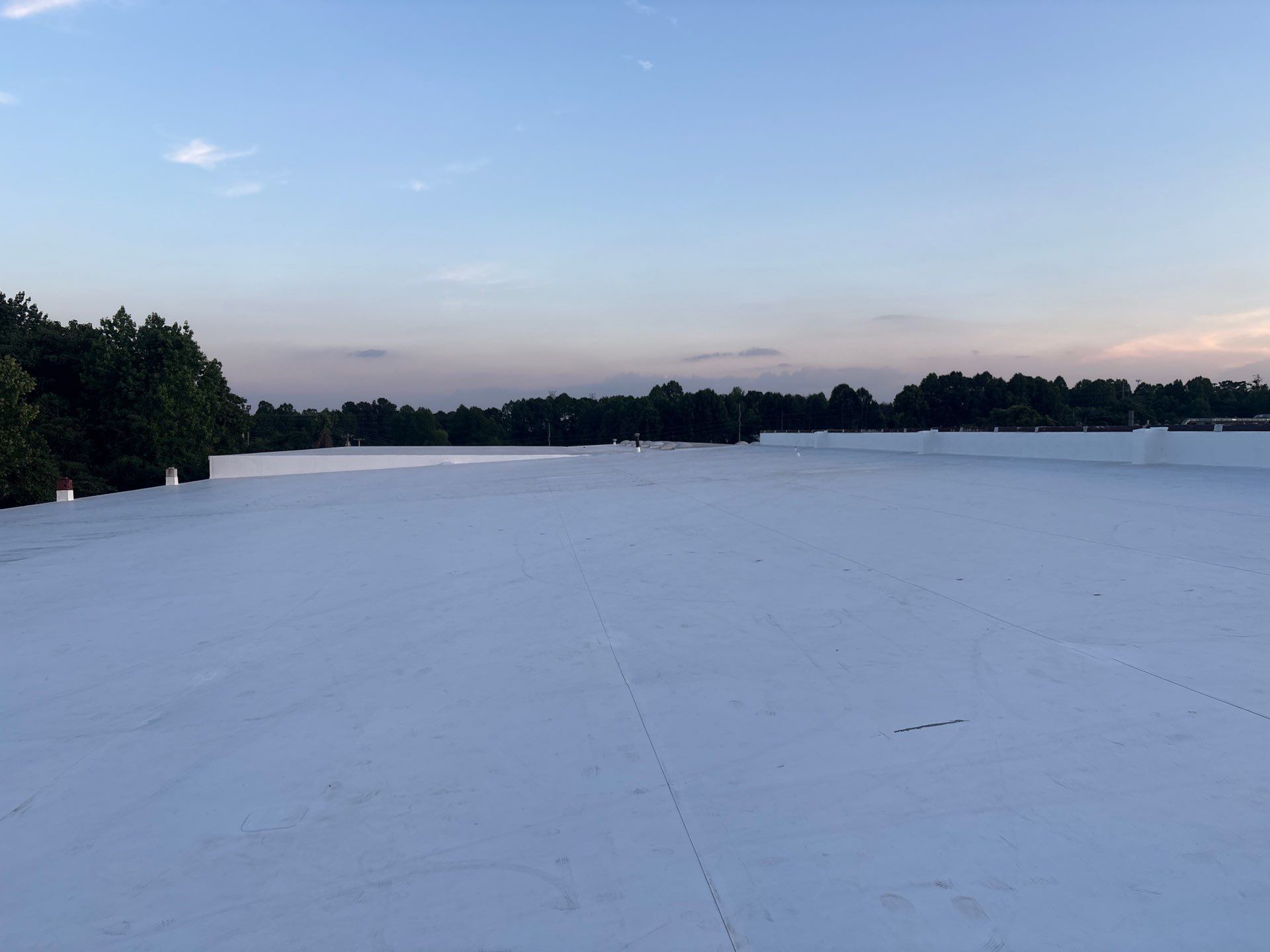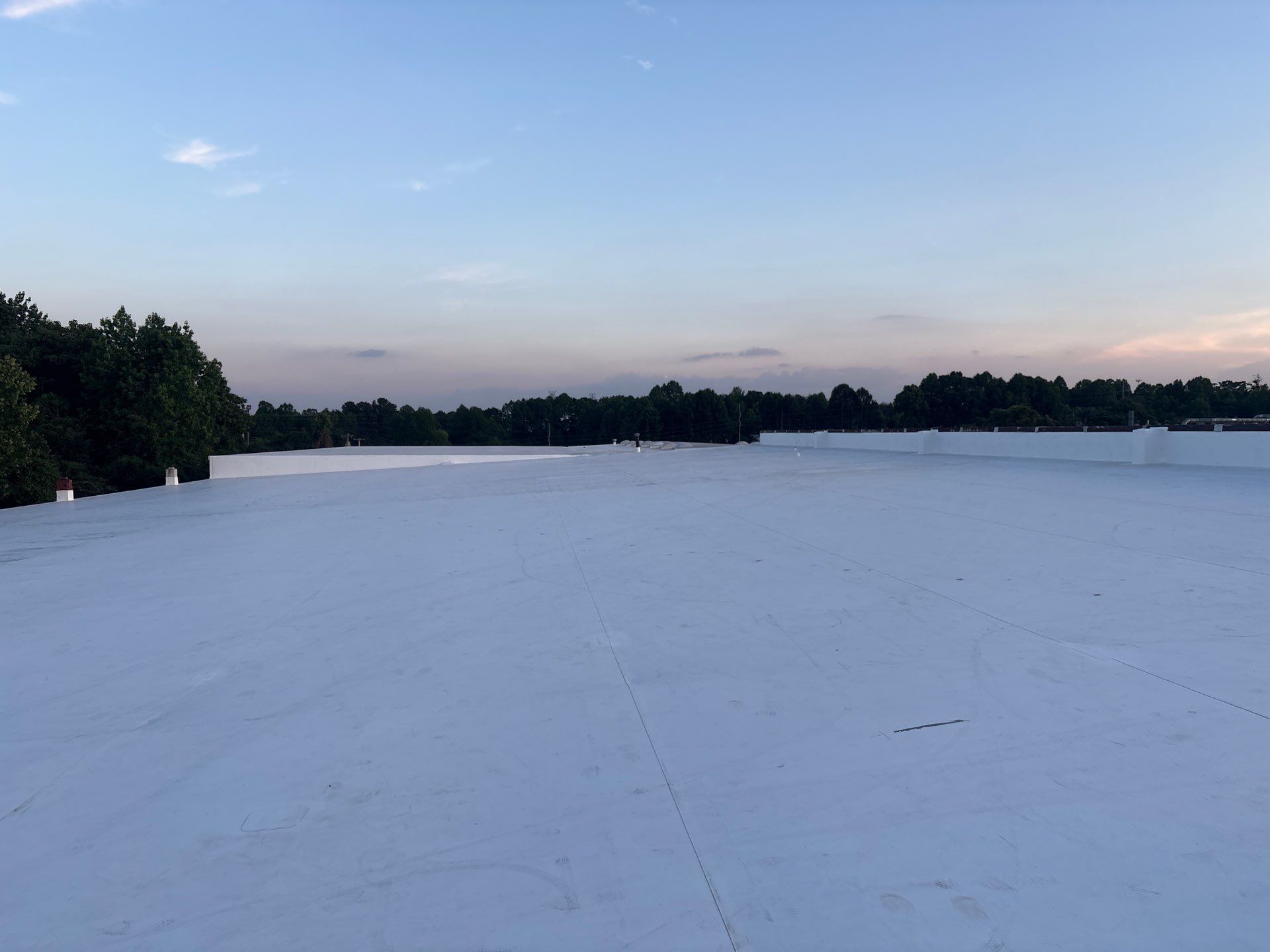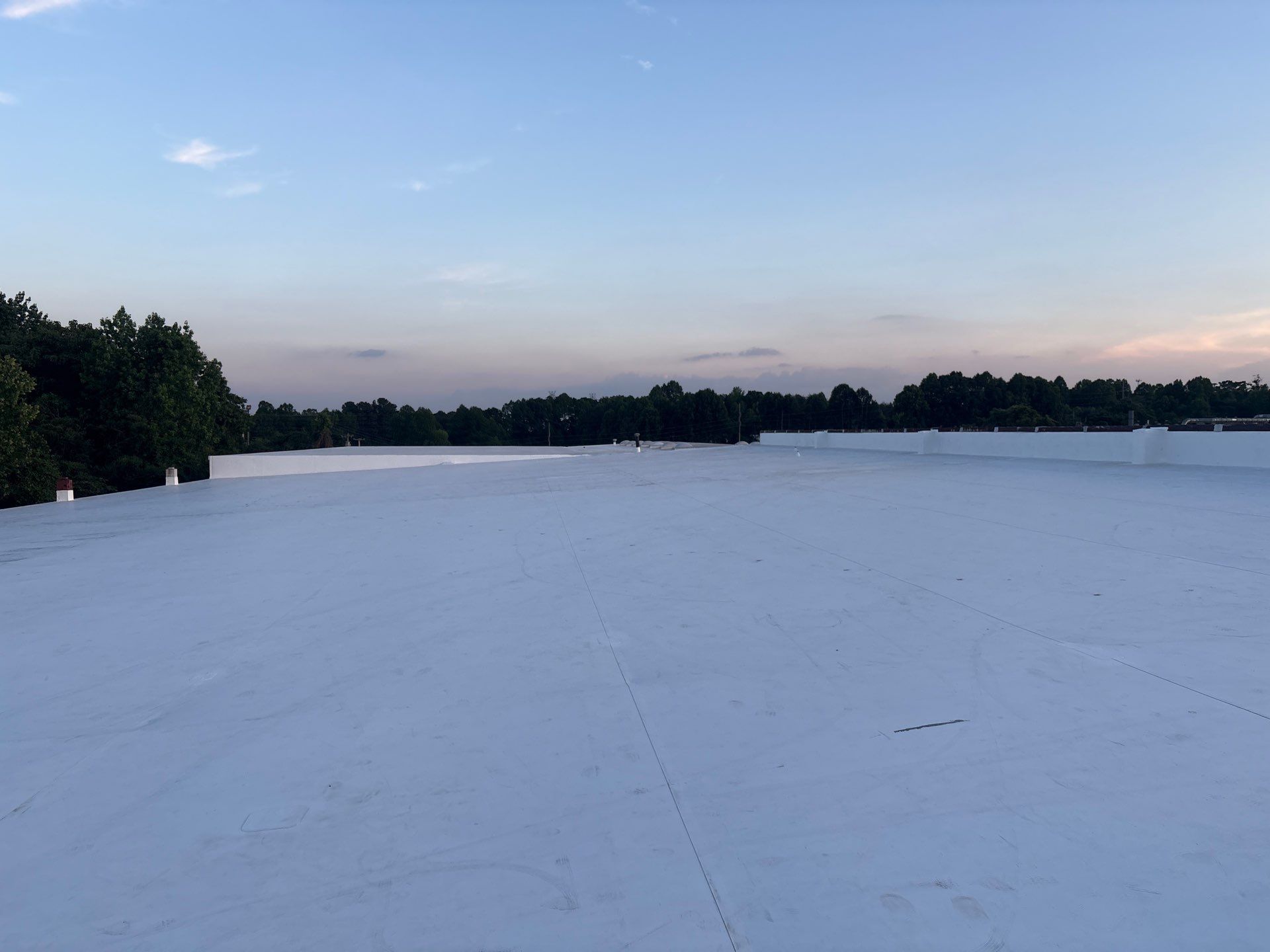

Lexington’s manufacturing and warehouse buildings weren’t designed with our summers in mind. Between the intense UV exposure and the humidity that settles in from the Yadkin River valley, flat commercial roofs take a beating here. We’ve installed TPO roofing in Lexington NC for businesses that need reliable protection without constant callbacks for leaks. TPO handles our climate better than most single-ply systems, and when it’s installed right the first time, you’ll forget you even have a roof.
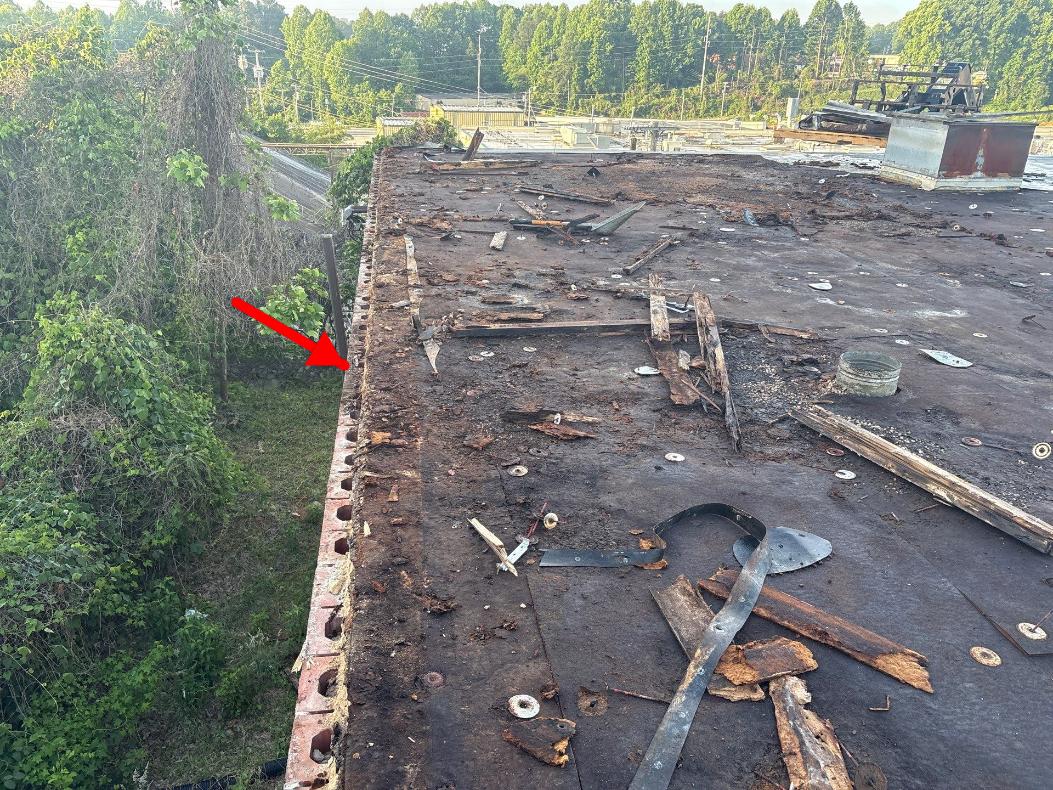
What We Found on This High Point Commercial Building
The existing roof had reached the end of its service life. The perimeter showed exposed, rotten wood decking along the edge details. This wasn’t a surprise — when water finds its way past the membrane and sits against wood substrate, rot spreads fast in our humid climate.
The roof perimeter is always the most vulnerable area on any commercial flat roof. That’s where the membrane terminates, where flashing meets parapet walls, and where water naturally wants to pool if drainage isn’t perfect. On this building, the wood damage told us the roof had been leaking longer than anyone realized.
The HVAC curbs also needed attention. Old curbs often develop gaps where the roofing membrane pulls away over time. We documented everything before we touched a single tool.
Why TPO Roofing Lexington NC Business Owners Choose for Durability
TPO makes sense for Lexington’s climate. The white reflective surface bounces back solar heat instead of absorbing it like darker membranes. Your building stays cooler. Your HVAC doesn’t work as hard. You save money on electricity every single month.
The material itself resists UV degradation better than older rubber membranes. We’ve gone back to inspect TPO roofs we installed years ago, and they’re still performing exactly as expected. The seams stay welded. The membrane stays flexible. No cracking, no brittleness.
TPO also handles ponding water better than modified bitumen or built-up systems. Not that you want standing water on any roof, but in the real world, perfect drainage doesn’t always exist. TPO won’t degrade if water sits for a day or two after a heavy storm.
The National Roofing Contractors Association recognizes TPO as one of the fastest-growing commercial roofing systems in the country. There’s a reason for that growth.
The TPO Installation Process We Follow
We started by stripping the old roofing system down to the deck. No shortcuts. You can’t install a quality roof over damaged substrate.
The rotten wood along the perimeter came out and we replaced it with new decking. Every piece of compromised material had to go. Once the deck was solid, we could build a roof that would actually last.
For this project, we installed a fully adhered TPO system around the entire perimeter. Fully adhered means the membrane is glued directly to the substrate with specialized adhesive. This creates a bond that won’t lift in high winds. The perimeter is where wind forces are strongest, so that’s where we use the most secure attachment method.
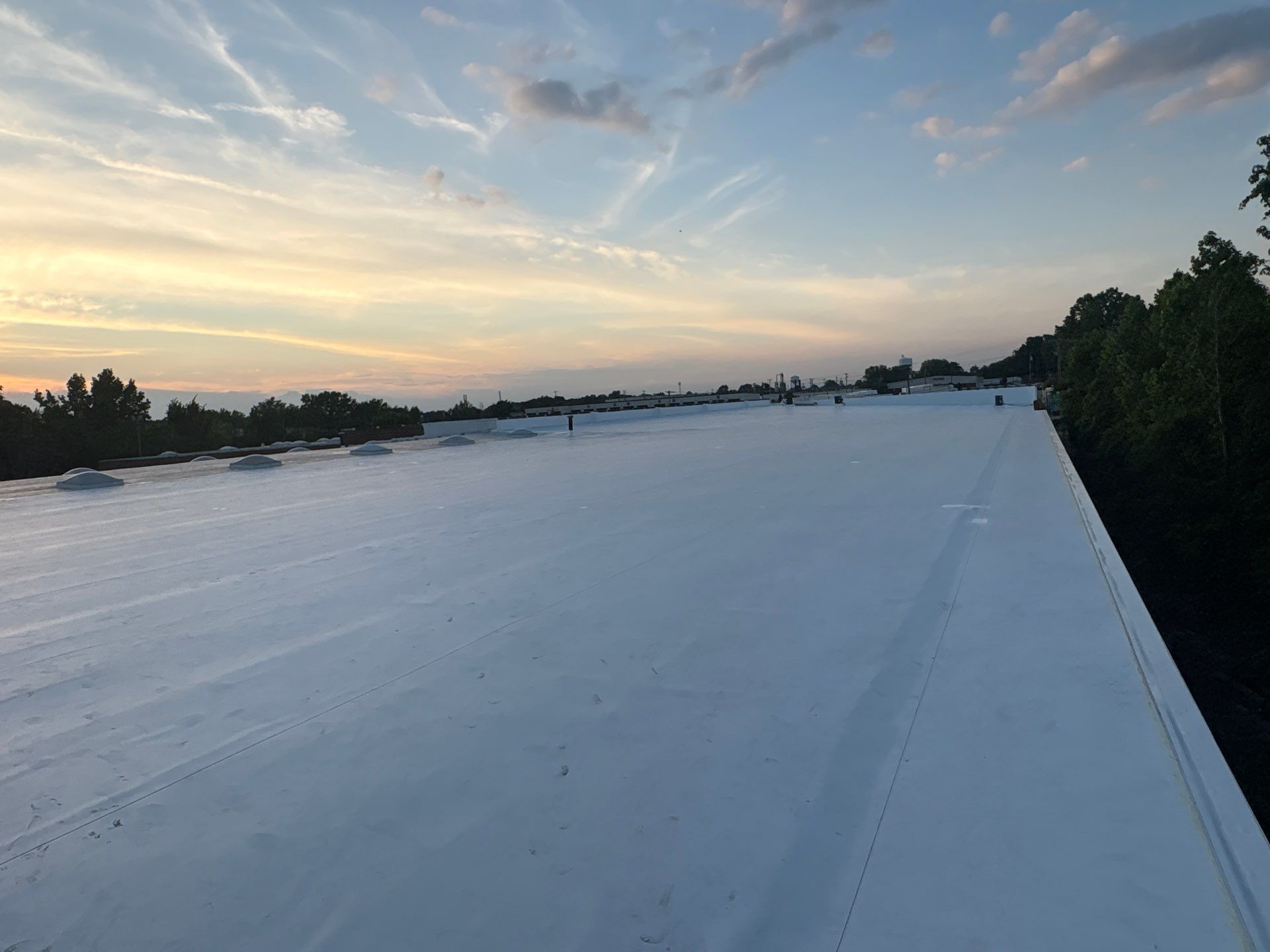
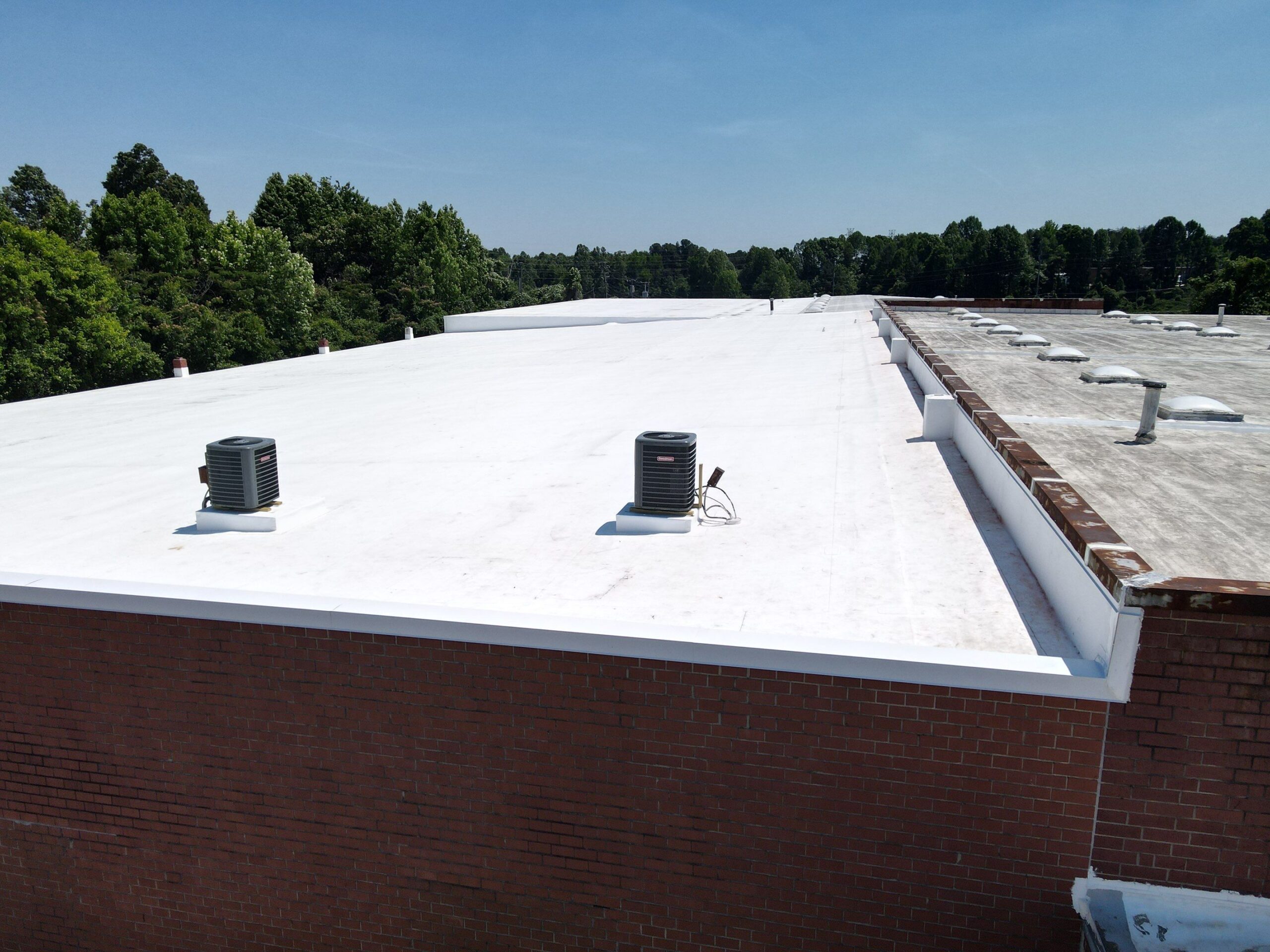
The field of the roof received new TPO membrane, heat-welded at every seam. Heat welding creates a molecular bond between the sheets of TPO. When done correctly, the seam is actually stronger than the membrane itself. No mechanical fasteners to back out. No tape to peel. Just a permanent, watertight bond.
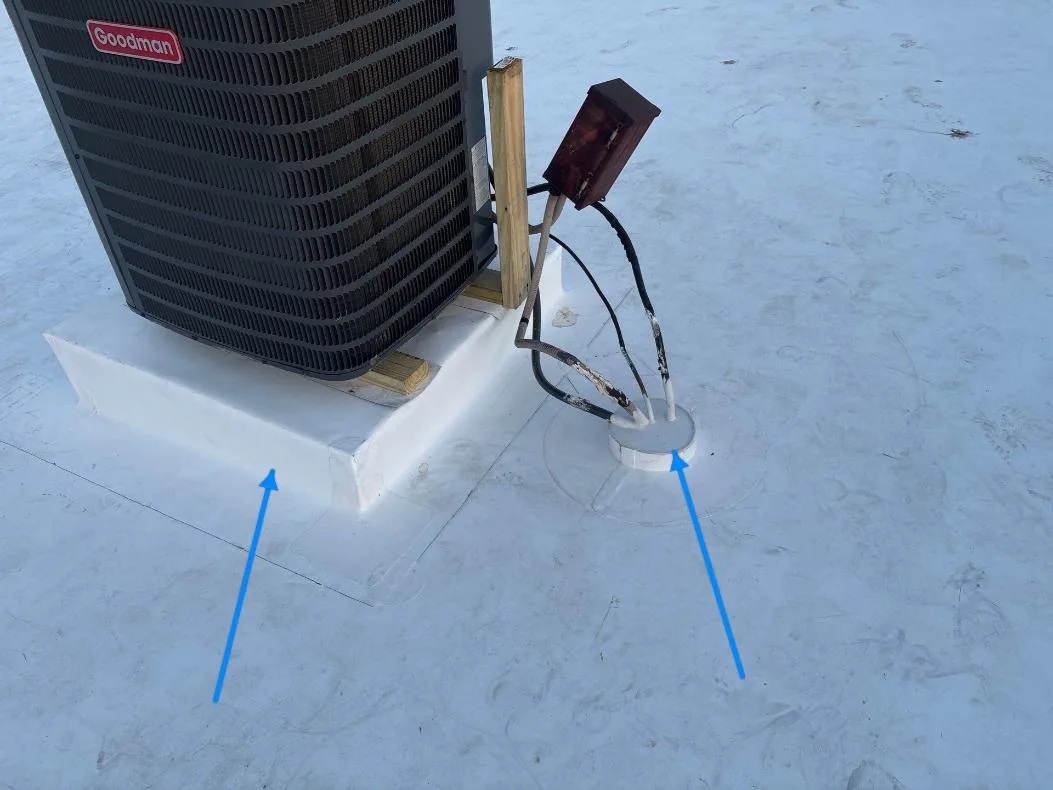
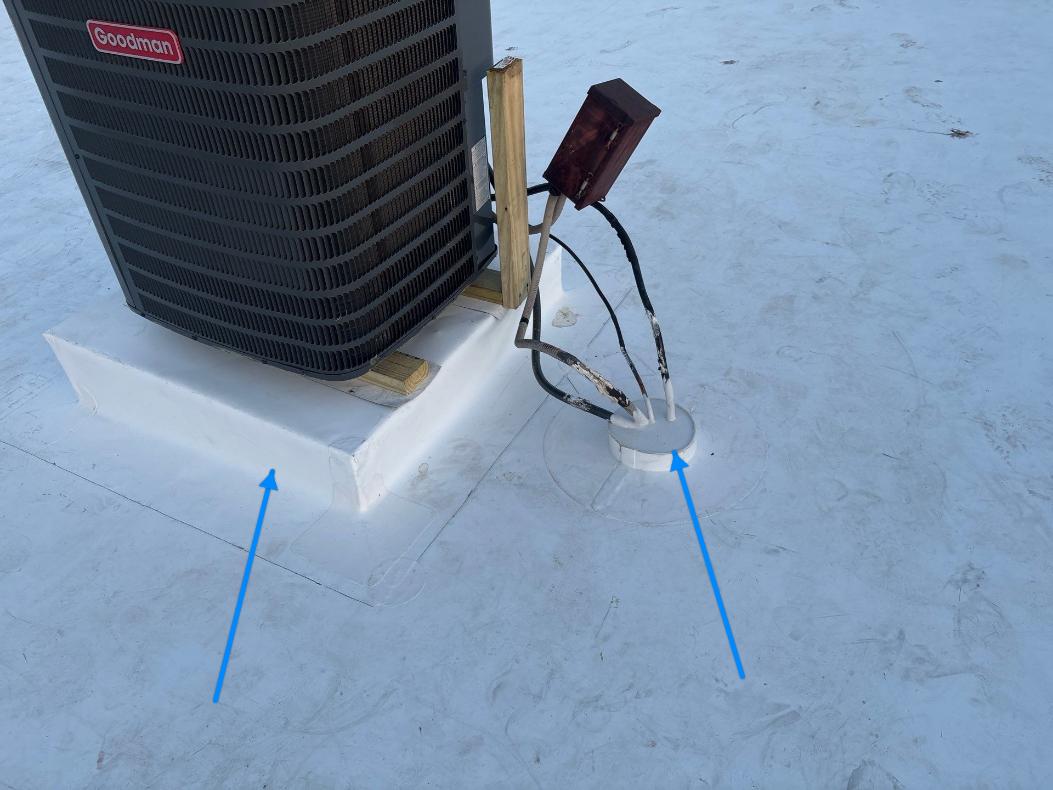
We built new HVAC curbs with proper flashing and counterflashing details. The curb has to shed water away from the penetration, and the membrane has to tie into it without creating stress points. These details matter more than most people realize.
Material staging happened before we tore off a single shingle. Everything was on-site, inspected, and ready. We don’t start a job until we can finish it without delays.
Our TPO Roofing services include a thorough inspection of your existing roof structure before we ever give you a quote. We need to know what’s underneath before we can tell you what it’ll take to fix it right.
Signs Your Lexington Building Needs TPO Roofing
Here’s what to watch for:
- Water stains on interior ceilings or walls, especially after heavy rain
- Visible ponding water that stays on the roof more than 48 hours after a storm
- Cracking, splitting, or peeling membrane on your current roof
- Seam separation where you can see gaps between membrane sheets
- Soft spots when you walk the roof — a sign of moisture trapped in the insulation
- Rusted or backed-out fasteners on mechanically attached systems
- Your roof is over 20 years old and you’ve had multiple repair calls
- Energy bills climbing because your roof is absorbing heat instead of reflecting it
- Visible daylight through the roof deck when you’re inside the building — by the time you can see daylight from inside, the roof has been leaking for years
Don’t wait until you’re calling for emergency tarps during a thunderstorm. Annual roof inspections catch these problems while they’re still manageable. For buildings with heavy tree coverage or HVAC units that create debris, we recommend bi-annual inspections.
Why Sunny Sky Roofing LLC for Commercial Roofing in Lexington
We’re based close enough to respond fast when you need us, and we’ve worked on enough commercial buildings in Davidson County to understand what holds up here and what doesn’t.
Joe Yutzy runs this company with a simple philosophy: do the work right, use quality materials, and stand behind what you install. We don’t have a call center. You’ll talk to people who actually know roofing.
Our crew doesn’t learn on your building. They’ve installed miles of TPO membrane on warehouses, manufacturing facilities, and commercial buildings throughout the Piedmont. They know the details that separate a roof that lasts from one that leaks in two years.
We use materials from manufacturers with proven track records. The TPO we install comes with warranties that mean something because the manufacturers have been around long enough to honor them.
When we finish a job, we walk the roof with you. We show you what we did and why. You’ll understand what you paid for. If you have questions six months later, you call the same number and talk to the same people.
We provide commercial roofing in Lexington and throughout the surrounding area. Distance matters when your roof is leaking and you need someone there today, not next week.
Frequently Asked Questions About TPO Roofing
How long does a TPO roof last in North Carolina’s climate?
A properly installed TPO roof typically lasts 20 to 30 years in our climate. The longevity depends on installation quality, regular maintenance, and the specific conditions of your building. TPO handles UV exposure and temperature extremes well, which is why it performs so reliably in the Piedmont. Annual inspections help catch minor issues before they become expensive problems and can extend the life of your roof.
Can you install TPO over my existing commercial roof?
Sometimes, but not always. It depends on the condition of your existing roof deck and how many layers are already up there. Building codes limit the number of roof layers you can have. If your deck has water damage or rot, we need to tear off and replace the damaged sections. We won’t install a new roof over compromised structure. We inspect first and give you an honest assessment of what your building needs.
What’s the difference between fully adhered and mechanically attached TPO?
Fully adhered TPO is glued directly to the substrate with adhesive. Mechanically attached TPO uses plates and screws through the membrane. Fully adhered offers better wind uplift resistance and we typically use it on perimeters and in high-wind areas. Mechanically attached installs faster and works well in the field of the roof. Many commercial projects use a combination of both methods, placing each where it performs best. We design the attachment pattern based on your building’s exposure and local wind loads.
How much does TPO roofing cost compared to other commercial systems?
TPO sits in the middle of the cost range for commercial roofing. It costs more upfront than some systems but delivers better energy efficiency and longer life than cheaper alternatives. The real value comes from reduced cooling costs and fewer repair callbacks. Focus on the total cost of ownership over 20 years, not just the installation price. A quality TPO roof is a smarter long-term investment than a system that needs constant attention.
Protect Your Lexington Building With Professional TPO Installation
Your commercial building deserves a roof that handles our climate without constant repairs. We’ve installed TPO systems throughout Lexington and Davidson County that are still performing years later because we did the work right the first time.
If your roof is showing its age or you’re dealing with leaks you can’t seem to fix permanently, let’s talk about what’s actually going on up there. We’ll inspect your roof, explain what we find, and give you straight answers about your options.
Call Sunny Sky Roofing LLC at 336-523-2103 or contact us through our website. We serve Lexington, NC and the surrounding Piedmont area with honest commercial roofing you can count on.