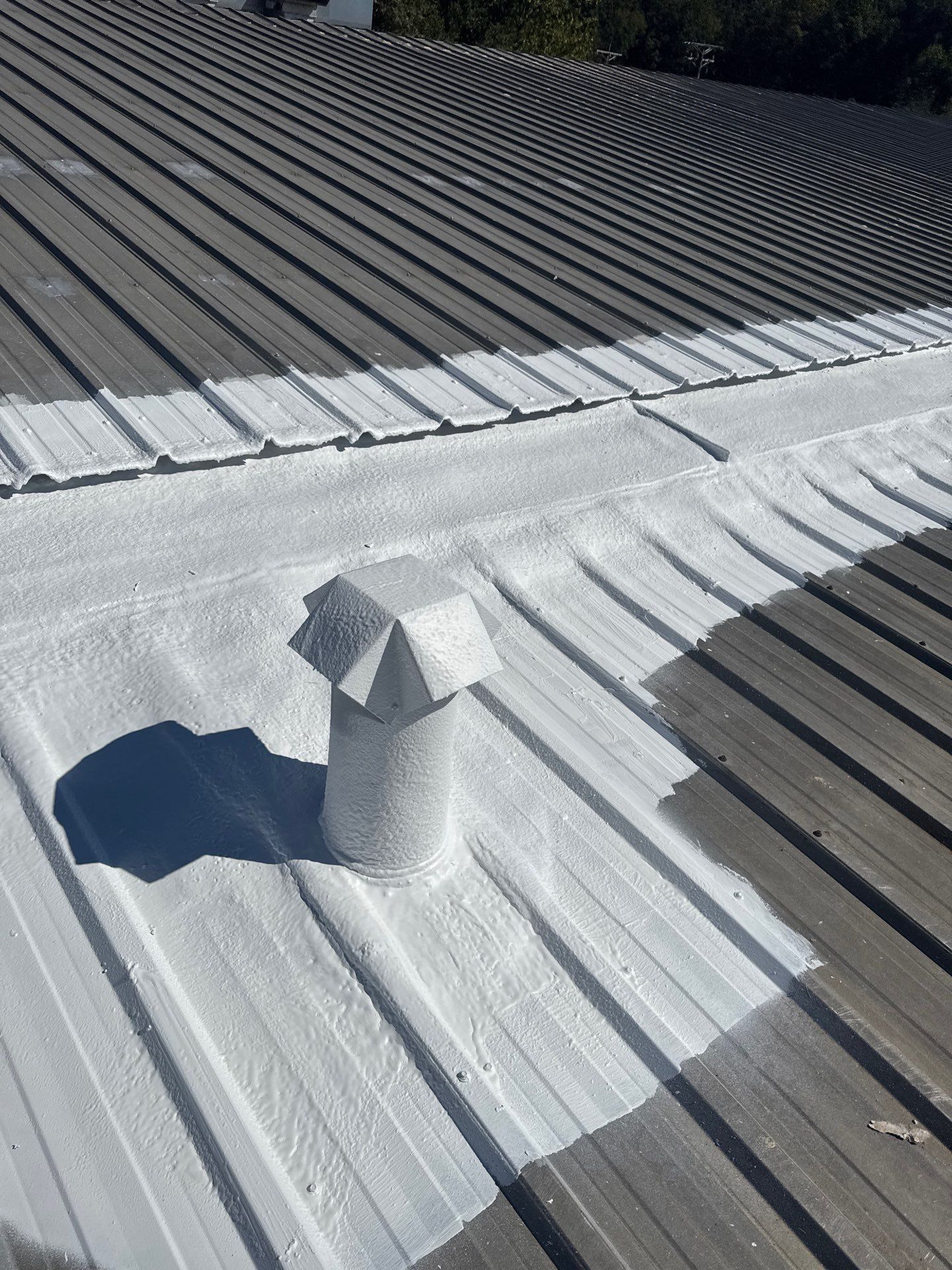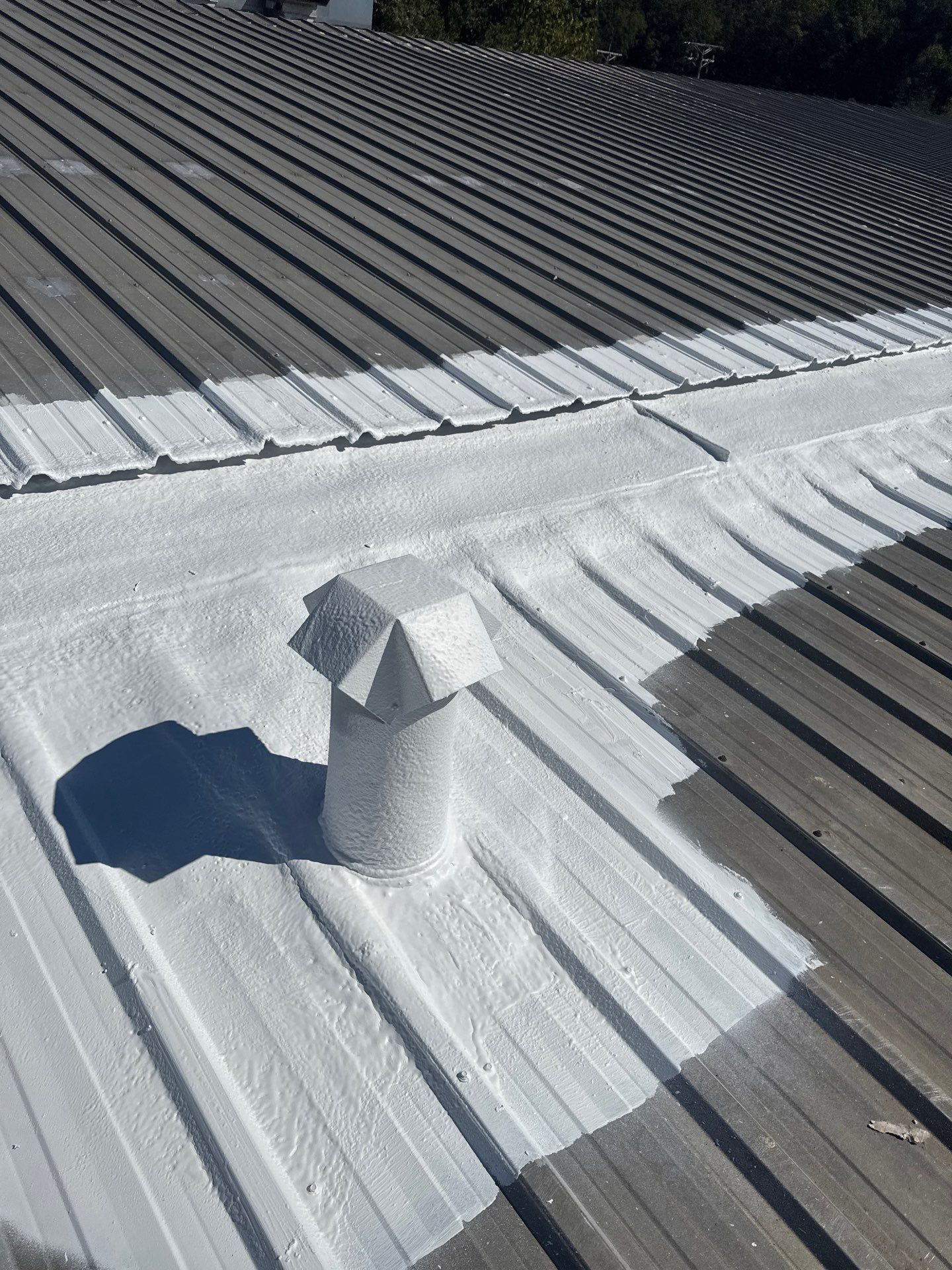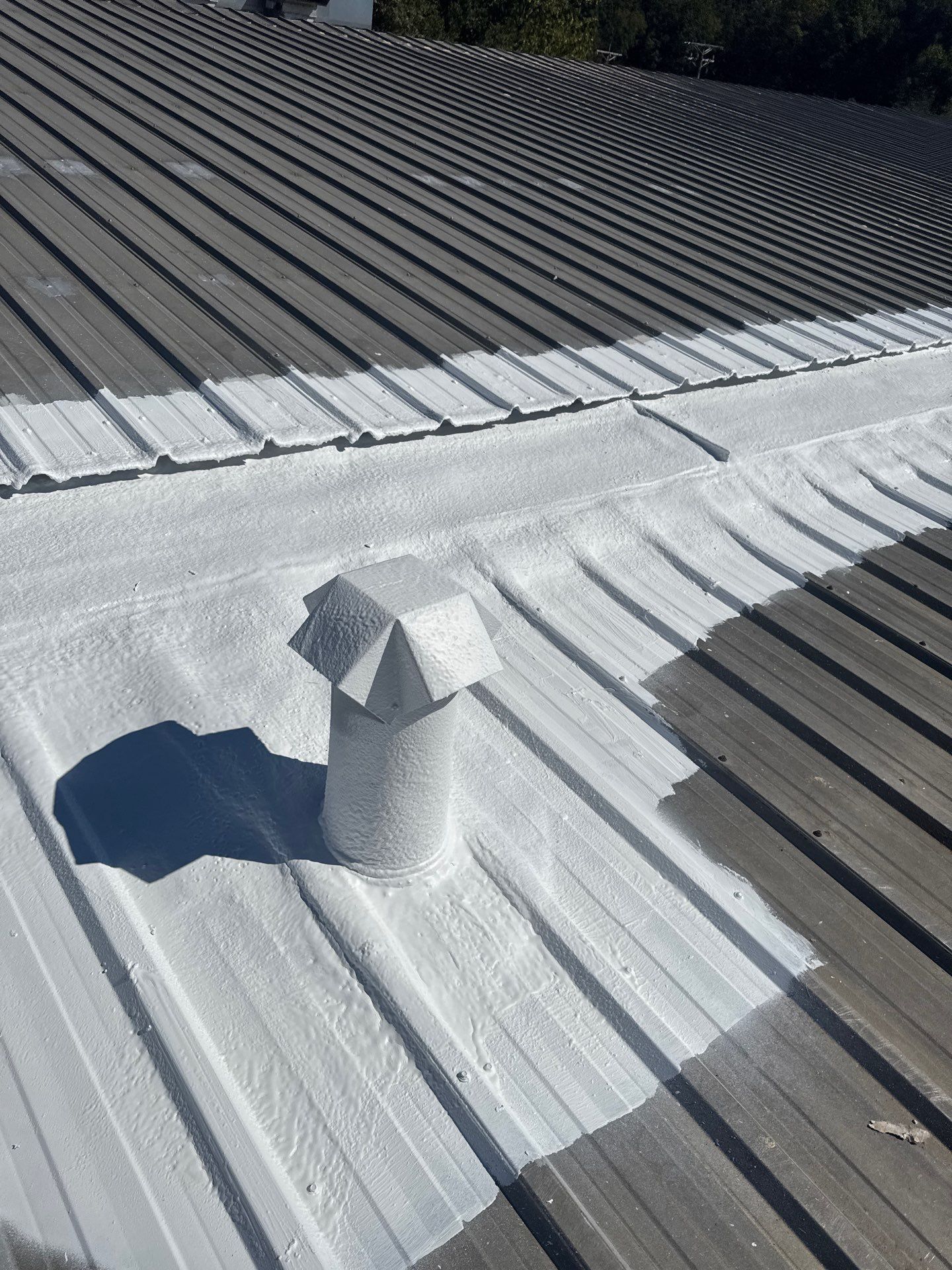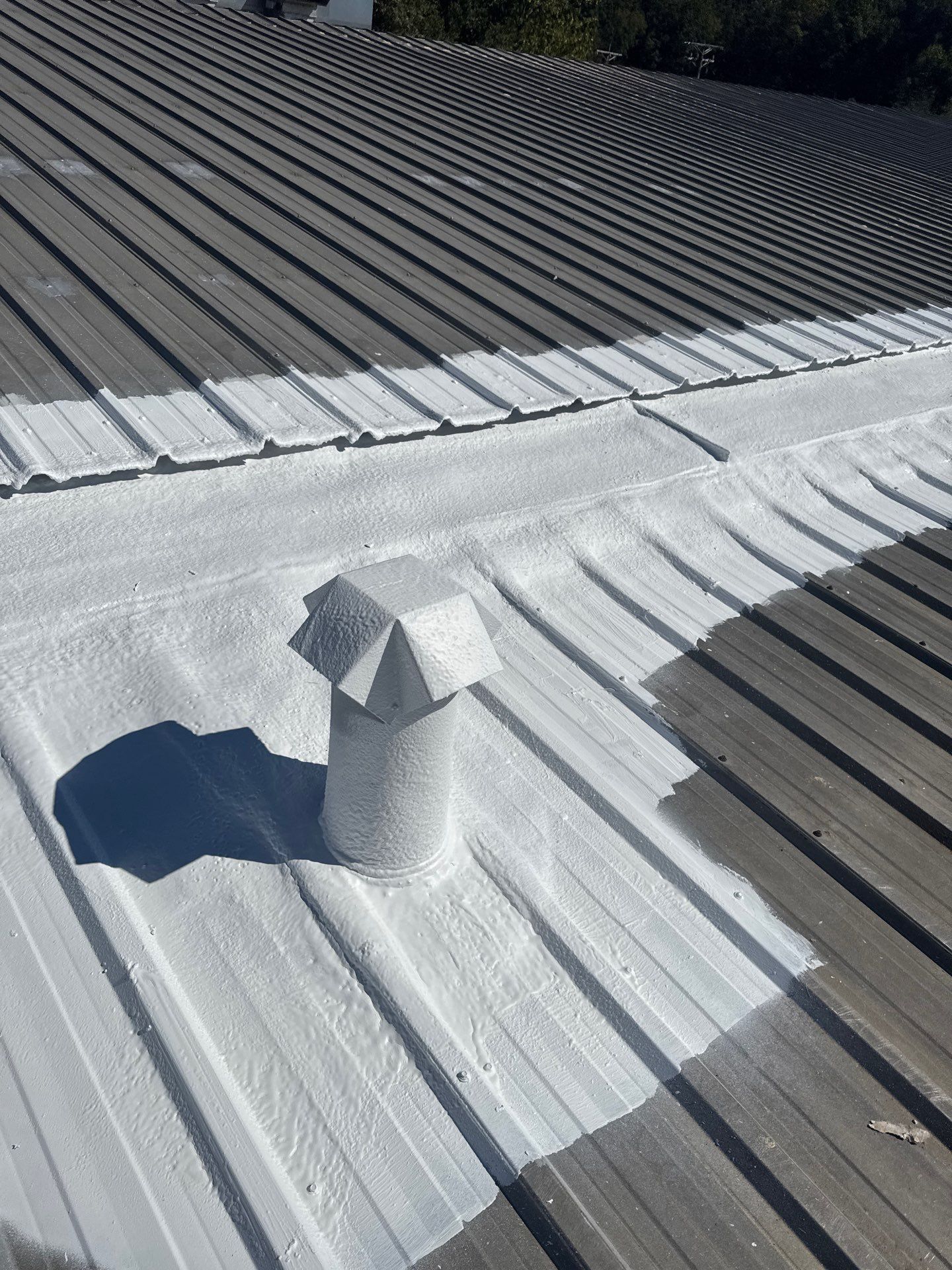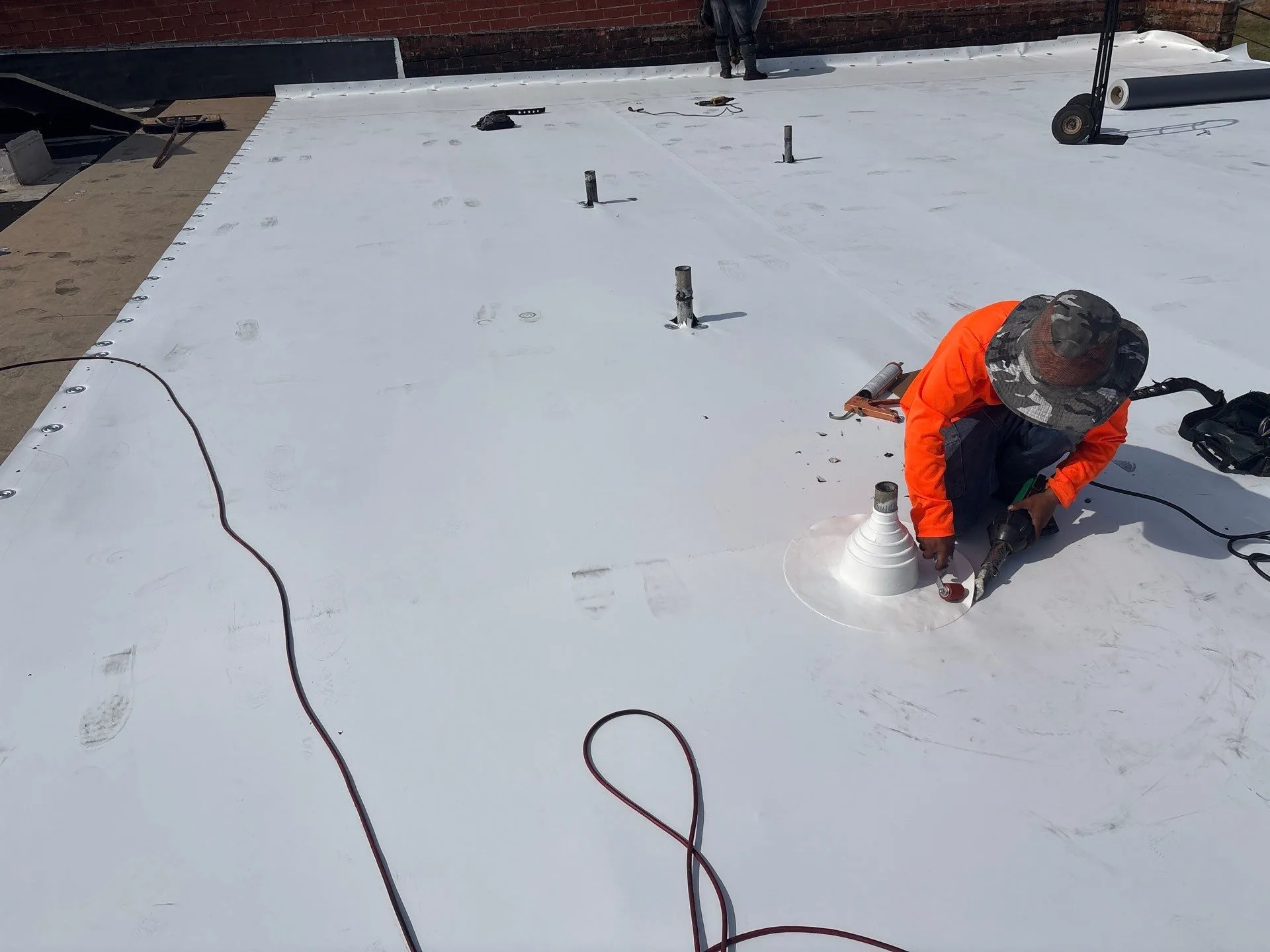

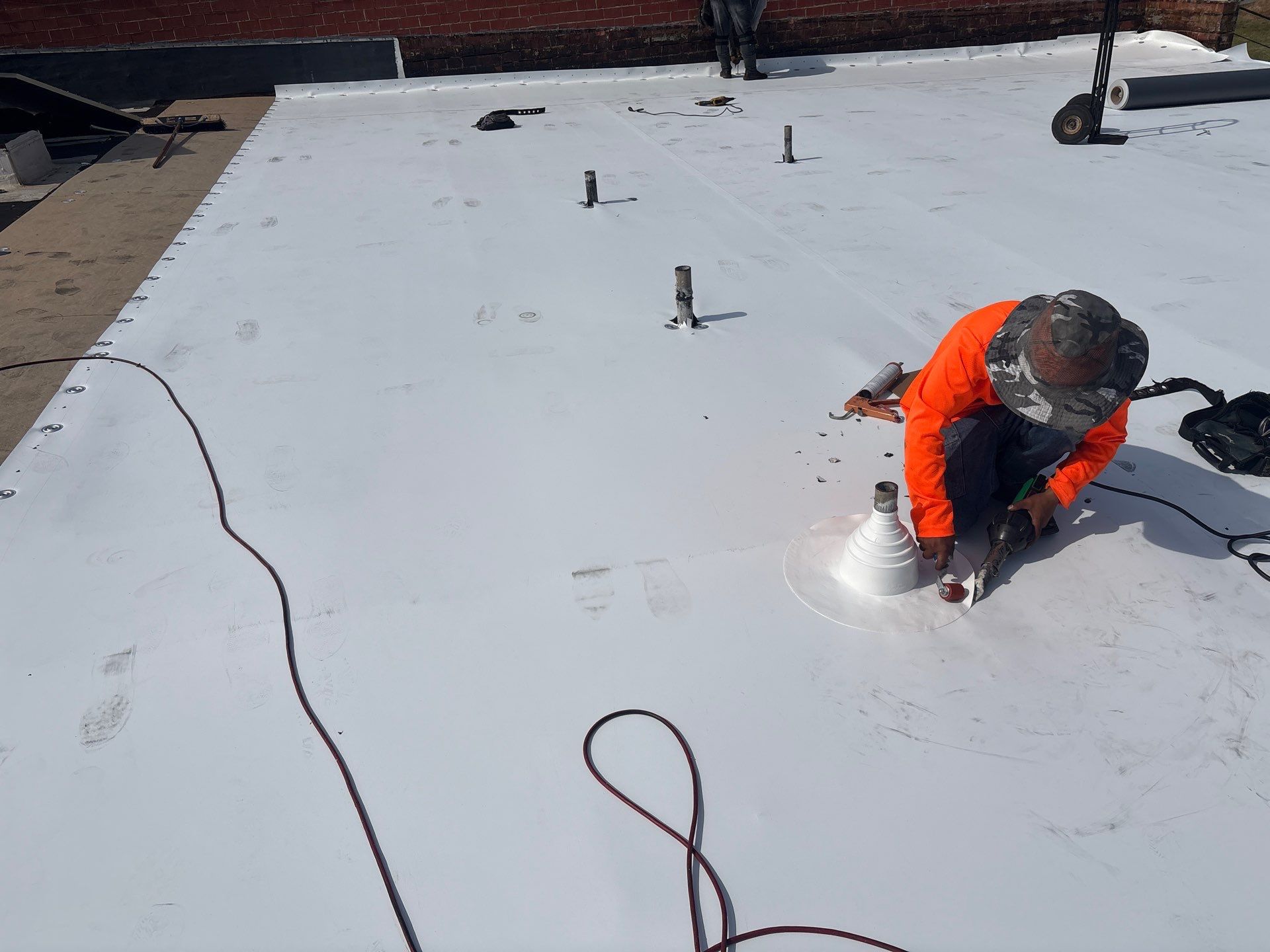
When a commercial facility in High Point needed TPO Roofing, our crew responded with precision installation that addressed membrane integrity and long-term performance. This Progress Ave. project involved complete TPO membrane application over a low-slope commercial structure, with careful attention to seam welding, penetration details, and drainage coordination. The white TPO surface visible in the project photos reflects our commitment to proper installation standards that protect the building envelope for decades.


Why High Point Commercial Roofs Benefit from TPO Roofing Systems
TPO membranes perform exceptionally well in North Carolina’s climate when installed correctly. High Point’s temperature swings from humid summers to freezing winters demand roofing systems that remain flexible year-round. TPO’s heat-welded seams create watertight bonds that outlast adhesive-based systems in our region.
Low-slope commercial roofs accumulate heat rapidly during summer months. White TPO membranes reflect solar radiation rather than absorbing it, reducing thermal stress on the building structure. This reflectivity also lowers cooling costs for conditioned spaces below the roof deck.
Many commercial buildings in High Point were constructed with aging built-up or modified bitumen systems. These roofs eventually reach the end of their serviceable life through UV degradation, thermal cycling, and moisture intrusion. TPO installation offers a modern alternative with superior weathering characteristics and manufacturer-backed warranties that property owners can document for insurance and resale purposes.
What This TPO Roofing High Point NC Project Involved
We began with complete removal of the existing roofing system down to the structural deck. Our crew inspected the substrate for moisture damage, deteriorated fasteners, and structural deficiencies that required correction before membrane installation. The deck received necessary repairs to ensure a sound foundation for the new TPO system.
Insulation placement followed deck preparation. We installed polyisocyanurate insulation boards in a staggered pattern to eliminate thermal bridging and create a uniform surface for the TPO membrane. Proper insulation attachment prevents wind uplift failures during severe weather events common to the Piedmont region.
The TPO membrane installation proceeded with mechanically fastened attachment methods appropriate for this building’s wind zone classification. Our technicians used hot-air welding equipment to create seams between membrane sheets, applying consistent heat and pressure to achieve factory-quality bonds. The second photo shows our crew working across the roof surface with power cords and welding tools positioned for efficient seam completion.
Penetration details required custom flashing fabrication around HVAC units, vent pipes, and roof drains. We built TPO flashings with adequate height and proper termination methods that prevent water intrusion at these critical vulnerability points. The white equipment covers visible in the photos received integrated flashing that ties directly into the field membrane.
Edge metal installation secured the membrane perimeter with continuous cleat systems. We coordinated drainage pathways to ensure water flows toward existing drains without ponding in low areas. The first photo captures the roof’s gentle slope and multiple drainage points that we incorporated into the final system design.
Results: What Changed After This TPO Roofing Installation
- Complete waterproofing protection with heat-welded seams that eliminate adhesive failure risks
- 20-year manufacturer warranty coverage on both membrane and workmanship
- Reflective white surface that reduces building cooling loads during summer months
- Mechanically attached system rated for High Point’s wind zone requirements
- Properly flashed penetrations that prevent common leak points at equipment curbs
- Several decades of expected service life with routine maintenance and inspections
- Documented roof asset value for property records and future building transactions
What High Point Building Owners Should Know About TPO Roofing
TPO membranes require professional installation to achieve their rated performance. Seam welding demands specific temperature control, overlap dimensions, and pressure application that only trained technicians can deliver consistently. Improperly welded seams fail within years rather than decades.
White TPO surfaces remain clean longer than darker membranes, but they still accumulate dirt and biological growth over time. Periodic cleaning maintains reflectivity and extends membrane service life. We recommend professional roof inspections twice annually to identify minor issues before they compromise the entire system.
Membrane thickness matters for long-term durability. Standard 45-mil TPO works well for most commercial applications, while 60-mil or 80-mil membranes provide enhanced puncture resistance for roofs with frequent foot traffic or equipment installations. The project specifications should match the building’s actual usage patterns.
Warranty coverage depends on proper installation and ongoing maintenance. Manufacturers void warranties when building owners neglect routine inspections or attempt unauthorized repairs. We document all installation details and provide maintenance guidelines that protect warranty validity throughout the coverage period.
TPO systems integrate well with GAF commercial roofing systems and other manufacturer product lines we install across the Triad region. Material compatibility ensures long-term performance without premature failure from chemical interactions or thermal movement conflicts.
Why Commercial Property Owners in High Point Choose Sunny Sky Roofing
Our installation crews train continuously on TPO welding techniques and manufacturer specifications. We maintain equipment calibration standards that produce consistent seam quality across every project. The third photo shows our attention to detail work that separates professional installations from marginal ones.
We provide honest assessments of roof condition before recommending solutions. Some situations warrant commercial roof repair rather than complete replacement. Others require commercial roof replacement to address structural issues that coatings cannot solve. Our diagnostic approach identifies the most cost-effective solution for each building’s specific circumstances.
Property owners across the areas we service in the Triad rely on our manufacturer certifications and warranty administration. We handle all documentation, inspection coordination, and warranty registration to ensure coverage remains active throughout the guarantee period.
If your commercial building needs professional TPO installation or evaluation, contact our team at (336) 523-2103. You can also reach us through our contact page to schedule a detailed roof assessment.
Frequently Asked Questions About TPO Roofing in High Point
How often should a commercial roof in High Point be inspected?
We recommend professional inspections twice annually, typically in spring and fall. These inspections identify minor issues like loose flashings or debris accumulation before they cause leaks. High Point’s severe weather during spring and summer makes post-storm inspections equally important for insurance documentation and immediate damage assessment.
What causes TPO seams to fail prematurely?
Improper welding temperature creates the most common seam failures. Excessive heat damages the membrane, while insufficient heat produces weak bonds that separate under thermal stress. Contaminated membrane surfaces from dirt or moisture also prevent proper fusion. Professional installers control these variables through equipment calibration and surface preparation protocols.
Does TPO installation preserve my existing roof warranty?
Complete TPO replacement terminates the previous roof warranty since you’re removing the old system entirely. The new installation comes with its own manufacturer warranty, typically 20 years for material defects. We provide workmanship warranties that cover installation quality for a specified period beyond project completion.
Can TPO installation be completed while the building is occupied?
Yes, most commercial buildings remain fully operational during TPO installation. We coordinate work schedules to minimize disruption and protect interior spaces from debris. Certain phases like penetration work near HVAC equipment may require temporary shutdowns, which we schedule with facility managers well in advance to accommodate business operations.