
High Point sits at the intersection of three counties in the Piedmont Triad, which means your commercial roof deals with everything North Carolina throws at it—humid summers that hover in the 90s for weeks, UV exposure that breaks down lesser materials, and enough afternoon thunderstorms to test every seam and penetration. We’ve installed TPO roofing in High Point, NC on warehouses near the furniture district, distribution centers off I-85, and medical offices throughout Guilford County. TPO handles this climate better than most single-ply membranes, but only when it’s installed right.
What We Found on This High Point TPO Roofing Project
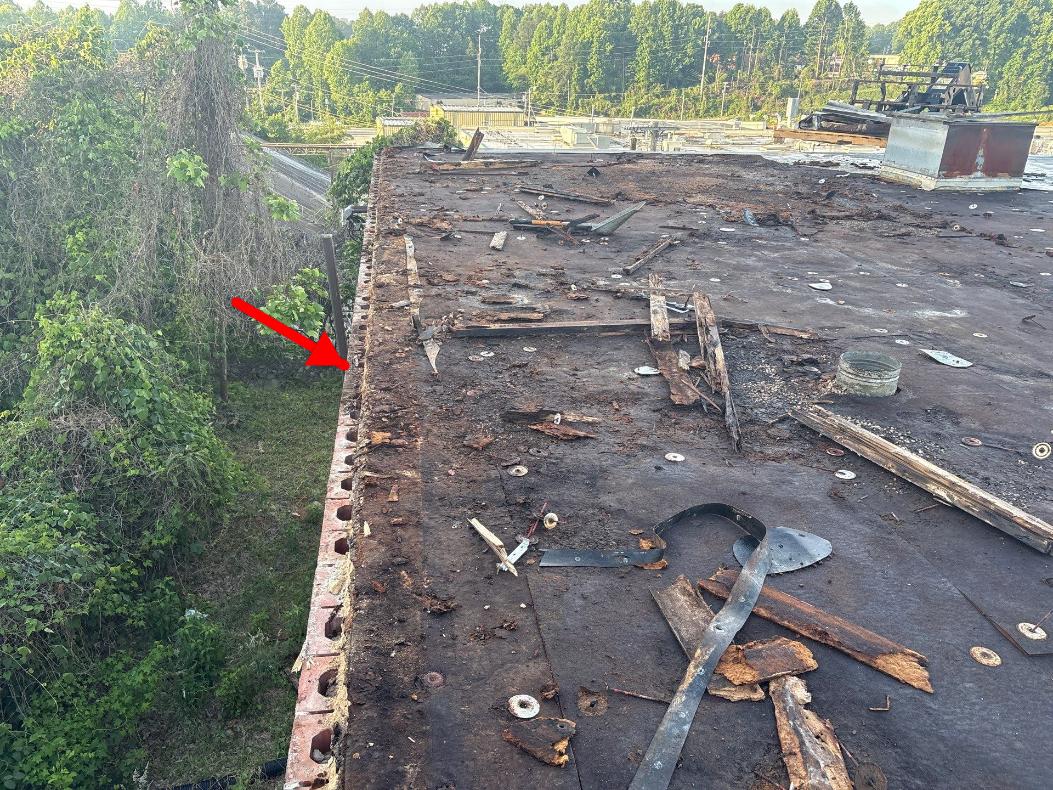
The building owner called us after noticing water stains on interior ceiling tiles. The existing roof had been patched multiple times, and the perimeter edge showed significant damage.
When we got up there, we found exactly what we expected:
- Rotten wood decking at the roof edge—the most vulnerable area on any commercial roof
- Exposed, deteriorated perimeter that had allowed water infiltration for longer than the owner realized
- Failed previous repairs that didn’t address the underlying structural issues
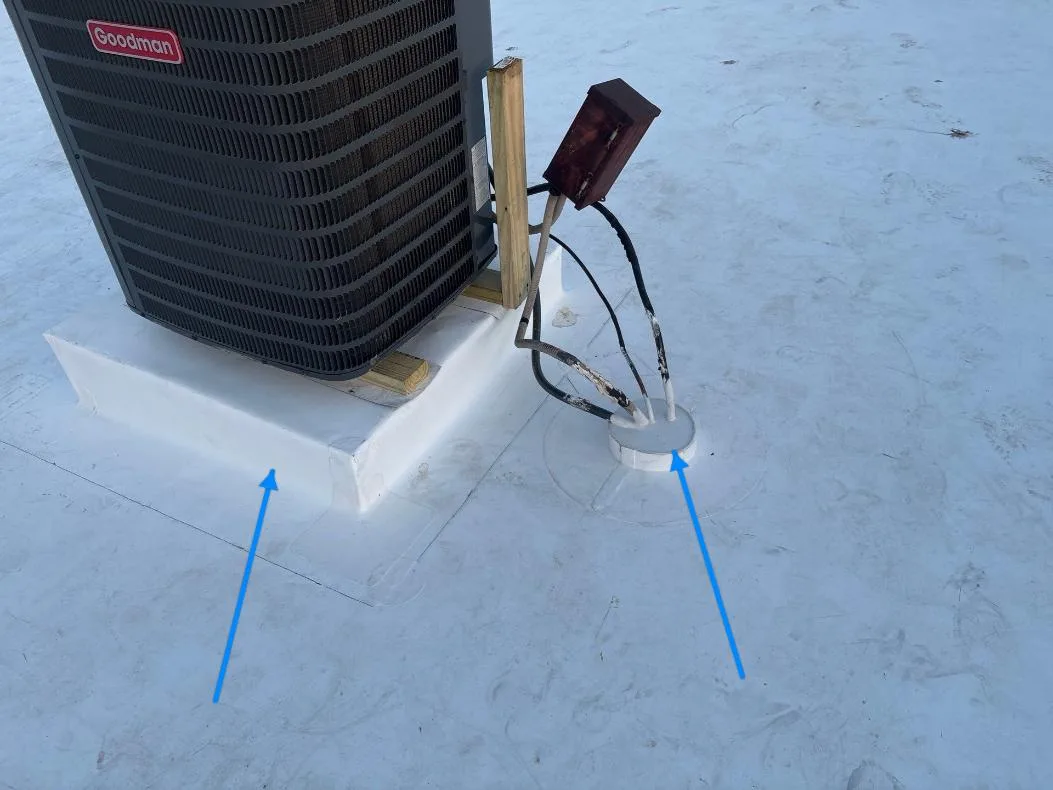
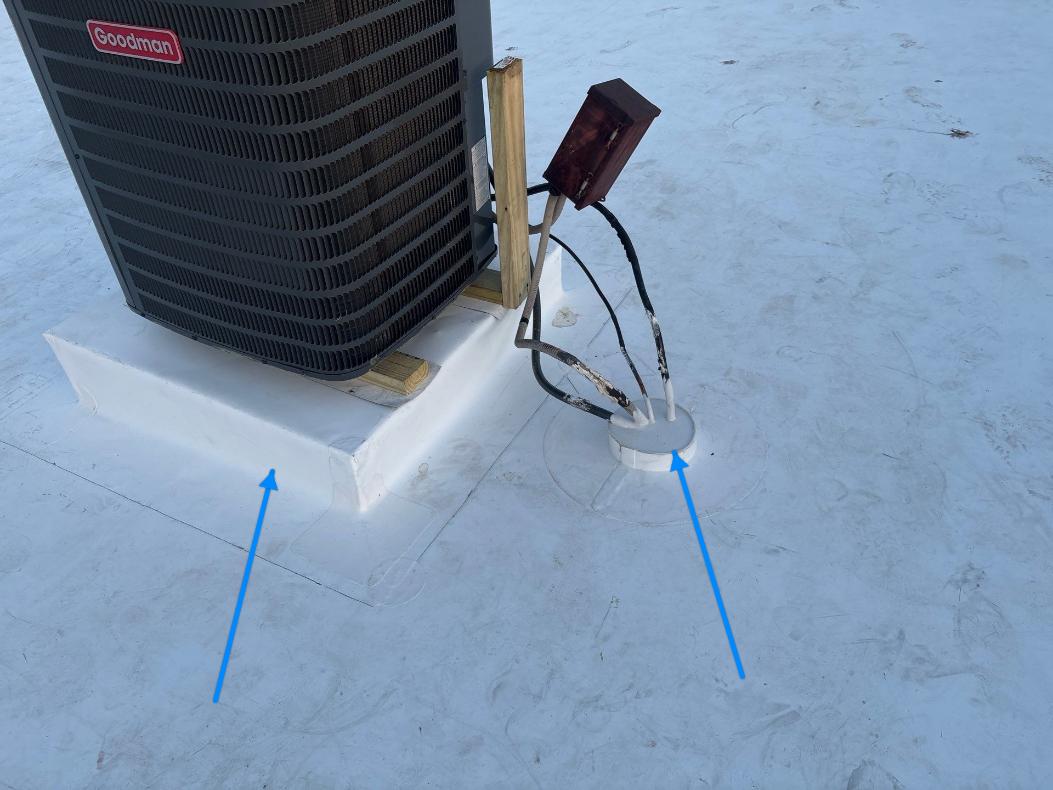
- HVAC curbs that needed complete replacement to maintain weathertight integrity
By the time you can see daylight from inside, the roof has been leaking for years. This wasn’t a maintenance issue—it was a full replacement situation.
Why TPO Roofing Works for High Point NC Commercial Buildings
TPO performs well in the Piedmont climate for specific reasons. The white reflective surface bounces back UV radiation instead of absorbing it, which matters when your roof bakes under July sun for 12 hours straight. That reflectivity cuts cooling costs measurably—we’ve had building owners report 15-20% reductions in summer HVAC expenses after switching from darker membranes.
The heat-welded seams create a monolithic surface that doesn’t rely on adhesives breaking down over time. High Point’s humidity and temperature swings stress adhesive bonds. Hot air welding fuses the membrane layers together at a molecular level. Done correctly, those seams outlast the membrane itself.
TPO also resists the algae and mildew growth that plagues this region. The membrane formulation includes biocides that prevent the black streaking you see on older roofs throughout the Triad. That’s not just cosmetic—biological growth holds moisture against the membrane and accelerates deterioration.
The National Roofing Contractors Association recognizes TPO as one of the fastest-growing commercial roofing products for good reason. It balances performance, longevity, and cost-effectiveness better than most alternatives in mixed-climate regions like ours.
The TPO Roofing Installation Process We Used in High Point
We started by staging materials on-site to minimize disruption to the building’s operations. This wasn’t a shut-down-the-business project—work continued inside while we replaced the roof.
First, we removed the old roofing system down to the deck. That’s when we confirmed the extent of the wood rot at the perimeter. We replaced all compromised decking with properly rated sheathing, creating a sound substrate for the new system.
The perimeter received special attention because that’s where most TPO failures start. We installed a fully adhered perimeter—no mechanical fasteners near the edge where wind uplift forces concentrate. Fully adhered perimeter sections create a continuous bond that resists the uplift pressures that peel back mechanically attached systems during severe weather.
We rebuilt the HVAC curbs completely. Old curbs leak. That’s not pessimism, it’s pattern recognition from installing hundreds of commercial roofs. New curbs with proper flashing details mean those penetrations stay watertight for the life of the membrane.
The field of the roof received mechanically attached TPO with heat-welded seams throughout. Every seam got probed and tested. Every penetration received multi-layer flashing that sheds water away from vulnerable transitions.
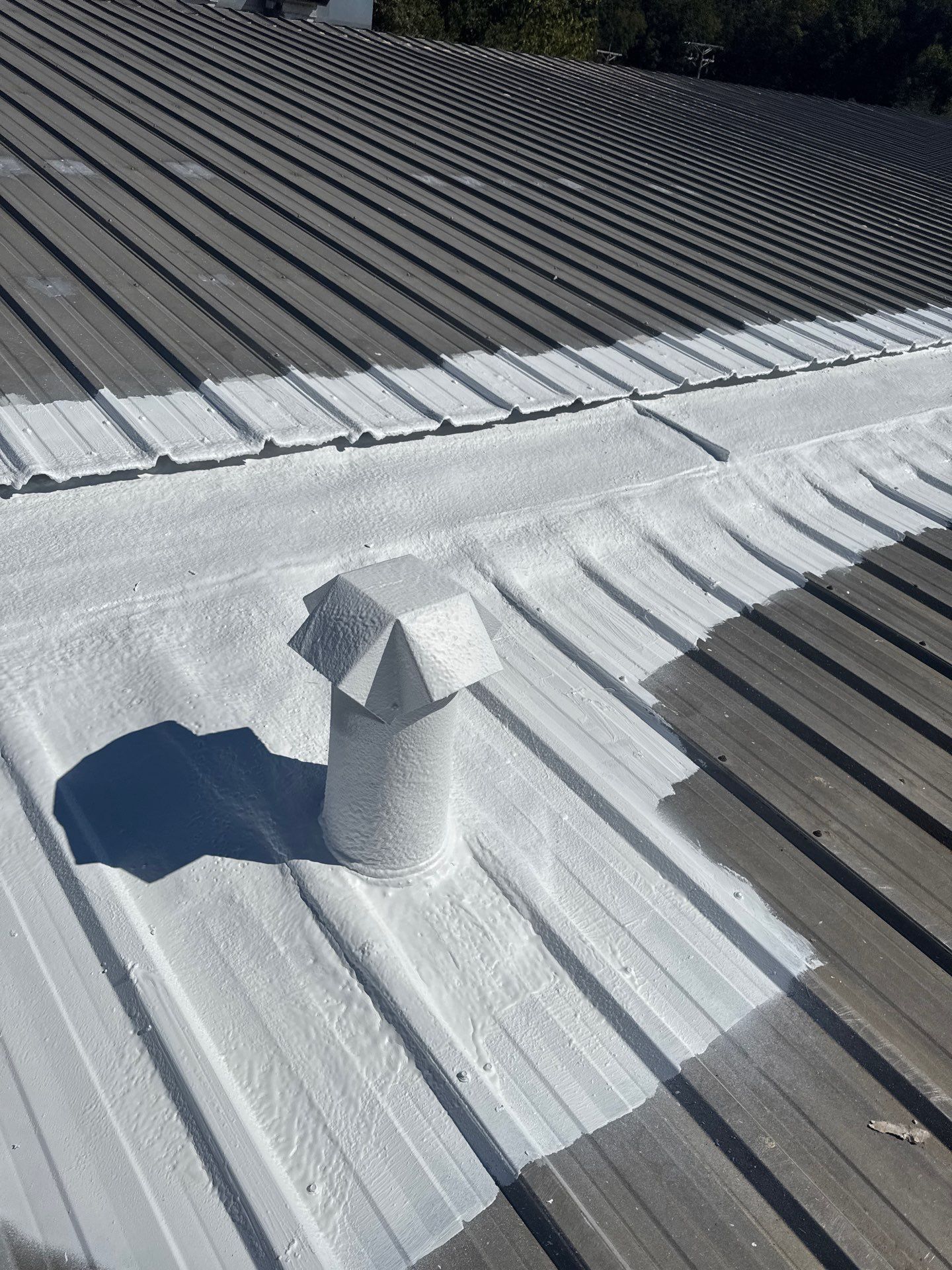
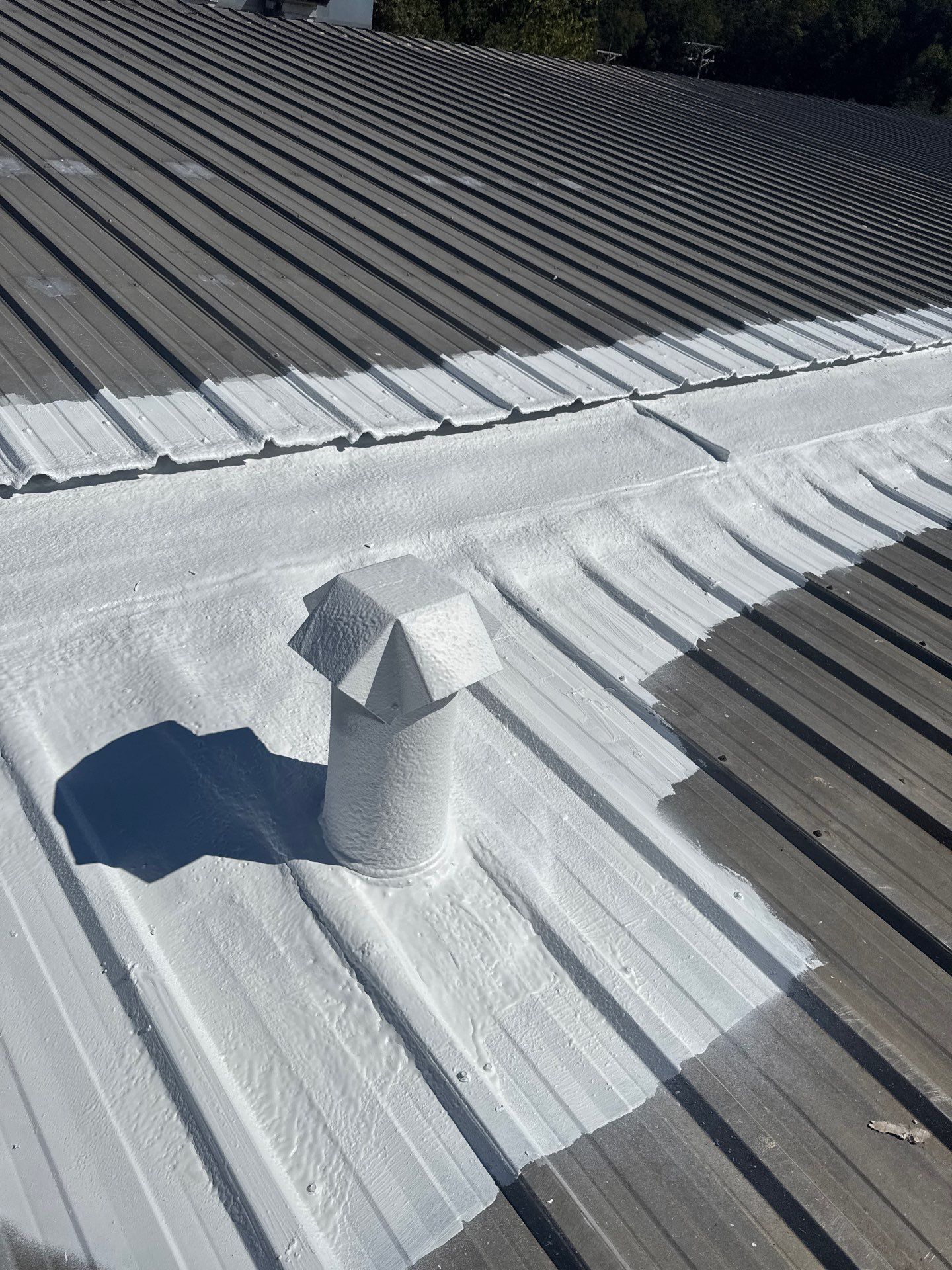
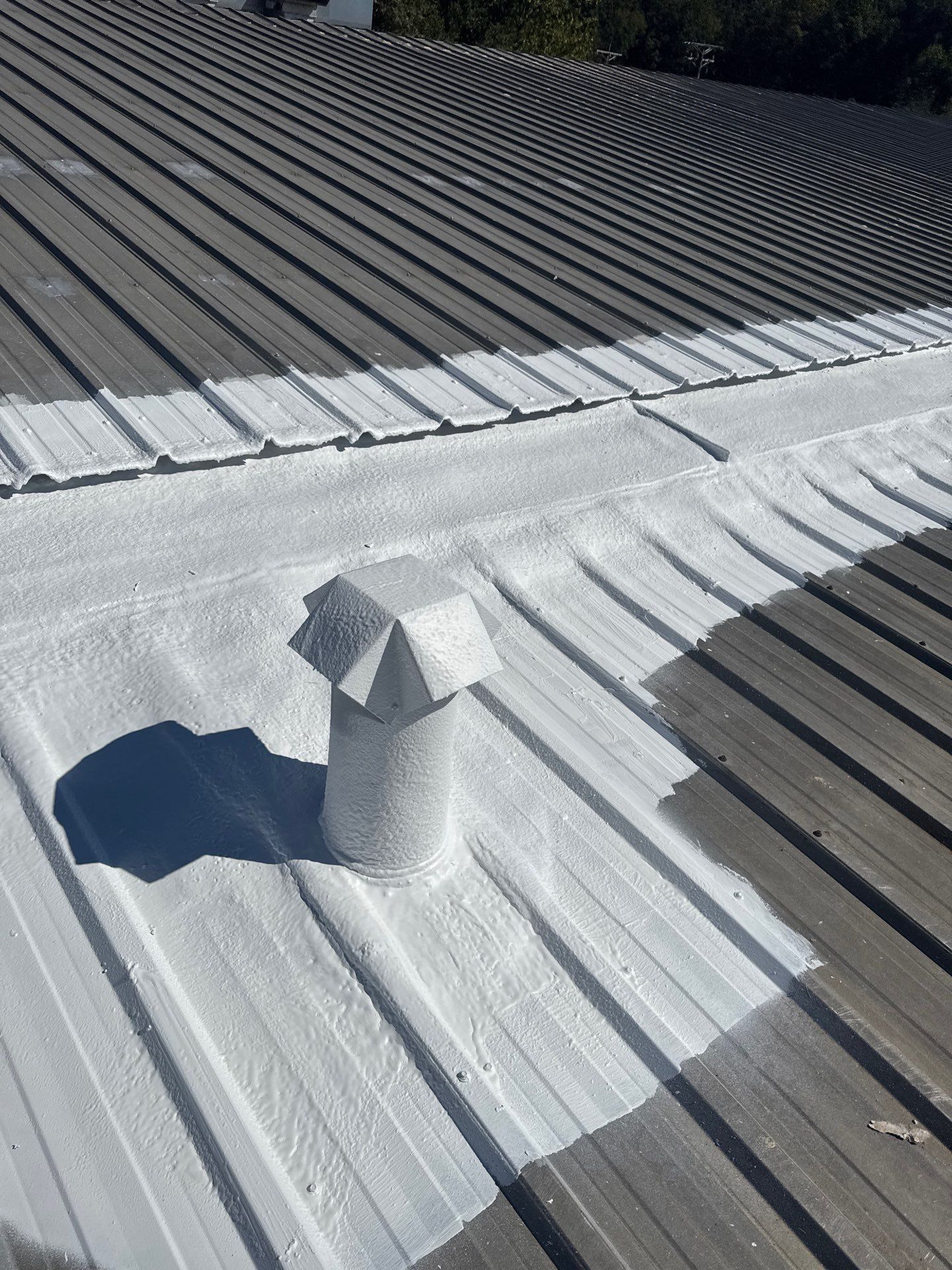
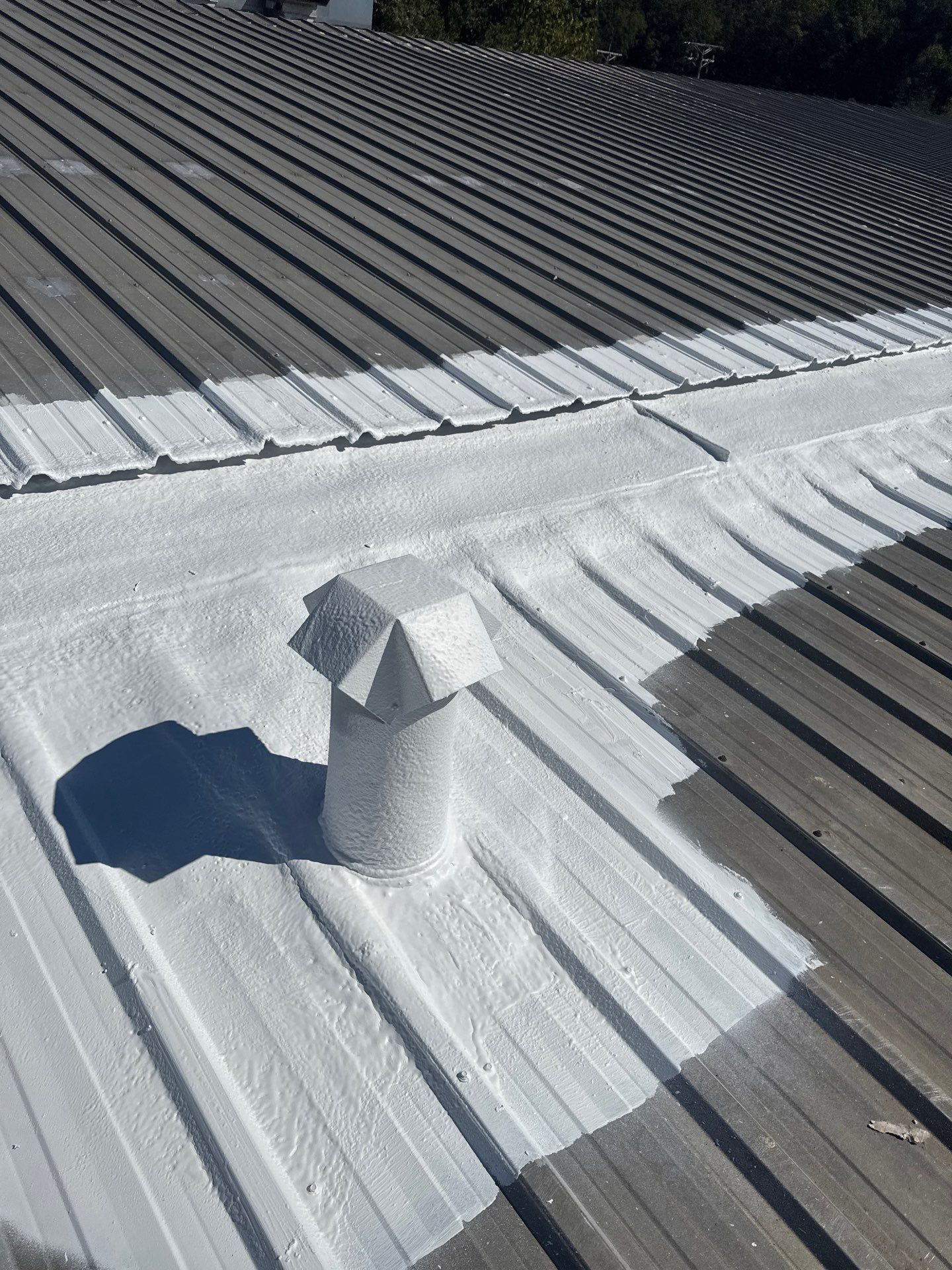
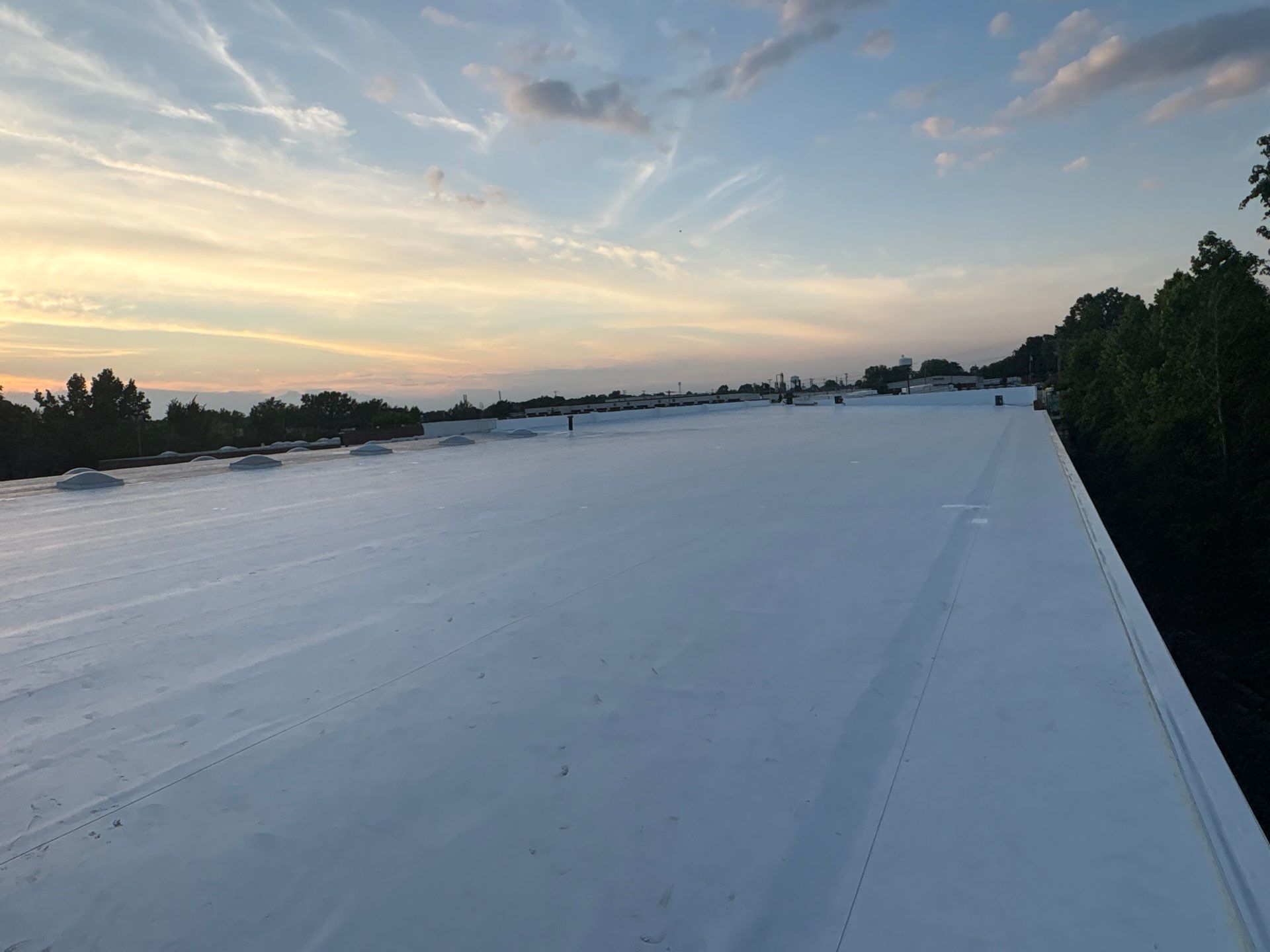
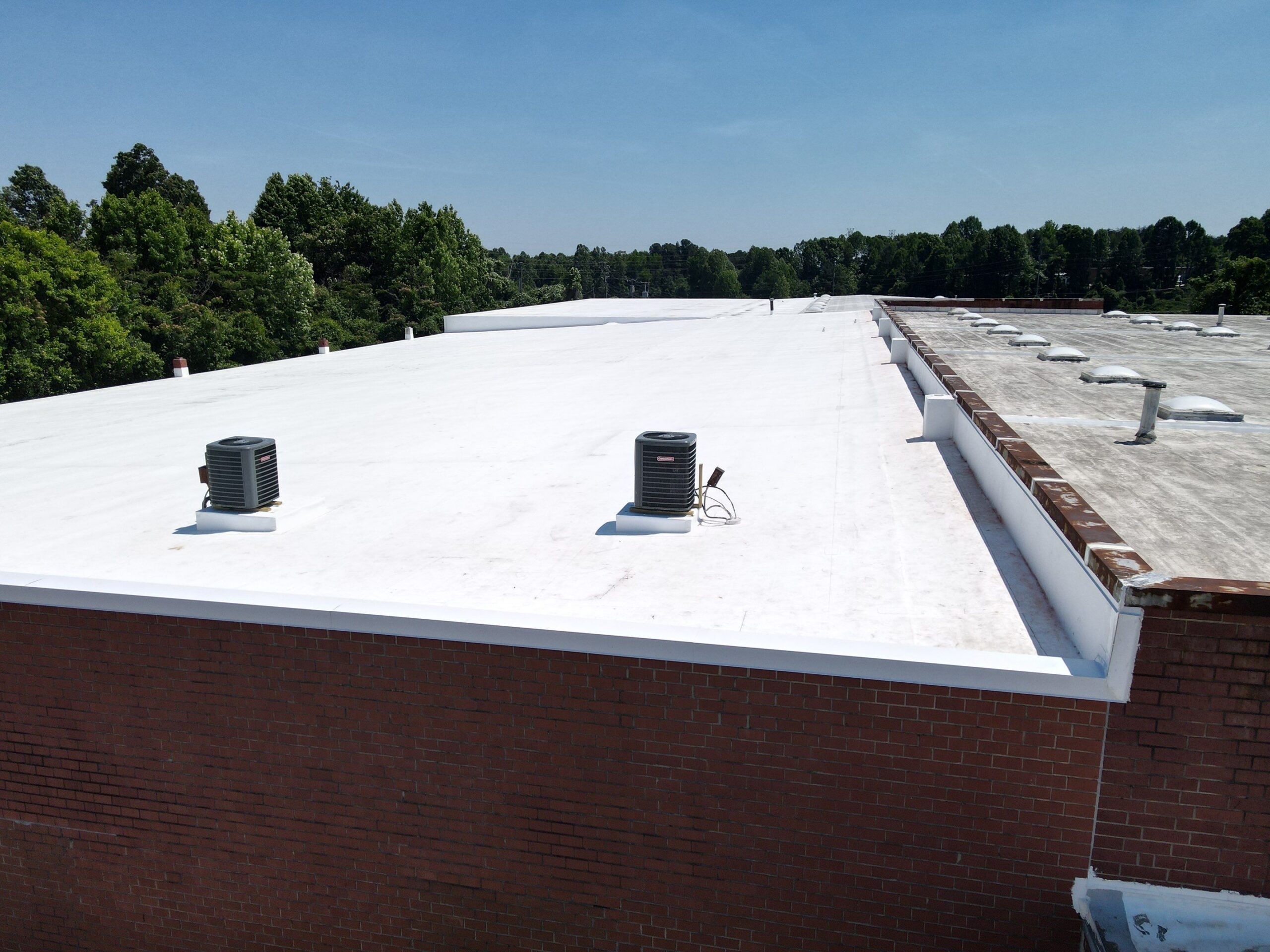
The job photos tell the story: rotten edge exposed and replaced, new white TPO installed across the entire roof plane, AC curbs detailed and sealed, finished installation ready for another 20-plus years of service.
Signs Your High Point Building Needs TPO Roofing Replacement
Don’t wait until you’re setting buckets inside. Watch for these indicators:
- Ceiling stains or discoloration — even small spots mean water is penetrating regularly
- Increased cooling costs — a failing roof loses its reflective properties and insulation value
- Visible membrane shrinkage — if seams look stressed or fastener plates show, the membrane is pulling away
- Ponding water that doesn’t drain within 48 hours — standing water accelerates membrane breakdown
- Multiple patch repairs — if you’re calling for fixes twice a year, you’re past the maintenance phase
- Roof age beyond 20 years — single-ply membranes don’t improve with age
- Soft spots or flex when walking — indicates insulation or deck damage underneath
- Rusted or backed-out fasteners — means the attachment system is compromised
We recommend annual roof inspections at minimum for all commercial properties. Catching problems early is more cost-effective than full replacement, but only if you’re actually inspecting regularly. Most building owners call us after ignoring small issues for years.
Why Choose Sunny Sky Roofing LLC for TPO Roofing in High Point NC
We’re based in the Triad and we work exclusively on commercial and industrial roofing. That focus matters. We’re not running residential crews during the week and trying to squeeze in commercial work on weekends. Our teams train specifically on commercial systems, and we carry manufacturer certifications that require ongoing education.
Joe Yutzy built this company on straightforward communication and quality work. We’ll tell you what your roof actually needs—not what generates the biggest invoice. Sometimes that’s restoration. Sometimes it’s replacement. We’ve walked owners through both options on the same roof and let them make informed decisions.
We handle all the details that separate good installations from callbacks. Proper deck preparation. Fully adhered perimeters. Heat-welded seams that get tested before we leave. Flashing details around every penetration. New curbs when needed. The kind of thoroughness that means you’re not calling us back in two years because something’s leaking.
Our TPO Roofing services include complete installations, repairs, maintenance programs, and honest assessments. We’ve handled everything from small office buildings to large distribution centers throughout High Point and the surrounding Piedmont region.
TPO Roofing High Point NC: Frequently Asked Questions
How long does a TPO roof last in High Point’s climate?
A properly installed TPO roof typically delivers 20-25 years of service in our climate. That assumes annual inspections and basic maintenance like keeping drains clear and addressing small issues before they become big problems. The heat-welded seams and UV-resistant formulation hold up well to North Carolina summers. We’ve seen poorly installed TPO fail in 10 years and well-maintained systems pushing 30 years. Installation quality and regular maintenance make the difference.
Is TPO better than EPDM or PVC for commercial buildings in High Point?
TPO balances performance and value better than most alternatives for this region. It’s more heat and UV resistant than EPDM, which matters during our summers. It costs less than PVC while delivering comparable durability for most applications. PVC makes sense for buildings with grease exposure or chemical concerns—restaurants, certain manufacturing facilities. EPDM works fine in cooler climates but absorbs more heat here. We install all three systems and we’ll recommend based on your specific building, budget, and long-term plans.
Can you repair TPO roofing or does it always need full replacement?
We repair TPO regularly. Small punctures, opened seams, flashing failures—all repairable if you catch them during annual inspections. Heat welding makes TPO repairs more reliable than patched EPDM or glued repairs. The question is always whether you’re fixing isolated damage or addressing systemic failure. If the membrane is shrinking, the attachment system is failing, or you’re patching multiple areas, replacement makes more sense. We’ll assess honestly and explain both options with realistic cost comparisons.
How often should I have my High Point commercial roof inspected?
Annual inspections at minimum for all commercial roofs. If your building has heavy tree coverage, rooftop equipment, or high foot traffic, move to bi-annual inspections. Annual inspections catch small problems—a lifted seam, a clogged drain, a failing penetration seal—before they cause interior damage. The inspection cost is minimal compared to emergency repairs or interior restoration after a leak goes unnoticed for months. We offer maintenance programs that include scheduled inspections and priority service for members.
Get Professional TPO Roofing in High Point NC
Your commercial roof protects everything under it—inventory, equipment, operations, and your investment in the building itself. We’ve handled commercial roofing in High Point for years, and we know what works in this climate.
If you’re seeing signs that your roof needs attention, don’t wait until you’re managing leaks and interior damage. Call Sunny Sky Roofing LLC at 336-523-2103 for an honest assessment of your High Point commercial roof. We’ll inspect your system, explain what we find, and give you a clear recommendation with transparent pricing. No pressure, no sales games—just straightforward information from a local contractor who’ll be here when you need service next year and ten years from now.
You can also contact us through our website to schedule an inspection or ask questions about your specific roofing situation. We’re here to help High Point business owners make smart decisions about their commercial roofing systems.