
Winston-Salem commercial buildings take a beating from our North Carolina summers and those unpredictable winter freezes. Between the temperature swings and the humidity, your roof is expanding, contracting, and dealing with moisture intrusion that most business owners don’t see until the damage is already done. That’s where spray foam Winston-Salem NC systems shine—literally and figuratively. We’re working on several projects in the Triad right now, and the difference between spray foam and traditional roofing is night and day.
What Makes Spray Foam Different from Every Other Roof System
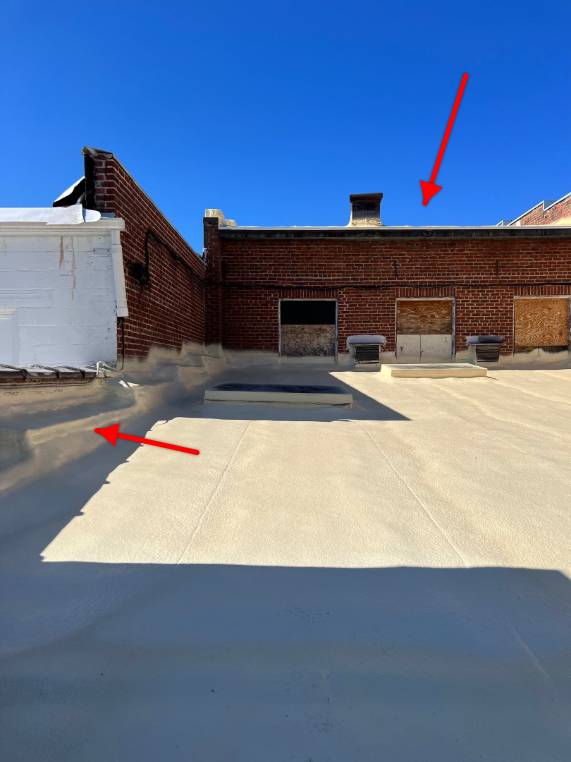
\p>We’ve installed plenty of roofing systems over the years—TPO, EPDM, metal, modified bitumen—and spray foam stands alone in one critical way: it’s self-flashing. That means every penetration, every HVAC unit, every pipe boot, every parapet wall gets sealed with the same seamless material that covers the rest of your roof. No separate flashings to fail. No seams to separate. No weak points where water sneaks in five years down the road.
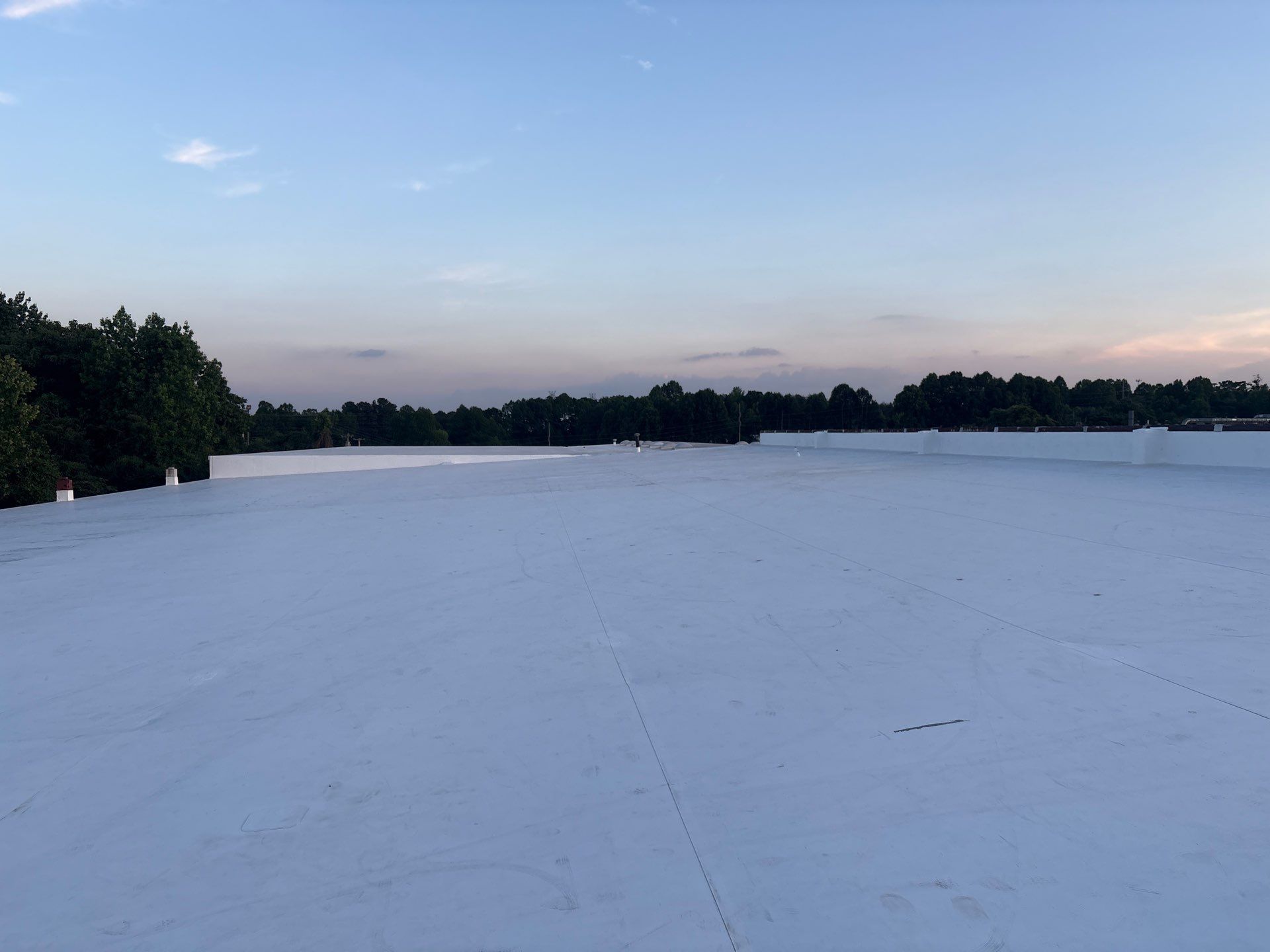
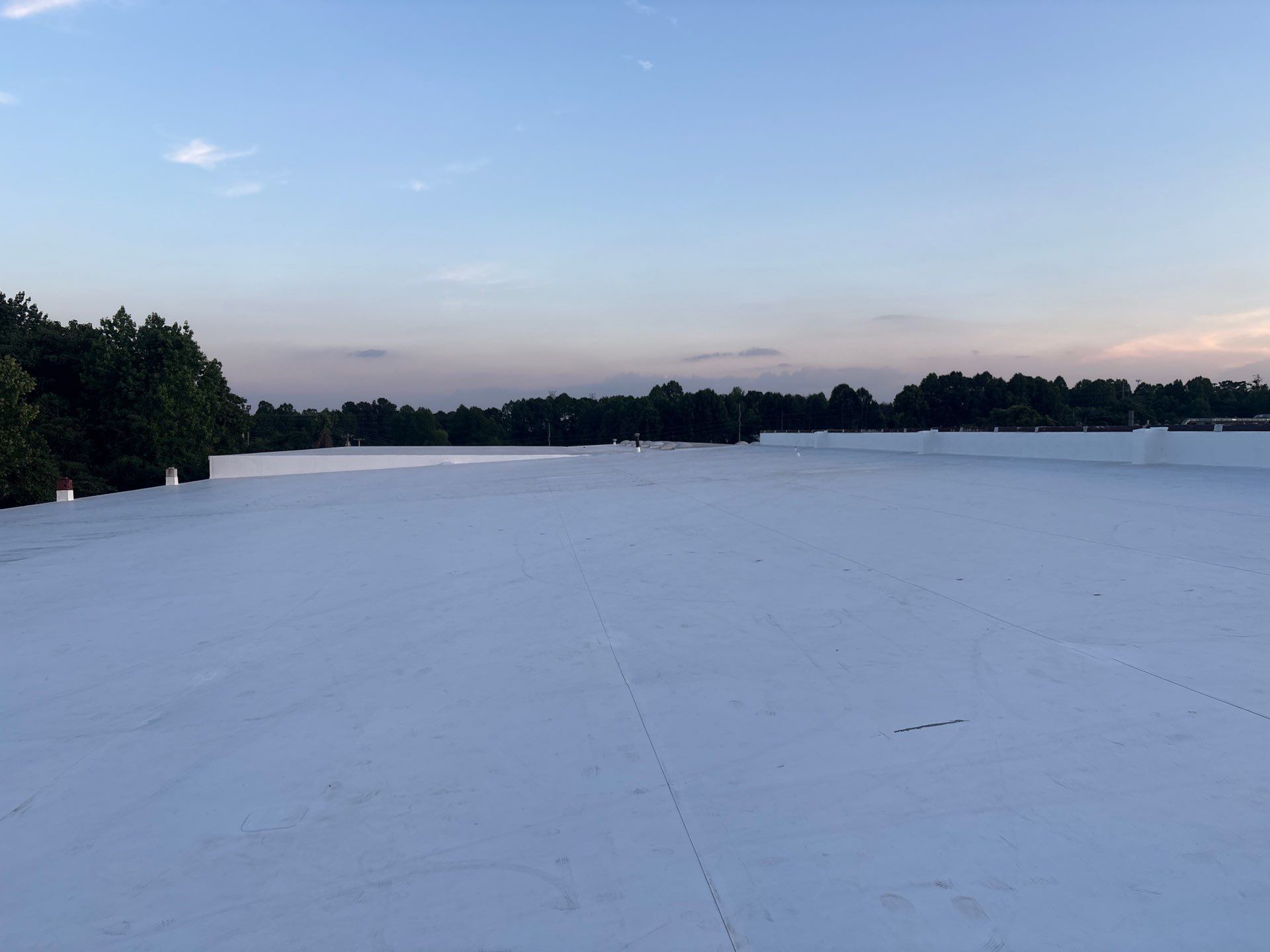
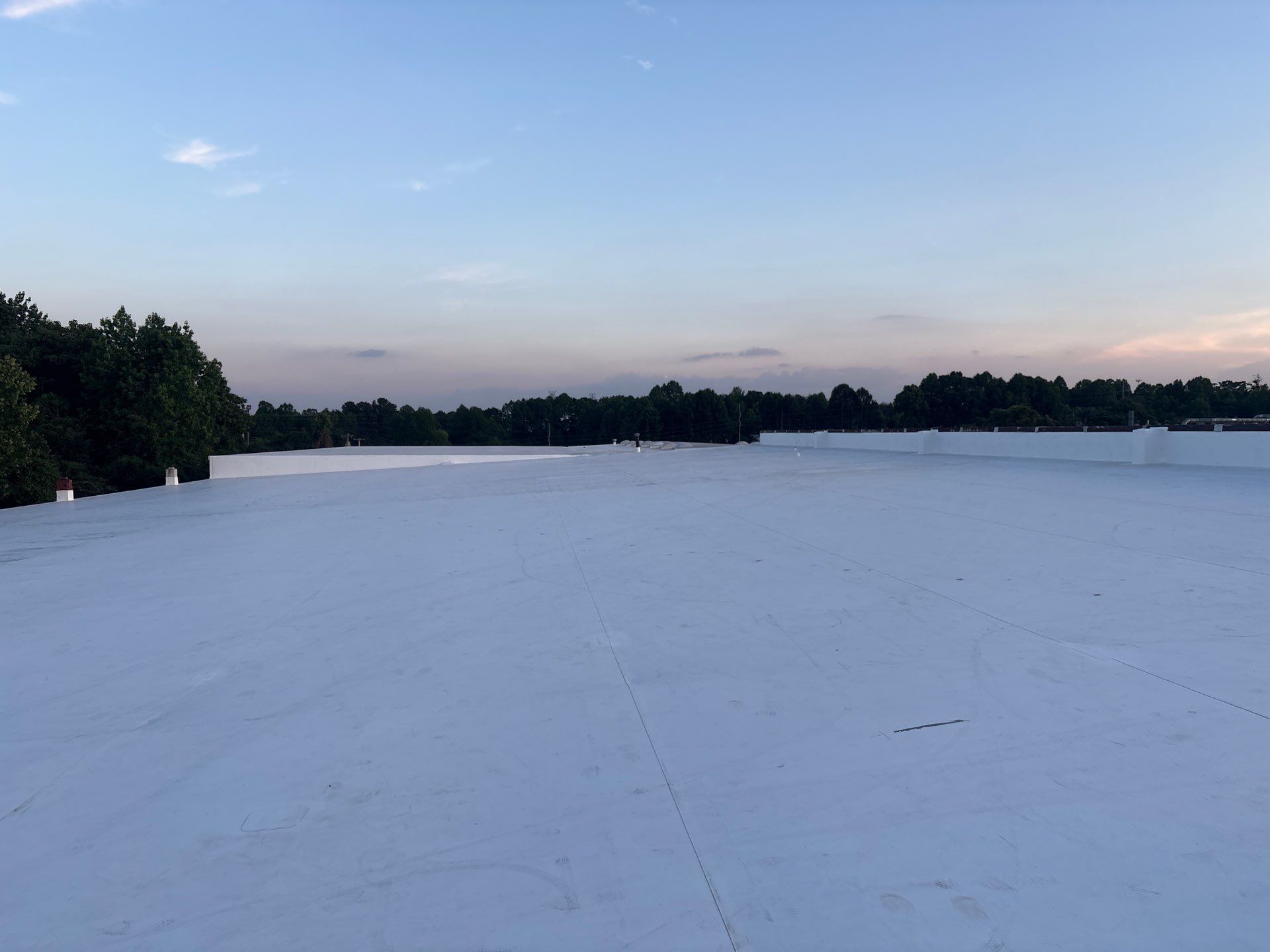
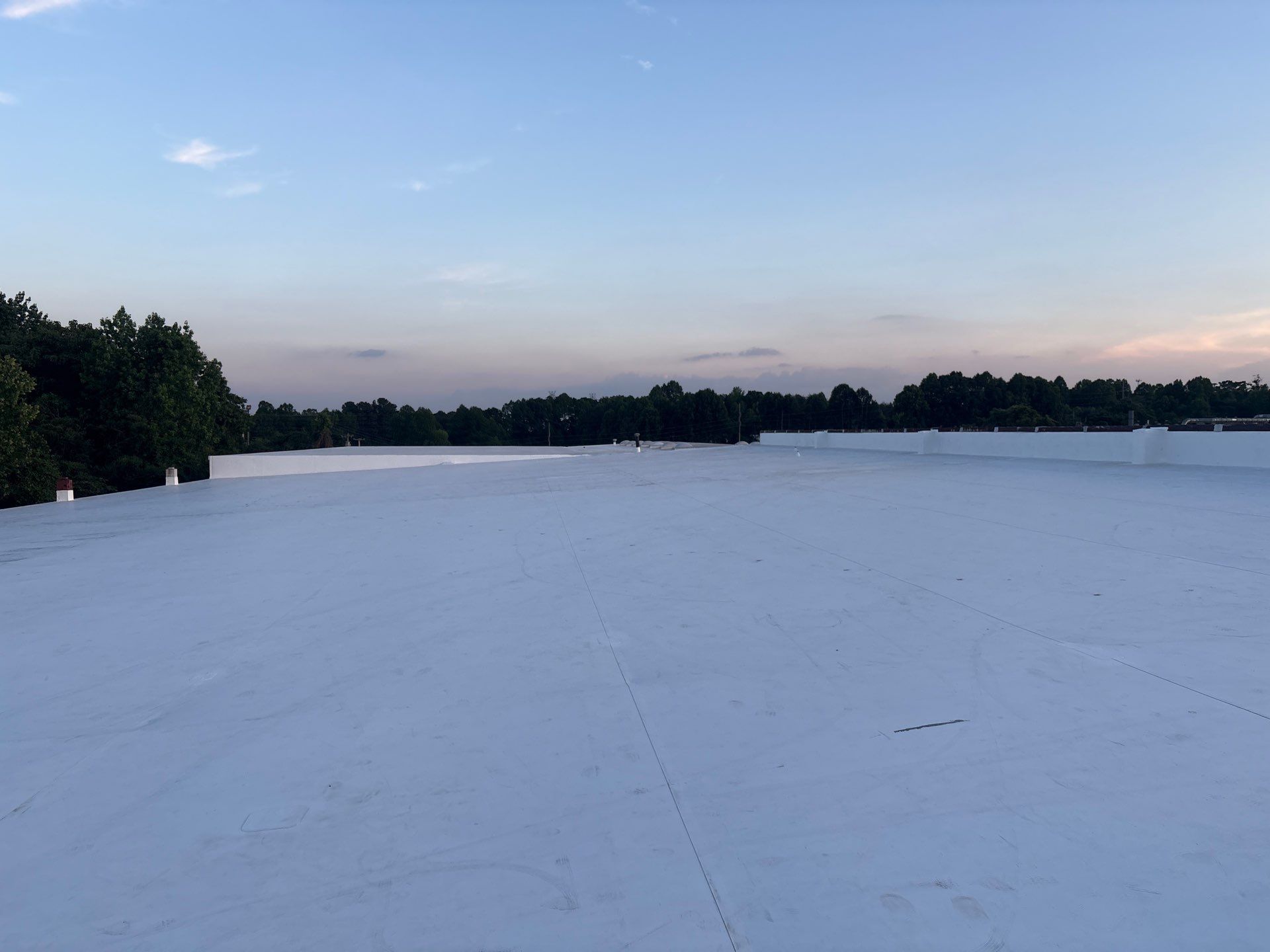
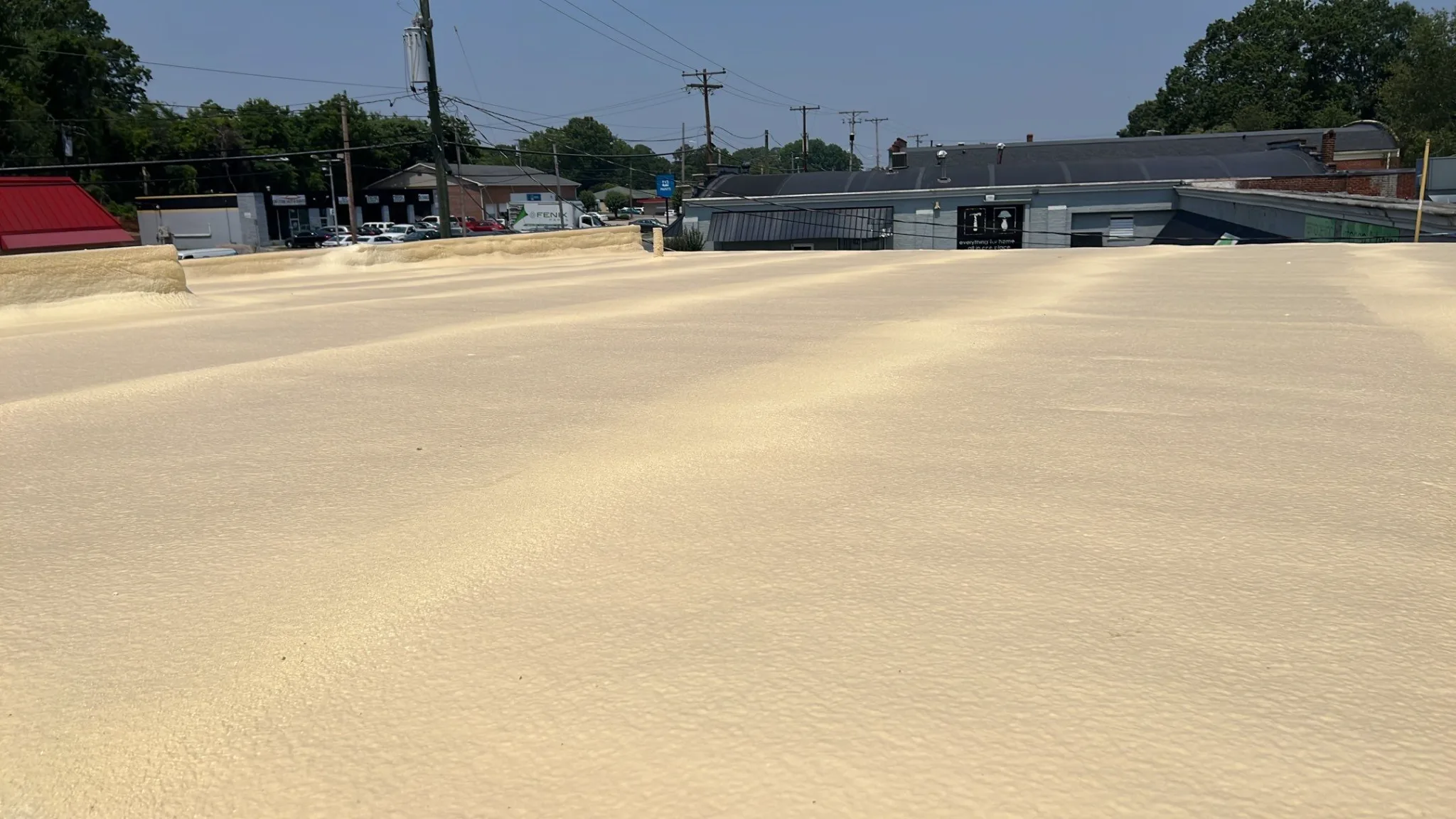
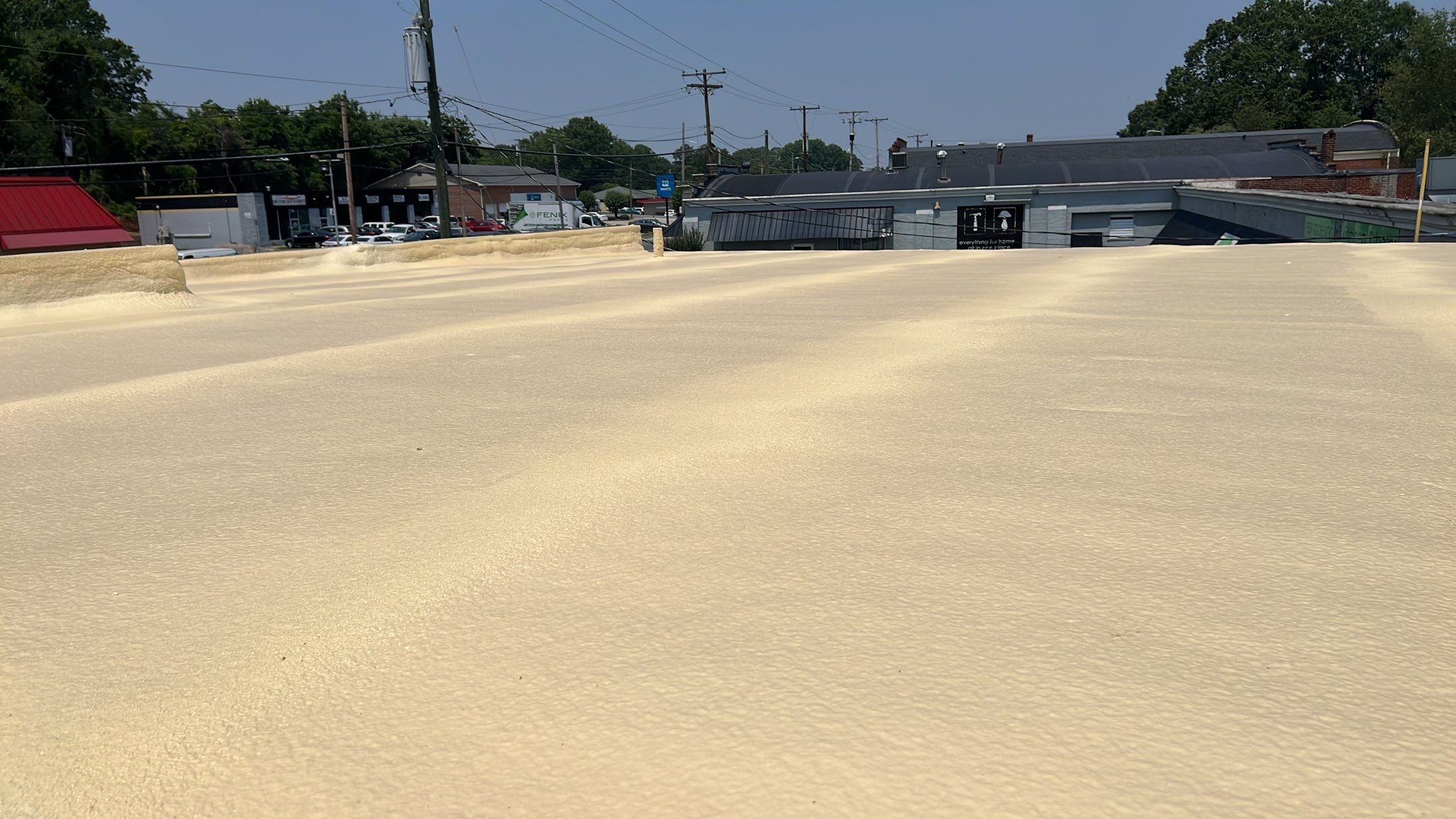
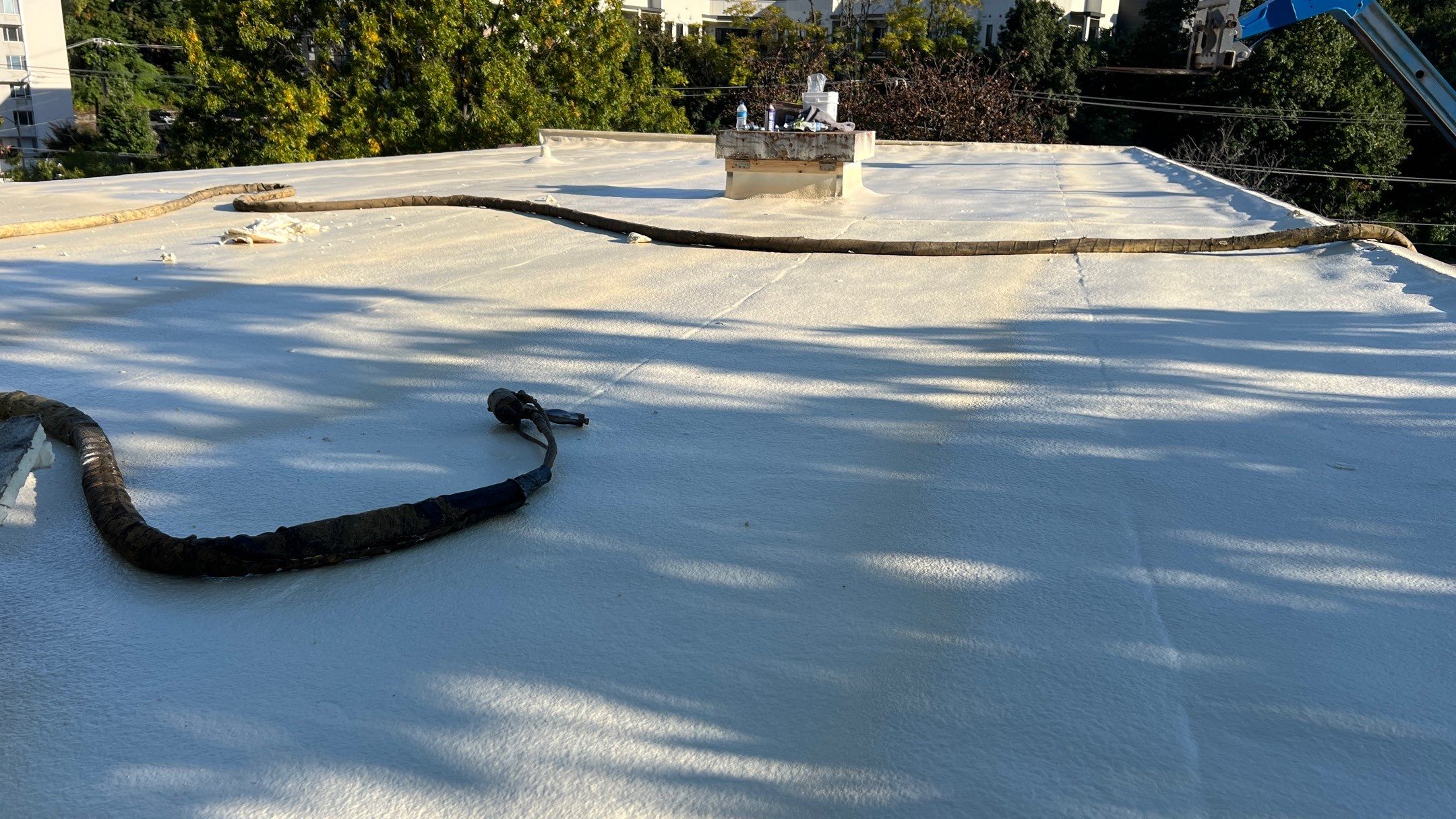
Right now we’re working on multiple commercial buildings in Trinity, and the photos from these jobs show exactly what I’m talking about. You’re seeing raw spray foam before we apply the protective coatings—this is the foundation of the system. That foam you see is doing two jobs simultaneously: waterproofing your building and insulating it. The R-value per inch on closed-cell spray foam beats every other roofing material on the market. We’re talking about R-6 to R-7 per inch, which means even a modest foam layer cuts your HVAC costs dramatically.
Every spray foam roof we install gets a basecoat and a topcoat when we’re finished. The raw foam you see in these project photos needs protection from UV rays—that’s what the coating system provides. The basecoat bonds to the foam, and the topcoat reflects heat and protects against weather. This isn’t optional. This is how a spray foam system works correctly.
Our Spray Foam services cover everything from initial application to that final protective coating system.
Why Winston-Salem Buildings Need the Energy Benefits of Spray Foam
Your cooling bills in July and August aren’t just high because energy is expensive. They’re high because heat is radiating through your roof deck into your building. A traditional single-ply membrane or metal roof panel has minimal insulation value. Heat transfers right through, your HVAC system runs constantly, and you’re paying Duke Energy instead of investing in your business.
Spray foam creates a thermal barrier that old-school roofing can’t match. The foam itself is the insulation and the waterproofing membrane. You’re not layering products and hoping they work together. You’re installing a monolithic system that bonds to your existing roof deck, seals every gap, and stops thermal transfer cold.
We see this all the time with warehouse buildings and manufacturing facilities around Winston-Salem. The owner has been dealing with high energy bills for years, assuming that’s just part of doing business. Then we install spray foam and their cooling costs drop by percentages that make the roof investment pay for itself faster than they expected. This isn’t magic—it’s physics. Better insulation means less energy waste.
The self-flashing property matters more than most people realize until they’ve dealt with roof leaks. Traditional roofing requires separate flashings at every transition point. Those flashings are different materials with different expansion rates, and they’re mechanically attached or adhered. Over time, movement happens. Seams open. Water finds a path. With spray foam, the same material that covers your field area flows up and over every protrusion and wraps every detail. It’s one continuous barrier.
The Spray Foam Process: Raw Application to Finished System
These Trinity projects show you the raw spray foam stage. This is after we’ve prepped the substrate, made sure everything is dry and ready for adhesion, and applied the foam in controlled lifts to build thickness without creating heat buildup or application defects.
We use closed-cell polyurethane foam for commercial roofing. This material expands as we spray it, filling gaps and creating that seamless surface you see in the photos. The foam bonds mechanically and chemically to the substrate—whether that’s metal, concrete, wood, or an existing built-up roof. We’re not just laying material on top. We’re creating a bond that makes the foam and the deck work as one system.
The thickness we apply depends on your building’s needs. More thickness means higher R-value and better insulation, but it also means more material cost. We work with you to find the sweet spot where energy savings justify the investment. Most commercial applications run between one and three inches of foam thickness.
After the foam cures, we apply the coating system. The basecoat goes on first—this is typically an elastomeric coating that bonds to the foam and creates a smooth surface for the topcoat. Then comes the topcoat, which is almost always a white or light-colored reflective coating. That reflective surface bounces solar heat away instead of absorbing it. The difference in surface temperature between a black EPDM roof and a white-coated spray foam roof can exceed 50 degrees on a summer afternoon.
The entire process from start to finish depends on building size and complexity, but we’re not talking about months of disruption. Most commercial buildings get fully operational spray foam systems in days, not weeks. The foam cures quickly, and the coatings dry fast in decent weather.
According to the Spray Polyurethane Foam Alliance, properly installed and maintained spray foam roofing systems routinely last decades when maintained correctly, making them one of the longest-lasting commercial roofing options available.
Signs Your Winston-Salem NC Building Needs Spray Foam Roofing
You might be wondering if spray foam makes sense for your situation. Here’s what we look for when evaluating buildings around Winston-Salem:
- High summer cooling costs — If your energy bills spike dramatically in warm months, you’re probably losing conditioned air through your roof
- Existing roof with good structural deck — Spray foam works great as a restoration system over old roofs that are leaking but have solid decking underneath
- Multiple roof penetrations — Buildings with lots of HVAC units, vents, pipes, and equipment benefit hugely from self-flashing properties
- Difficult-to-flash details — Parapets, unusual angles, skylights, and complex transitions are where spray foam excels
- Need for added insulation — If your building was built before modern energy codes, spray foam adds substantial R-value while solving roofing problems
- Recurring leak issues at seams — Tired of chasing leaks where your metal panels overlap or membrane seams separate? Spray foam eliminates seams entirely
- Odor or comfort complaints — Temperature variations and moisture problems often show up as employee complaints before you see obvious damage
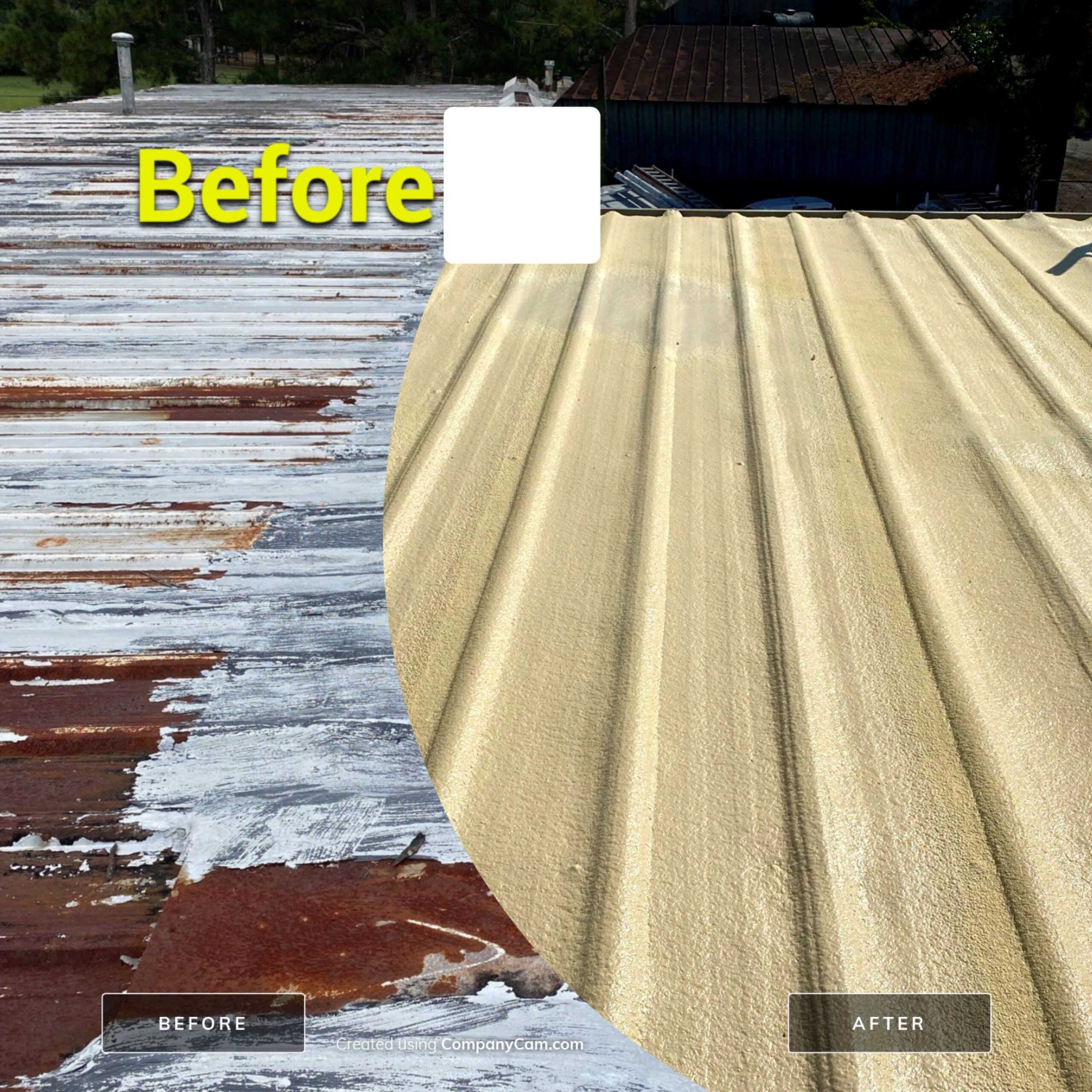
Spray foam works as a restoration over many existing roof types. If your roof is fundamentally failing—rotted deck, collapsed structure, serious ponding water—that needs addressing first. But if you’ve got a metal roof with seam leaks, a built-up roof that’s reached end of life, or a single-ply membrane that’s shrinking and pulling, spray foam can give you a completely new roof system without a complete tear-off.
That’s more cost-effective than full replacement in many situations. You’re avoiding the labor and disposal costs of tearing off the old roof, and you’re adding significant insulation value your building probably didn’t have before.
Why Choose Sunny Sky Roofing LLC for Spray Foam in Winston-Salem
We’ve been installing commercial roofing systems across the Triad for years, and spray foam requires specific expertise that not every roofing contractor has developed. The application process is more technical than rolling out a membrane or screwing down metal panels. Temperature, humidity, substrate prep, and application technique all affect the final result.
Joe Yutzy built Sunny Sky Roofing on the principle that commercial building owners deserve straight answers and quality work. We don’t push spray foam on every building that calls—we evaluate your situation and recommend the system that makes sense for your building’s condition, your budget, and your long-term plans. Sometimes that’s spray foam. Sometimes it’s not.
When we do install spray foam, you get the complete system: proper substrate prep, professional foam application, full basecoat and topcoat protection. The projects we’re working on in Trinity right now will get finished the right way, with protective coatings that ensure those foam systems last for decades.
We also recommend annual roof inspections as standard practice for any commercial roof. Spray foam systems are durable, but they’re not maintenance-free. That topcoat needs periodic inspection, and any small damage should get addressed before it becomes a bigger problem. Regular maintenance extends roof life dramatically—true for every roof type, including spray foam.
Our commercial roofing in Winston-Salem covers everything from small repairs to complete roof systems like these spray foam installations.
How long does a spray foam roof last compared to other commercial roofing systems?
Spray foam roofing systems routinely last multiple decades with proper maintenance. The foam itself doesn’t degrade—it’s the protective topcoat that needs attention. We recommend annual inspections and periodic recoating to maintain the UV protection. With regular maintenance, spray foam often outlasts traditional single-ply or metal roofing systems. The key is addressing small coating issues before they expose the foam to extended UV exposure.
Can you apply spray foam over my existing commercial roof?
Yes, in most cases. Spray foam works as a restoration system over metal, built-up roofing, modified bitumen, and existing single-ply membranes—as long as the roof deck underneath is structurally sound and dry. We evaluate your existing roof to make sure there’s no rot, serious ponding water, or structural issues that need correction first. If the deck is solid, spray foam bonds right to the existing surface and creates a completely new roof system without the cost and disruption of tearing everything off.
Will spray foam really cut my energy bills in Winston-Salem?
The energy savings are real and measurable. Closed-cell spray foam provides R-6 to R-7 per inch of insulation, which is substantially higher than traditional roofing systems. Most commercial buildings see significant reductions in cooling costs during summer months because the foam prevents heat transfer through the roof. The white reflective topcoat we apply also bounces solar radiation away instead of absorbing it, keeping your roof surface dramatically cooler than dark-colored roofing materials. The exact savings depend on your building size, HVAC efficiency, and current insulation levels, but energy cost reduction is one of the primary reasons businesses choose spray foam.
What maintenance does a spray foam roof need?
We recommend annual roof inspections at minimum for all commercial roofs, including spray foam. During inspections, we check the topcoat for any damage, look for areas where the coating might be thinning, and make sure all penetrations and flashing areas are still properly sealed. Small coating repairs are straightforward and inexpensive when caught early. The foam itself is extremely durable, but the protective coating takes the UV exposure and weather impact, so maintaining that topcoat is essential. Most spray foam roofs need recoating every 10 to 20 years depending on exposure and conditions. Regular maintenance keeps your system performing correctly for decades.
Ready to Cut Energy Costs with Spray Foam in Winston-Salem?
If you’re dealing with high cooling bills, recurring leaks, or an aging roof that needs replacement, spray foam might be the solution that solves multiple problems at once. We’re currently working on several commercial projects in the Triad, and we’d be happy to evaluate your building and explain your options.
Call Sunny Sky Roofing LLC at 336-523-2103 to schedule a roof assessment in Winston-Salem. We’ll give you straight answers about whether spray foam makes sense for your situation, what the process involves, and what you can expect for energy savings and roof performance. You can also contact us through our website to get the conversation started.