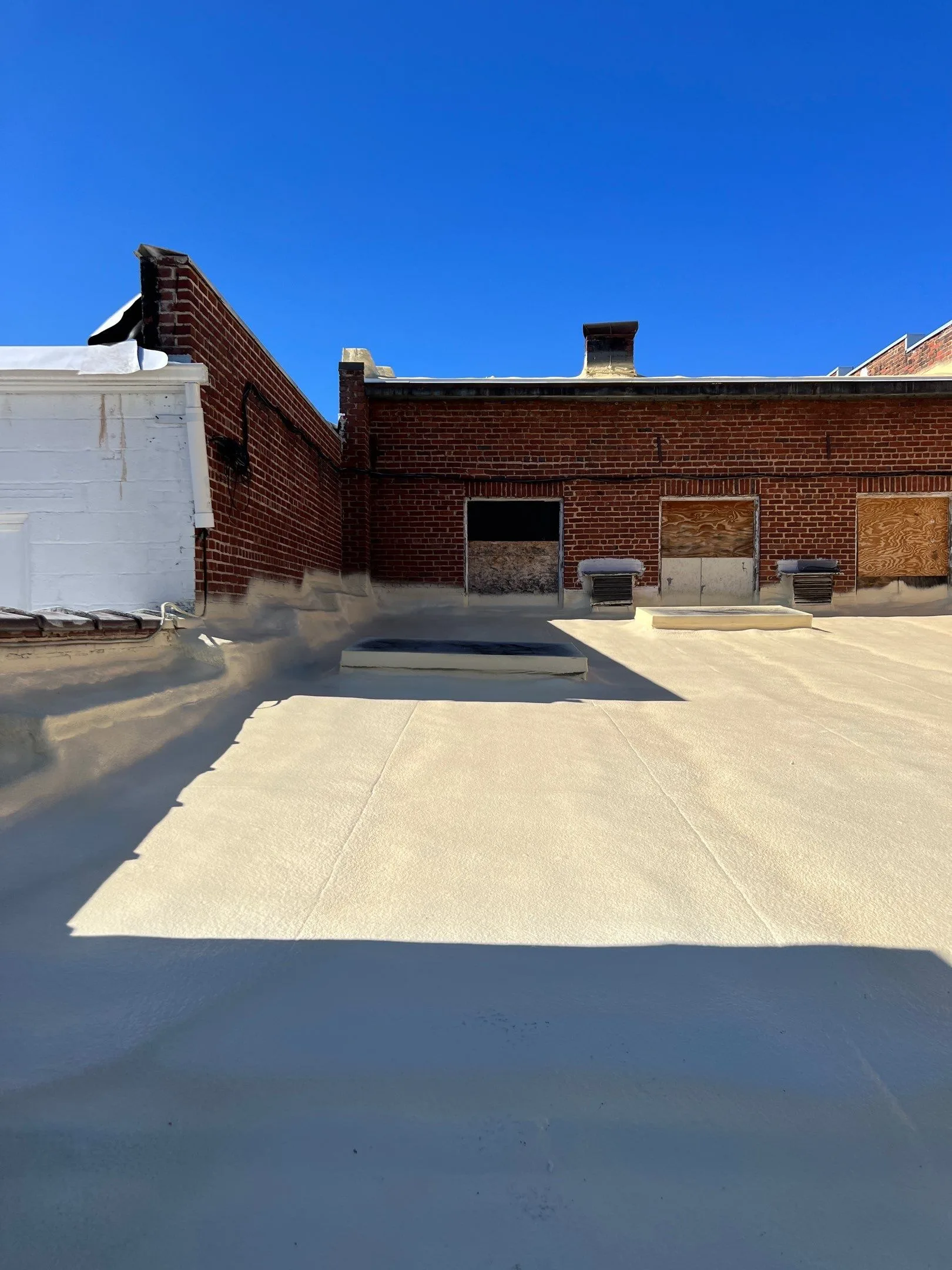

When a commercial building needs spray foam High Point NC contractors rely on Sunny Sky Roofing LLC to deliver durable restoration solutions that extend roof service life. We recently completed a spray polyurethane foam (SPF) project in Trinity that demonstrates how this versatile system handles multiple roof substrates, fills low spots, self-flashes penetrations, and adds significant insulation value. Spray foam works equally well for targeted commercial roof repair and full restoration systems across modified bitumen, built-up roofing, metal panels, and other commercial substrates common throughout the Triad.
Why High Point Commercial Roofs Benefit From Spray Foam Restoration
Commercial roofs in High Point face constant challenges from ponding water, failed seams, backed-out fasteners, and substrate movement. Traditional repair methods like tar patches offer only temporary relief because tar dries out, cracks under thermal cycling, and allows water infiltration that accelerates deterioration. Spray polyurethane foam eliminates these problems by creating a monolithic, seamless surface that conforms to every roof detail. The two-component system—isocyanate (A-side) mixed with polyol resin (B-side)—chemically reacts to form rigid closed-cell foam that bonds directly to clean, prepared substrates. This approach stops leaks at their source rather than masking symptoms with patchwork repairs that fail within months.
We apply spray foam using specialized high-pressure equipment that mixes the components at precise ratios for consistent density and adhesion. The foam expands immediately upon contact, filling low spots where water ponds and building thickness to establish proper drainage. North Carolina’s humidity and temperature swings make substrate prep critical—we remove all loose material, clean surfaces thoroughly, and verify adhesion conditions before application. The foam self-flashes around penetrations, up parapet walls, and over complex roof details that traditional membranes struggle to seal. This versatility makes spray foam ideal for roofs with multiple HVAC units, vent stacks, and equipment bases that create leak-prone transitions.
What This Spray Foam Project in Trinity Involved
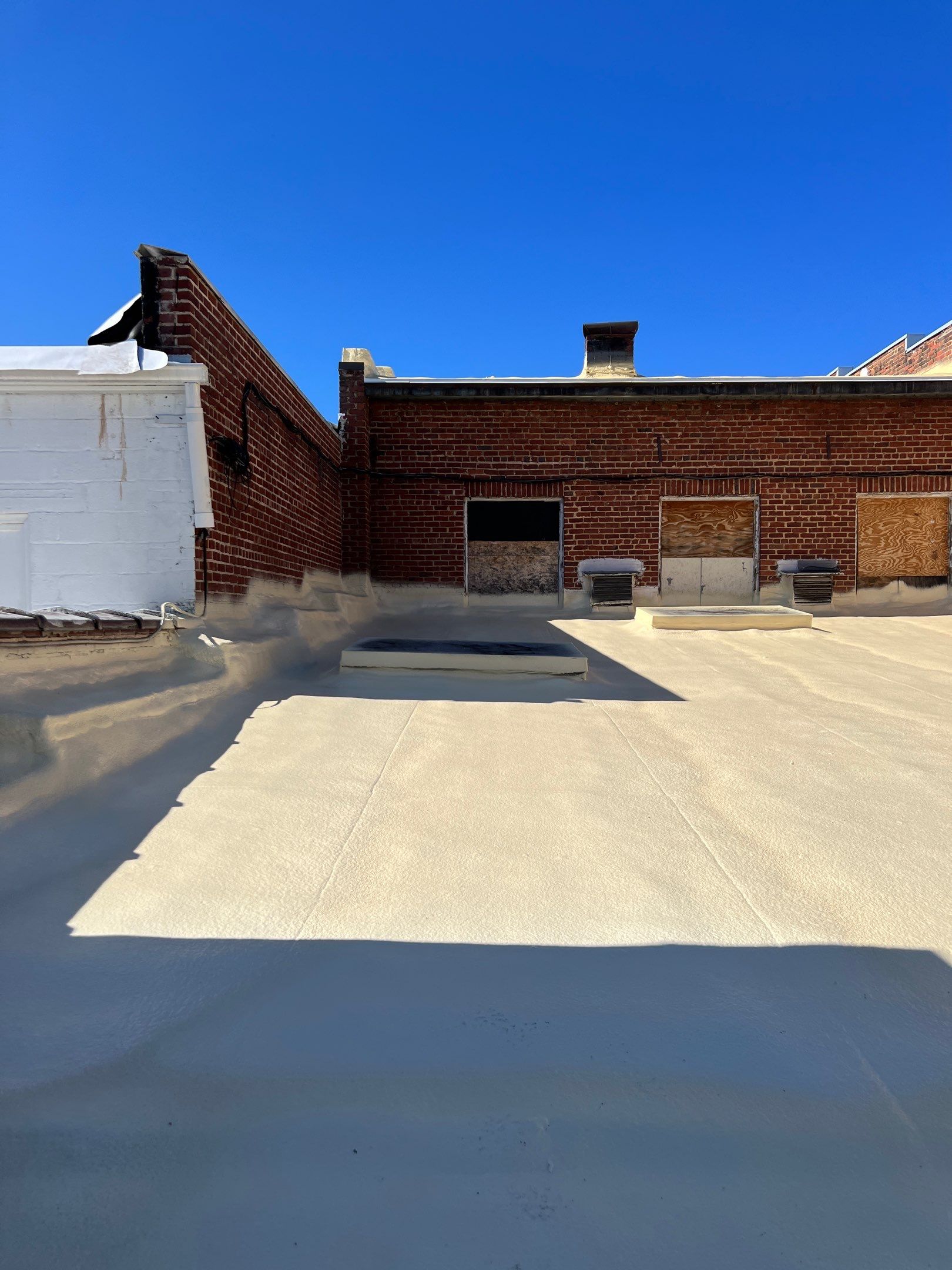
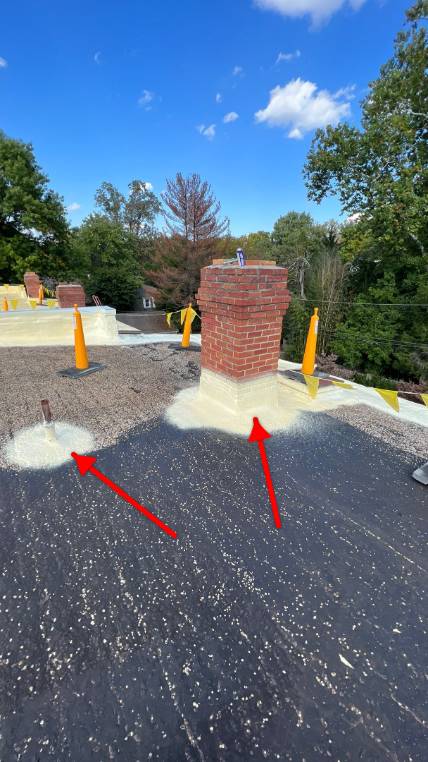
The during photos show active spray foam application across multiple roof areas with varying substrates. We started by pressure washing all surfaces and removing failed tar patches, loose gravel, and deteriorated material that would compromise adhesion. Each substrate required different prep protocols—metal roofs need rust treatment and degreasing, while built-up roofing demands removal of alligatored surfaces and moisture testing. We verified all areas were clean, dry, and ready for foam application before mobilizing our spray rig.
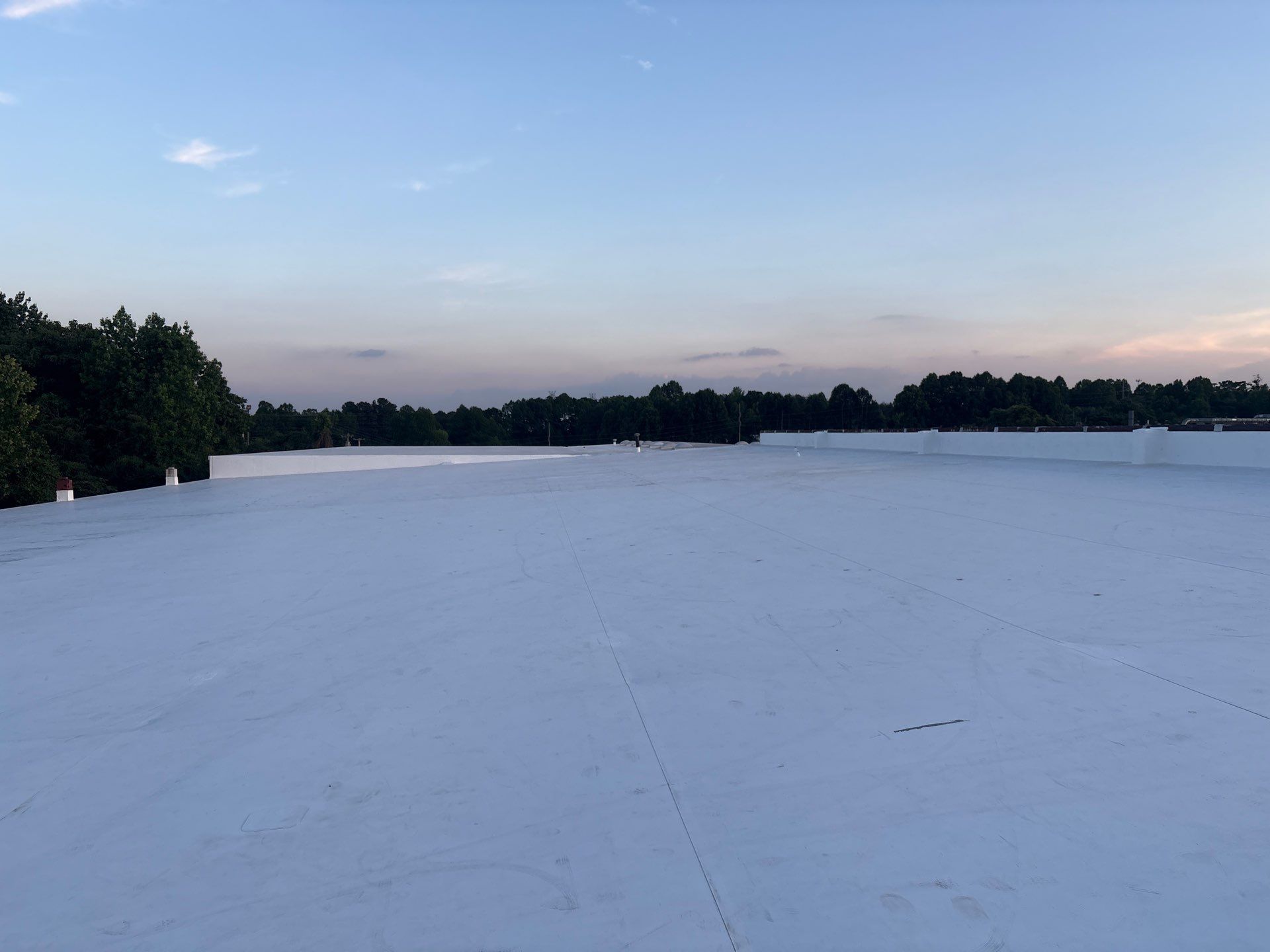
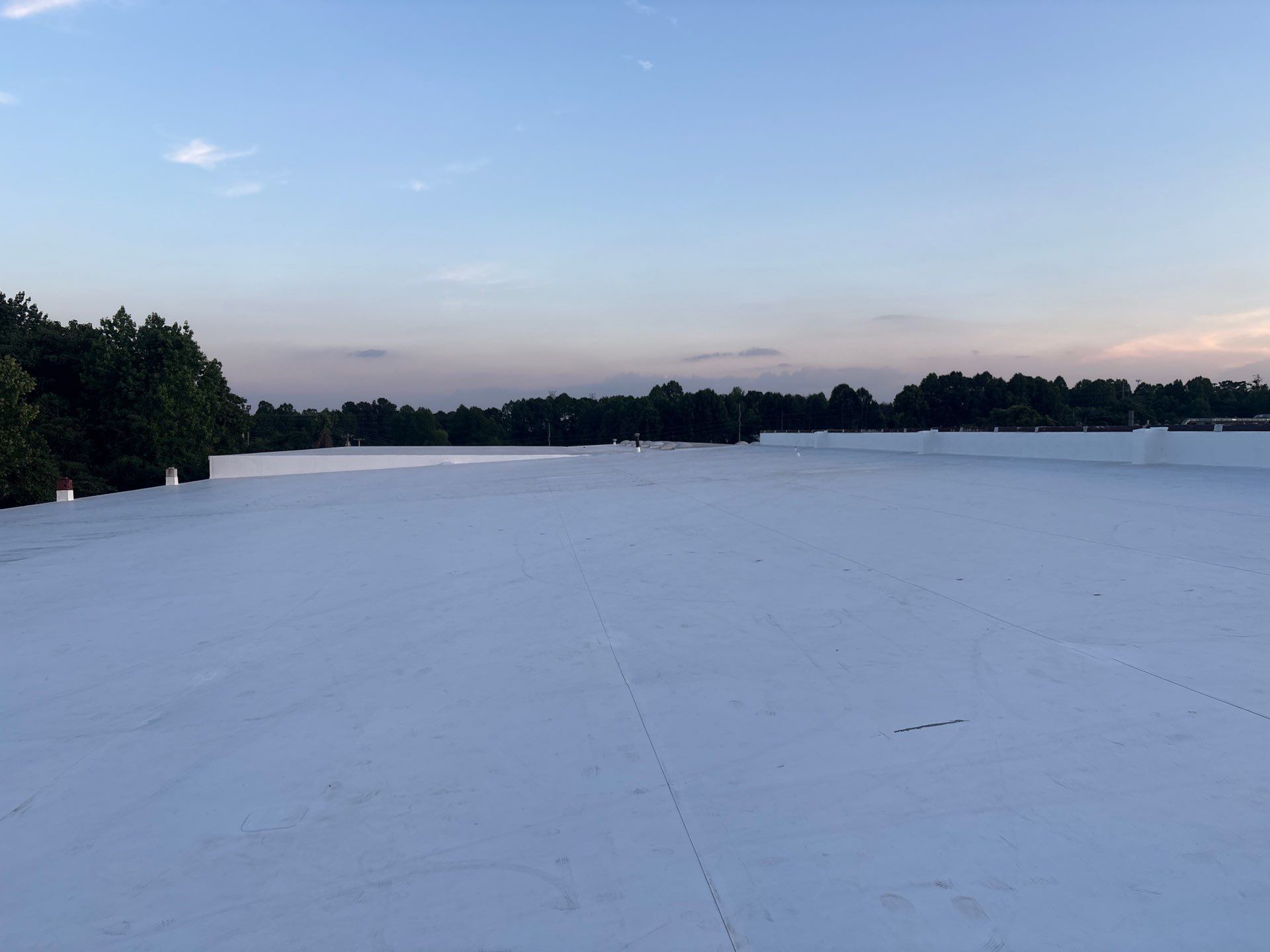
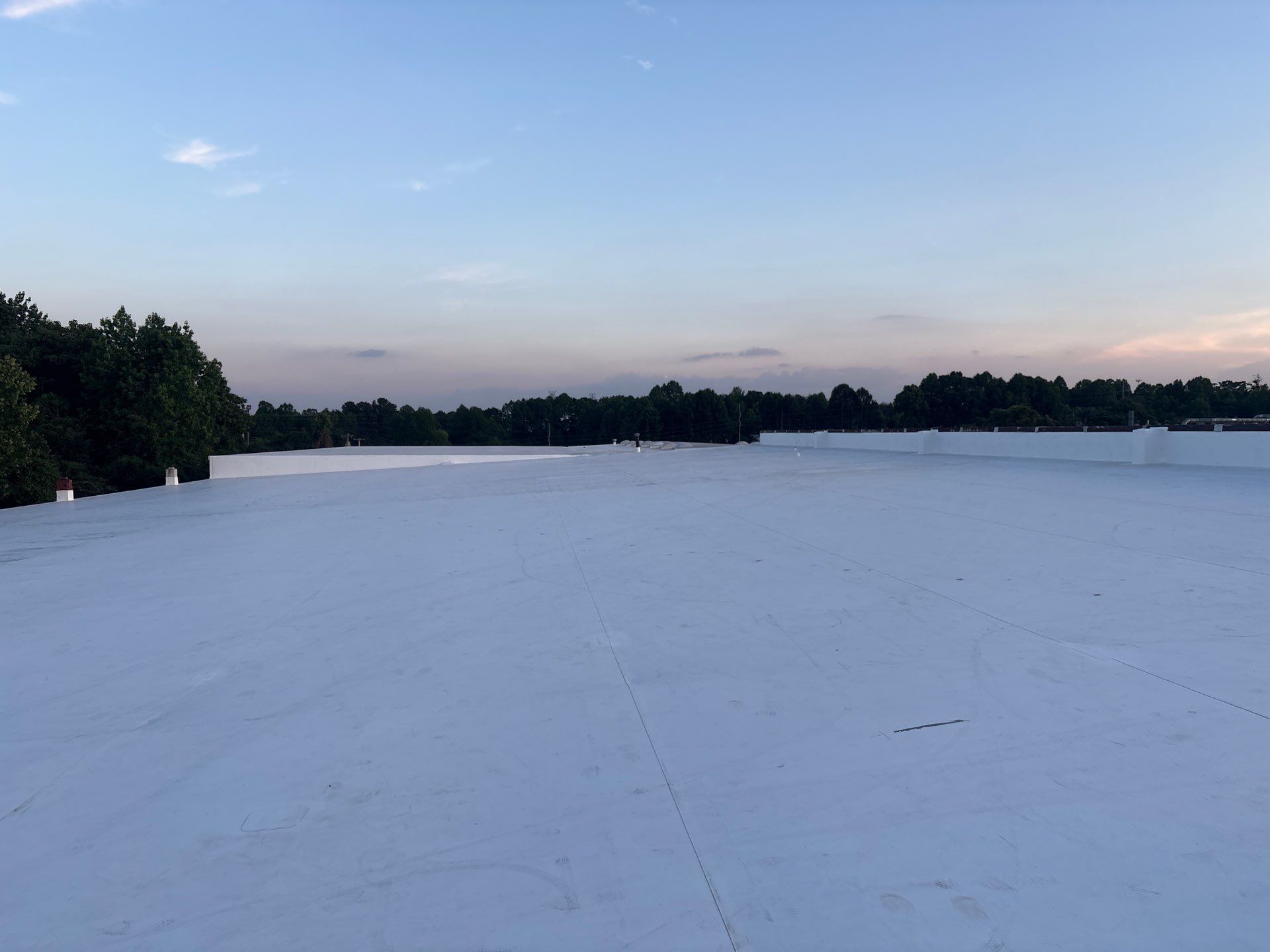
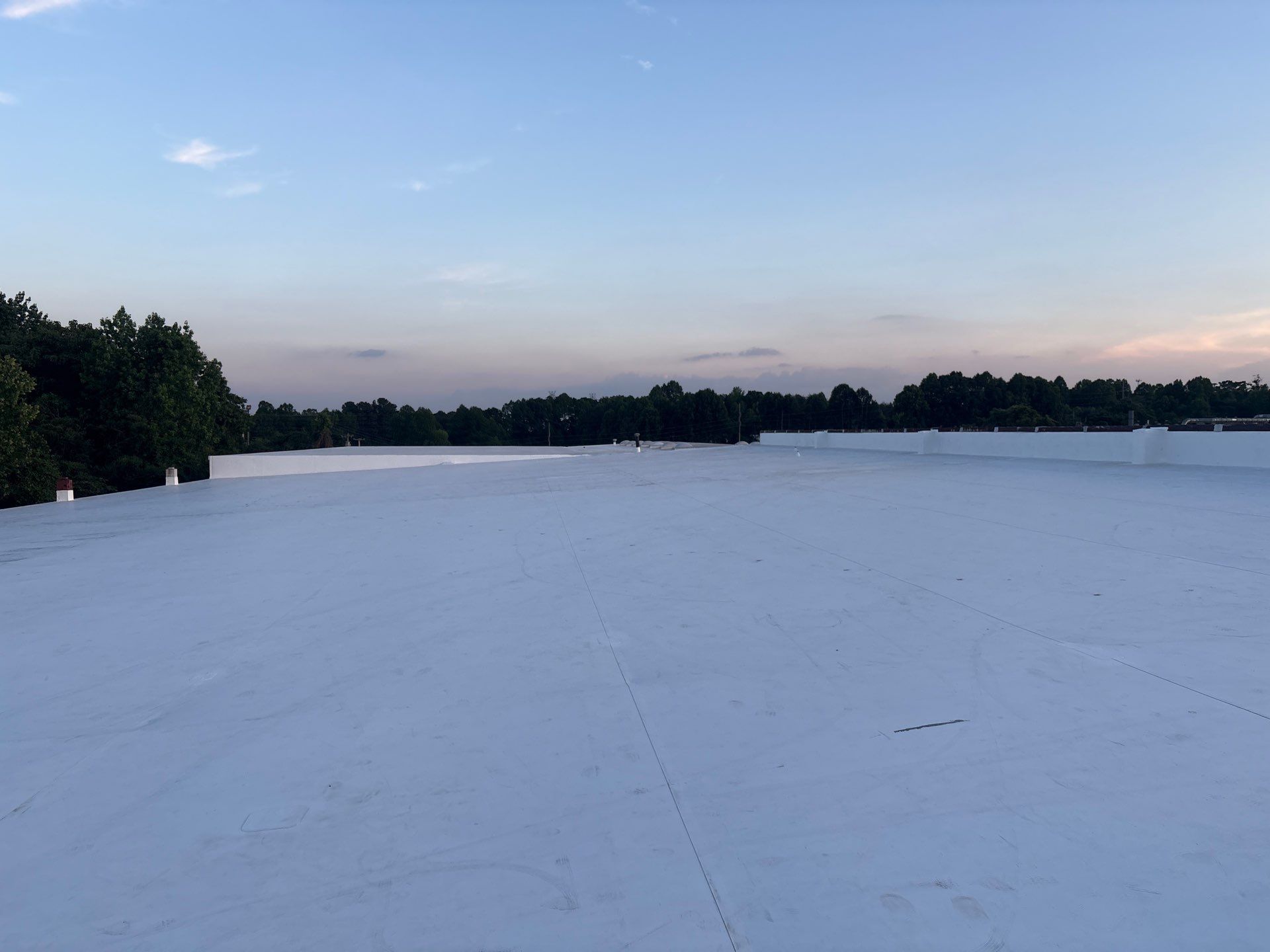
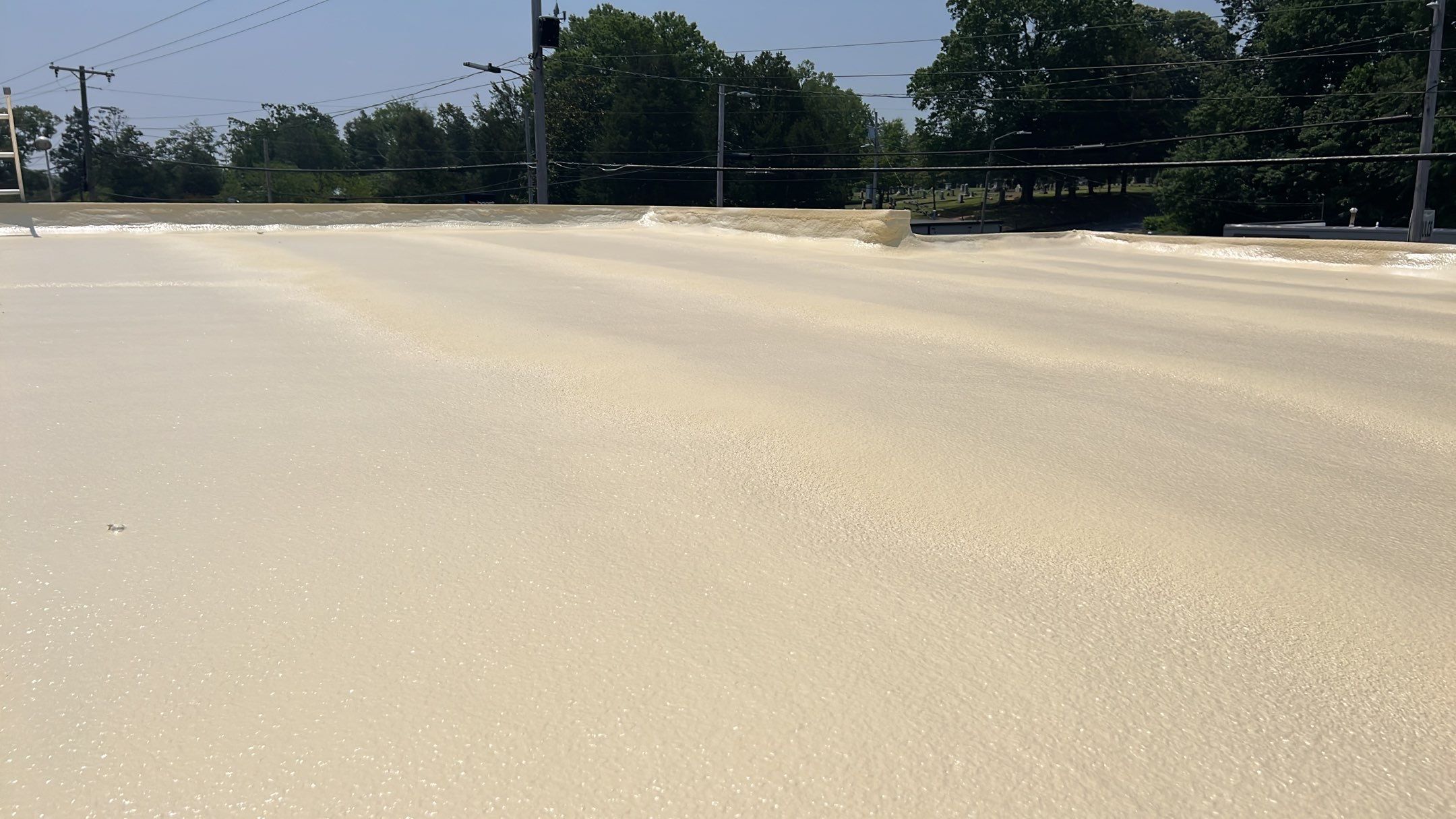
Our crew applied the two-component spray polyurethane foam in multiple passes to build the specified thickness. The after photo shows the completed foam layer creating a uniform surface across the entire roof. You can see how the foam fills depressions, levels uneven areas, and creates seamless transitions at roof edges and penetrations. We maintained consistent lift thickness with each pass to prevent overheating and ensure proper cell structure throughout the foam layer. The foam’s closed-cell structure provides exceptional R-value per inch—dramatically improving the building’s thermal performance compared to the original assembly.
The foam application shown in these photos represents the foundation layer of the complete system. After foam cures, we apply a base coat of elastomeric coating to seal the foam surface and prepare it for the topcoat. The topcoat provides UV protection, weather resistance, and the final waterproof barrier. This three-layer system—foam, base coat, and topcoat—qualifies for Spray Foam manufacturer warranties ranging from 10 to 20 years depending on system specifications. The complete assembly delivers both immediate leak protection and long-term performance that postpones costly commercial roof replacement.
Results: What Changed After This Spray Foam Restoration
- Eliminated ponding water by filling low spots and establishing positive drainage across all roof sections
- Created monolithic waterproof barrier with no seams, fasteners, or vulnerable transitions
- Self-flashed all penetrations, parapet walls, and roof edges with seamless foam application
- Added substantial insulation value that reduces HVAC load and improves building comfort
- Stopped active leaks at substrate level rather than applying temporary surface patches
- Extended roof service life significantly compared to tear-off and replacement costs
- Prepared substrate for manufacturer-backed warranty once base coat and topcoat are applied
- Delivered immediate protection while building owner defers major capital expense
What High Point Building Owners Should Know About Spray Foam
Spray polyurethane foam works on nearly all commercial roof substrates including metal, modified bitumen, built-up roofing, concrete, and existing single-ply membranes. The foam must bond to clean, sound substrate—areas with active leaks require moisture removal and substrate drying before application. Temperature and humidity conditions affect foam application, so timing projects for favorable weather windows ensures proper curing and adhesion. The Spray Polyurethane Foam Alliance provides detailed technical resources about foam roofing systems and proper installation standards.
Spray foam requires protective coating immediately after application because UV exposure degrades the foam surface. We apply elastomeric base coats and topcoats that provide weather protection and qualify the system for manufacturer warranties. These warranties require documented maintenance including annual inspections and periodic recoating as specified by the manufacturer. Properly maintained spray foam systems routinely deliver decades of service, but neglected systems develop coating breakdown that exposes foam to UV damage. Building owners should budget for recoating every 10 to 15 years depending on coating type, roof exposure, and environmental conditions.
Spray foam adds significant weight to roof structures—approximately half a pound per square foot per inch of thickness. Most commercial buildings easily handle this load, but older structures or those with known deficiencies require engineering review before foam application. We evaluate structural capacity during roof assessments and recommend solutions when load concerns exist. Spray foam also changes roof surface characteristics—the cured foam creates a hard, durable surface that resists foot traffic better than many single-ply membranes, but sharp impacts can damage the coating layer. We recommend protective walkway pads at high-traffic areas and equipment service zones.
Why Commercial Property Owners in High Point Choose Sunny Sky Roofing LLC
Sunny Sky Roofing LLC brings specialized spray foam expertise to every project across the areas we service in the Triad. We operate our own spray equipment and employ trained technicians who understand the chemistry, application techniques, and quality standards that separate successful restorations from premature failures. Our diagnostic process identifies whether spray foam offers the best solution or if alternative approaches like fluid-applied coatings or membrane replacement better serve your building’s specific conditions and budget.
We provide honest assessments that consider remaining roof life, structural capacity, substrate condition, and long-term maintenance requirements. Some roofs benefit most from targeted spray foam repairs combined with coating systems. Others need comprehensive foam restoration that addresses widespread deterioration and drainage problems. We explain options clearly, document conditions with photos and reports, and recommend solutions that deliver measurable value. Our relationships with manufacturers including GAF, Carlisle SynTec, Firestone, and General Coatings ensure access to quality materials and warranty programs that protect your investment.
If your High Point commercial roof shows signs of ponding water, active leaks, failed repairs, or approaching the end of its service life, call Sunny Sky Roofing LLC at (336) 523-2103 for a thorough evaluation. We’ll assess your roof’s condition, explain your options, and provide detailed proposals that help you make informed decisions. Contact us today to schedule your roof inspection and discover how spray foam restoration can extend your roof’s life while deferring replacement costs.
Frequently Asked Questions About Spray Foam in High Point
How often should a commercial roof in High Point be inspected?
We recommend annual inspections minimum for all commercial roofs in High Point. Buildings with heavy tree coverage, multiple HVAC units, or known drainage issues benefit from bi-annual inspections in spring and fall. Regular inspections catch minor problems before they become expensive failures and help maintain warranty compliance for spray foam and coating systems.
What causes ponding water on flat commercial roofs?
Ponding develops when roof surfaces settle, insulation compresses, or structural deflection creates low spots where water collects. Inadequate drainage design, clogged drains, and sagging deck sections also contribute to standing water. Spray foam fills these depressions and re-establishes positive drainage that moves water off the roof rather than allowing it to pond and accelerate membrane deterioration.
Does spray foam preserve my existing roof warranty?
Applying spray foam typically voids existing roof warranties because you’re installing a new roofing system over the original membrane. However, the completed spray foam system with proper base coat and topcoat qualifies for new manufacturer warranties ranging from 10 to 20 years depending on system specifications. Always verify warranty status before proceeding with any roof modification.
How long can spray foam extend my roof’s life?
Properly installed and maintained spray foam systems routinely provide 15 to 25 years of additional service life depending on substrate condition, foam thickness, coating quality, and maintenance consistency. The system requires periodic recoating every 10 to 15 years to maintain protection and warranty coverage. Spray foam offers significantly longer service than temporary patch repairs while costing considerably less than complete tear-off and replacement.