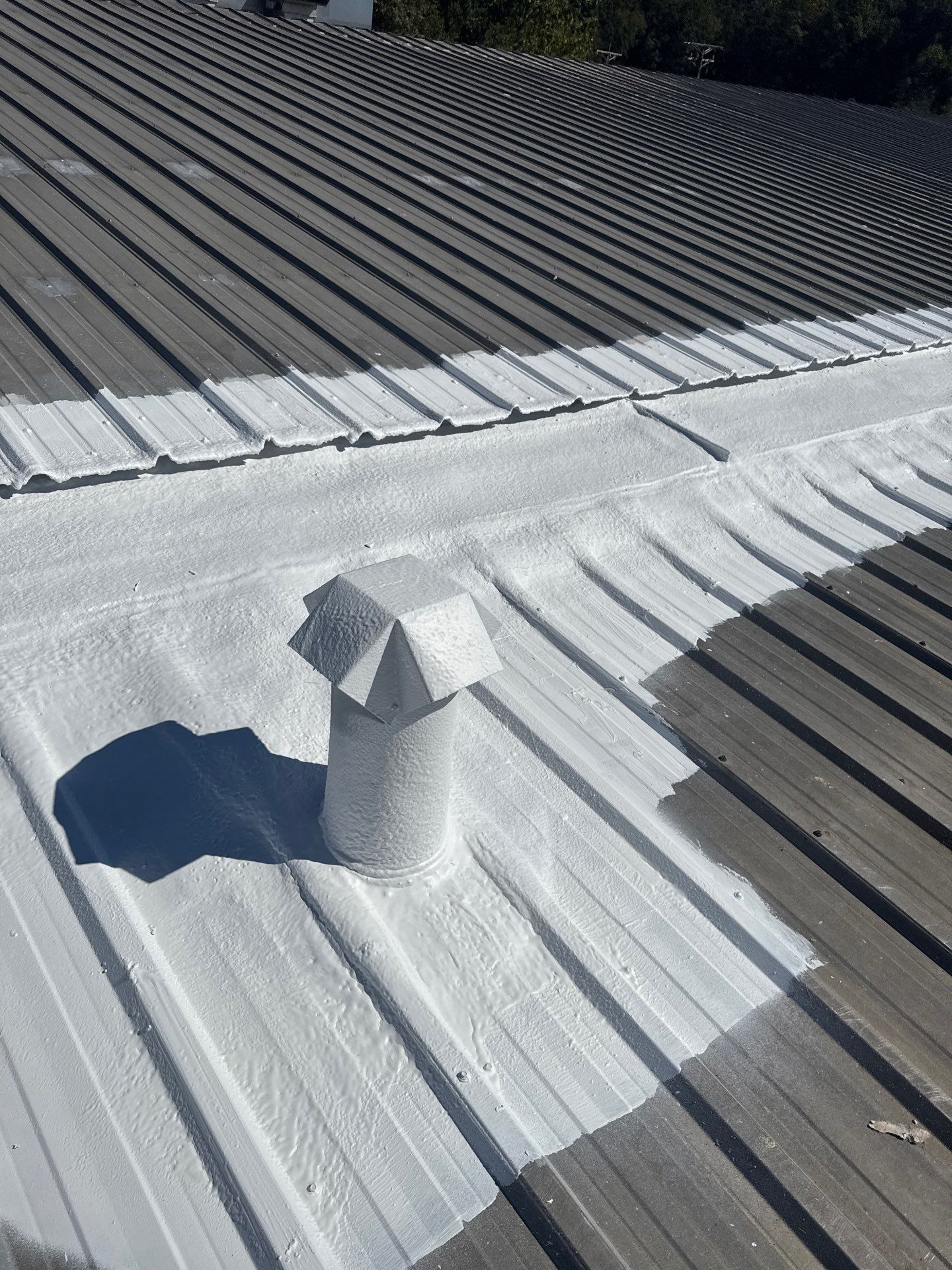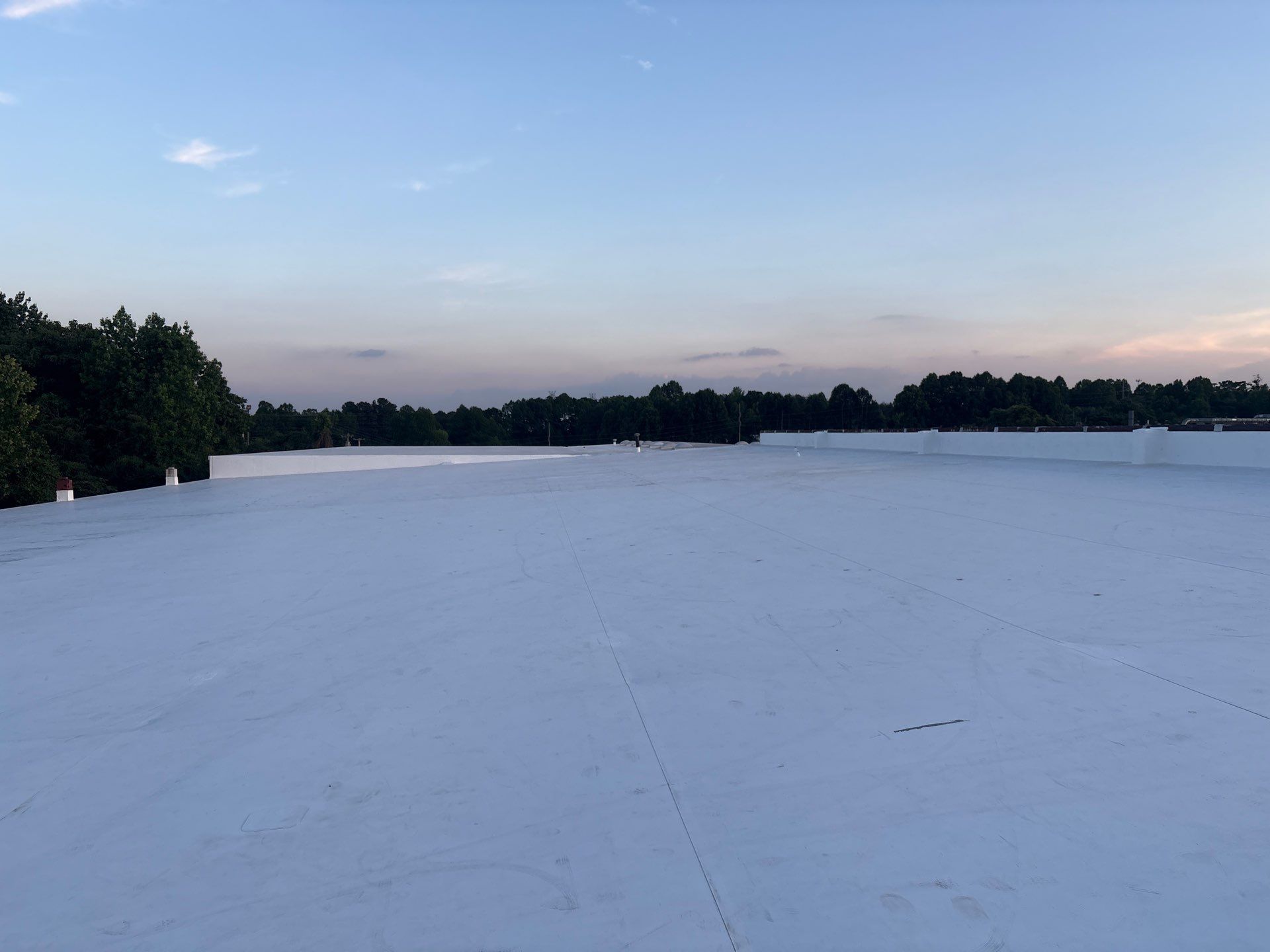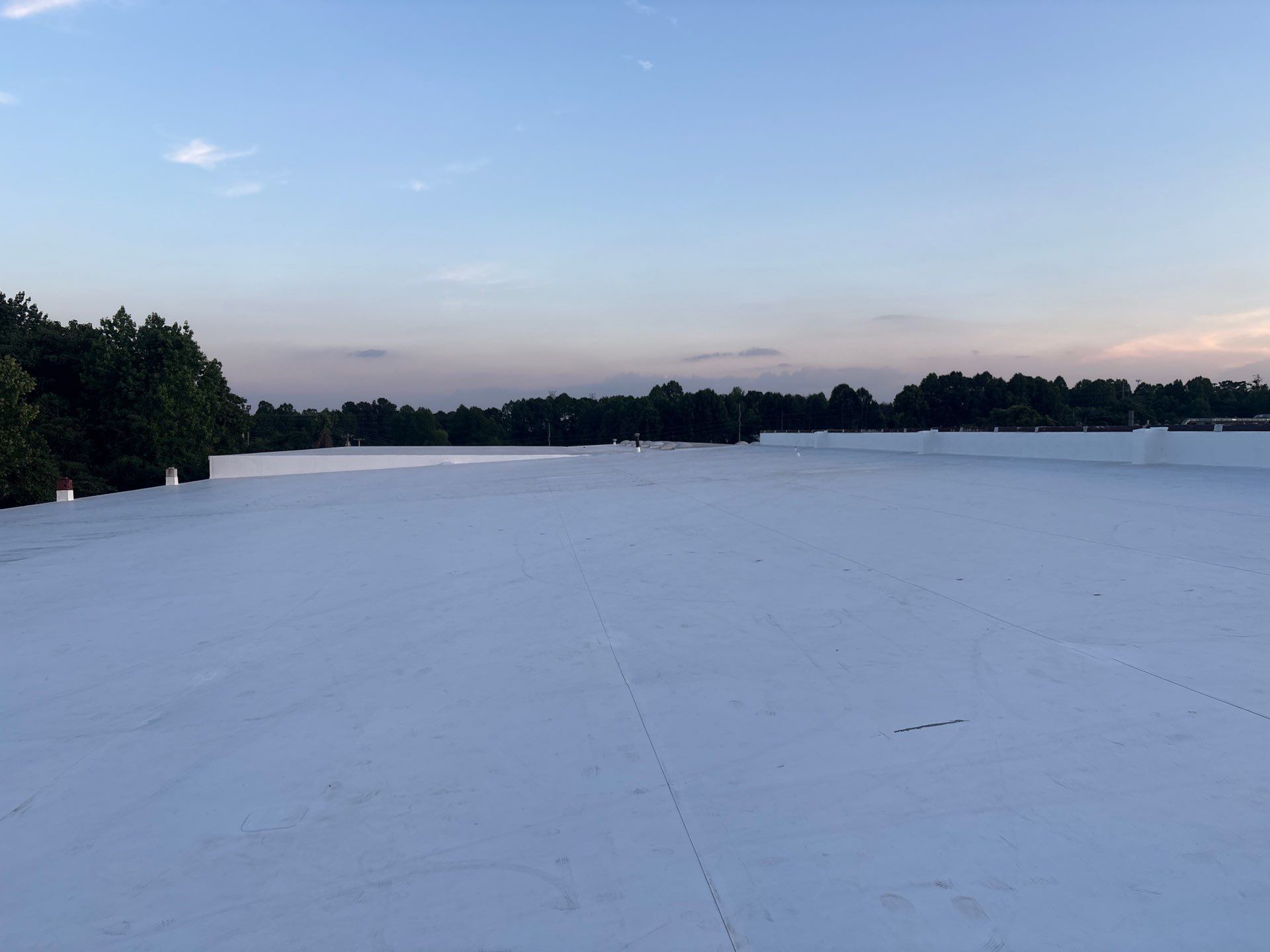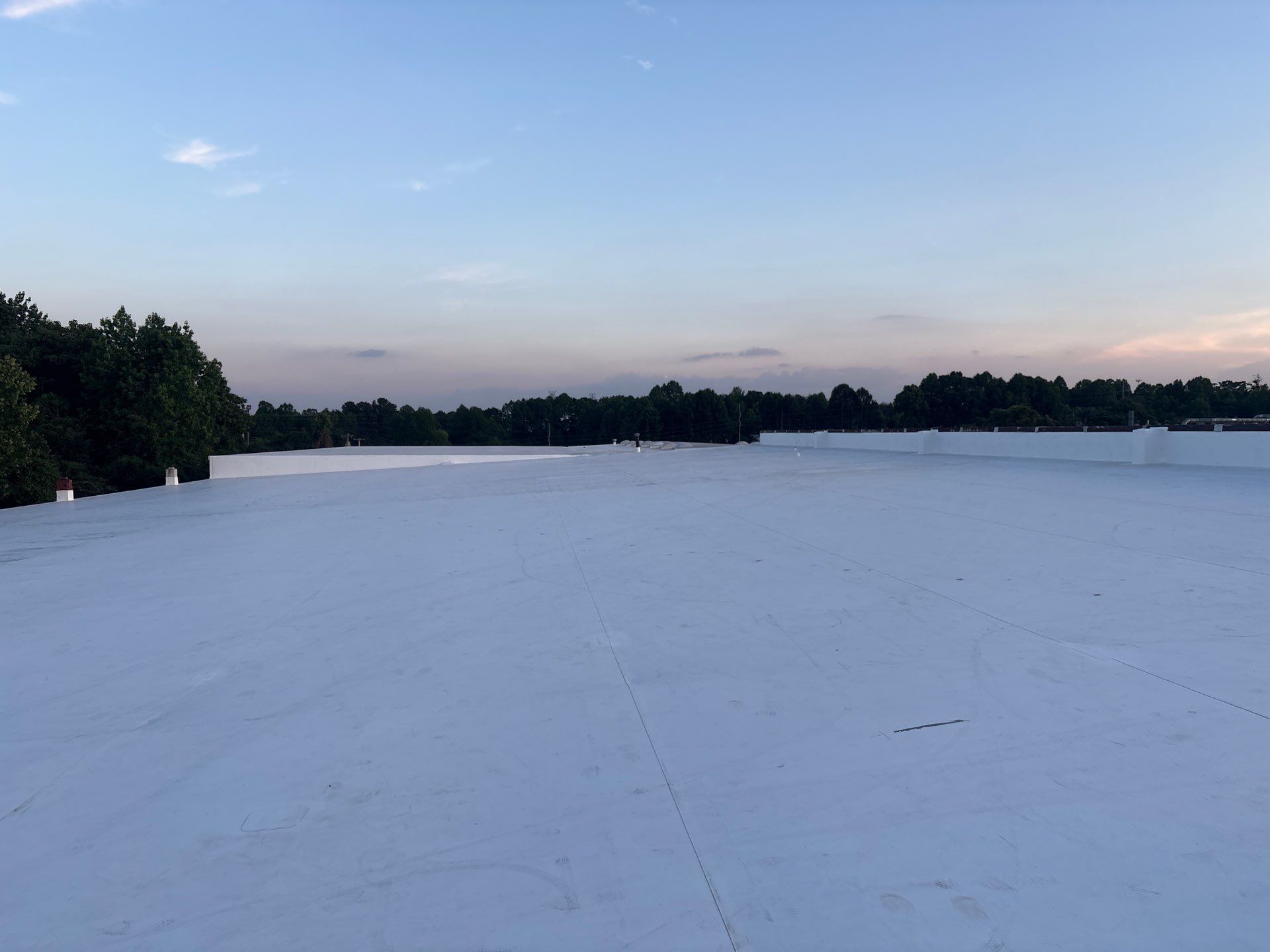

High Point’s commercial buildings face a unique challenge. Between the humidity rolling in from the east and the temperature swings we see year-round in the Triad, flat roofs take a beating. If you’re managing a warehouse, manufacturing facility, or office building with a low-slope roof that’s leaking or just plain worn out, spray foam high point nc might be the solution you didn’t know existed. We just finished a project in Kingston that shows exactly what goes into a proper spray foam installation — and it’s not just spraying foam on an old roof and calling it done.
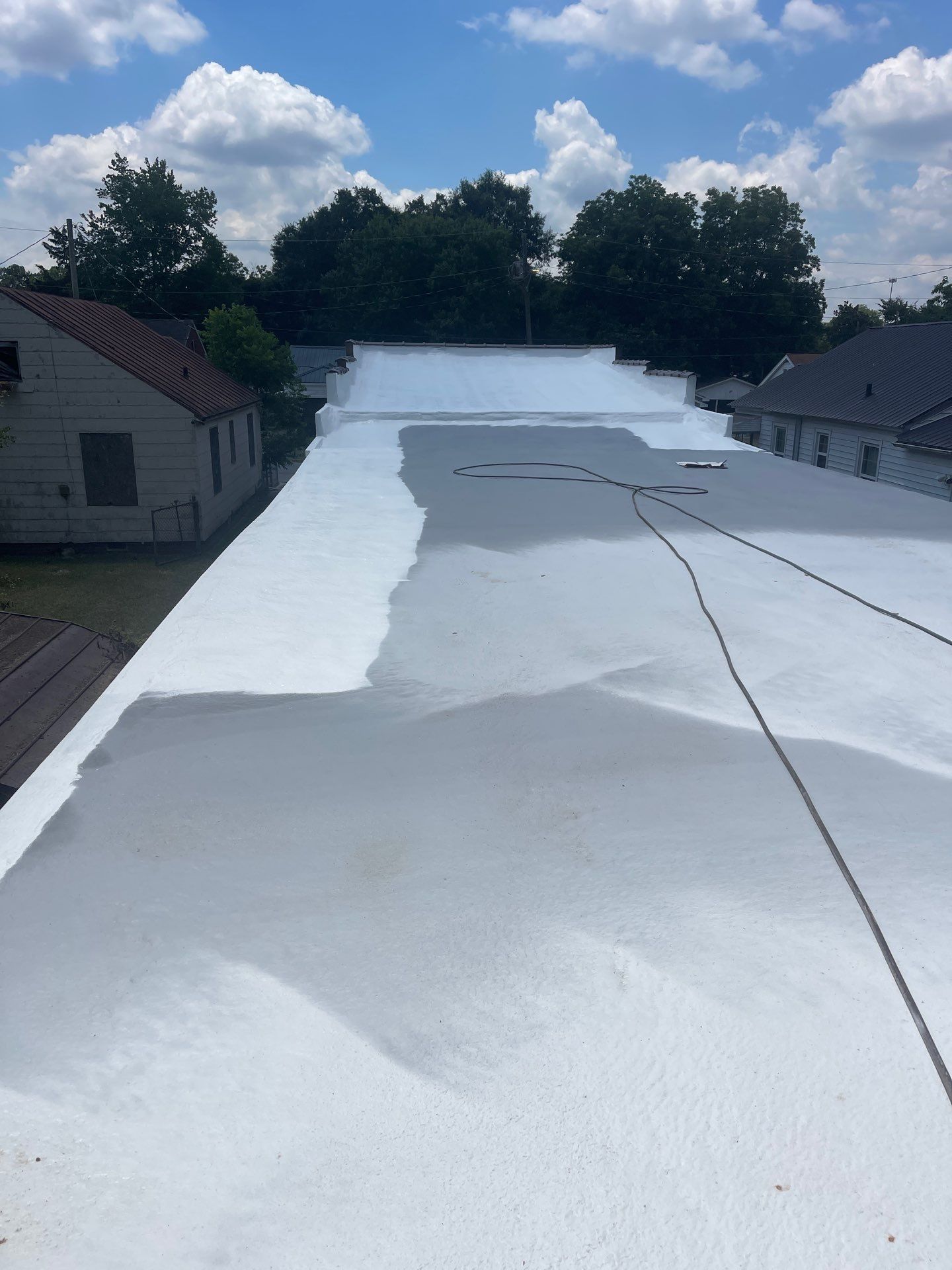
What We Found on This Kingston Project
The building owner called us because they had persistent leaks. The existing roof had been patched multiple times over the years, and those patches weren’t holding anymore. When we got up there to assess the situation, we found what we often find: the roof deck itself was sound in most areas, but years of small leaks had rotted out sections of wood decking around penetrations and along the perimeter.
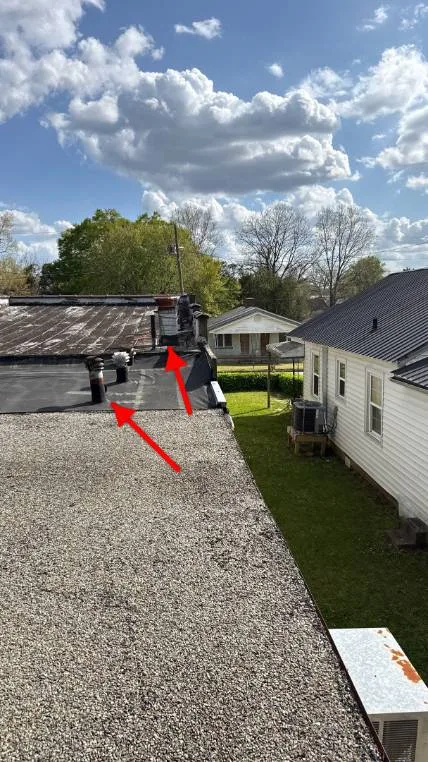
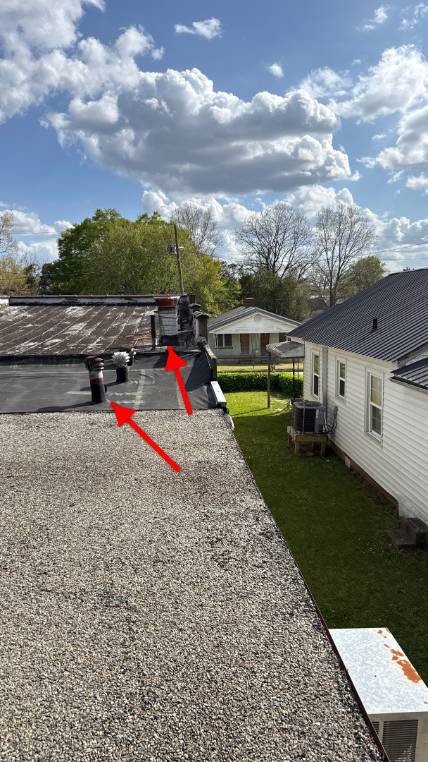
We also found old chimneys that hadn’t been used in decades, abandoned pipes sticking up through the roof, and outdated HVAC equipment penetrations that someone had cut and capped but never properly sealed. Every one of those penetrations was a leak point waiting to happen — or already leaking.
The owner wanted a long-term solution. They’d been throwing money at repairs for years and wanted to stop the cycle. That’s where our Spray Foam services came in.
Why Prep Work Makes or Breaks a Spray Foam High Point NC Installation
Here’s what most people don’t understand about spray foam roofing: the foam itself is an incredible material. It seals, it insulates, it’s waterproof, and it adheres directly to the substrate. But if you spray it over rotten wood, failing flashing, or abandoned penetrations that should’ve been removed twenty years ago, you’re just creating expensive problems.
The foam will stick to anything. That’s both its strength and its danger. If the substrate underneath is compromised, the foam can’t fix that. You’ve just buried the problem under a layer of polyurethane.
On this Kingston job, we spent significant time on prep work before we ever mixed the first batch of foam. We removed those old chimneys completely. We cut out the abandoned pipes, patched the openings properly, and made sure the roof deck underneath was solid. Where we found rotten wood decking, we tore it out and replaced it with new plywood. You can’t skip that step.
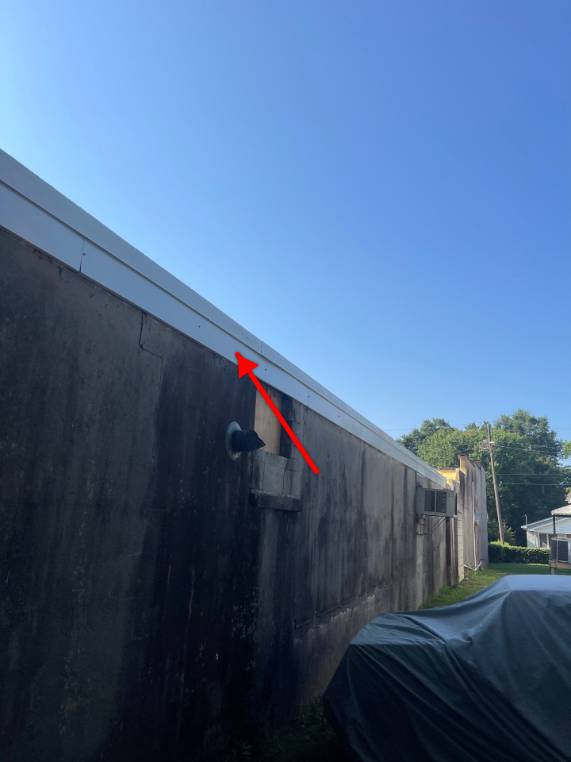
We also installed new trim along the perimeter walls and around any remaining penetrations. Spray foam needs a clean, solid edge to terminate against. If you’re working with crumbling masonry or rusted-out metal trim, the foam won’t seal properly. We installed new metal flashing where the roof meets the walls, making sure every edge had a proper termination point. This isn’t optional work — it’s the foundation of a system that’ll last twenty-five years or more.
The Spray Foam High Point NC Process We Follow
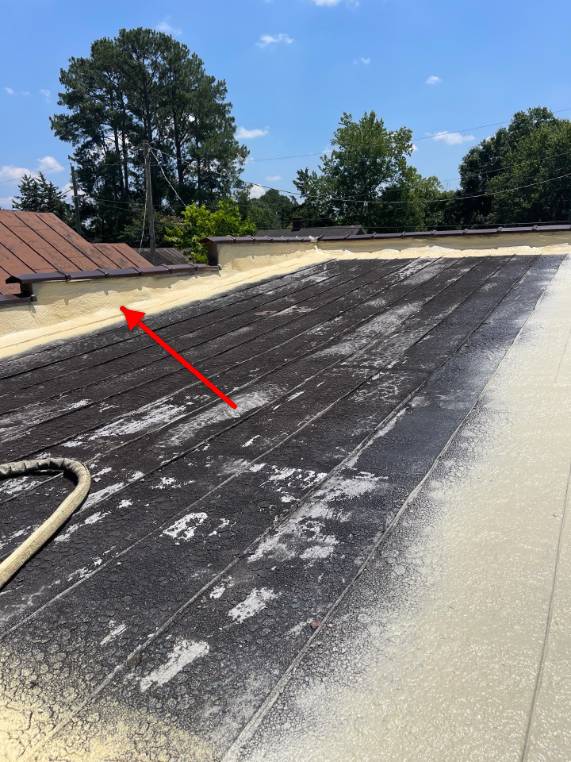
Once the prep work was done, we moved to the actual foam application. We cleaned the entire roof surface to remove loose debris, dirt, and any contaminants that would prevent adhesion. The existing roof had to be completely dry before we started spraying. If there’s moisture trapped in the substrate, the foam will trap it there forever, and you’ll have rot spreading underneath a perfectly good foam roof.
We applied the spray foam in multiple passes. The foam expands as it’s applied, and you need to build it up in layers to achieve the right thickness and ensure complete coverage. We typically aim for a minimum thickness that gives you both waterproofing and significant insulation value — most commercial applications get at least an inch and a half, often more.
After the foam cured, we applied a protective coating over the top. Spray foam is UV-sensitive, meaning direct sunlight will degrade it over time if it’s left exposed. The coating we use is specifically formulated for roof applications. It’s elastomeric, so it moves with the building as temperatures change, and it’s highly reflective, which keeps the building cooler in summer and reduces your energy costs year-round.
The whole process took us several days on this building, but most of that time was prep work and allowing proper cure times between layers. You can’t rush a spray foam installation. The weather has to cooperate — you need dry conditions and temperatures within a specific range for the foam to cure properly — and every step has to be done right.
Signs You Need Spray Foam Roofing in High Point
Not every roof is a candidate for spray foam, but many are. Here’s what we look for when a building owner calls us:
- Persistent leaks that keep coming back — You’ve patched the same areas multiple times, and water still finds a way in. Spray foam creates a monolithic, seamless barrier that eliminates most common leak points.
- High energy bills — If your HVAC system runs constantly and your building is still uncomfortable, you’re probably losing conditioned air through your roof. Spray foam adds significant insulation value, often R-6 or higher per inch.
- An aging roof that’s structurally sound — If the decking is good but the waterproofing layer is shot, spray foam lets you restore the roof without tearing everything off and starting over. That saves time, money, and avoids the disruption of a full tear-off.
- Multiple penetrations and complex roof geometry — Buildings with lots of HVAC units, skylights, or unusual roof shapes are hard to waterproof with traditional systems. Spray foam conforms to any shape and seals around penetrations completely.
- Need for a long-term solution — If you’re planning to own the building for the next twenty years, spray foam is a smart investment. With minimal maintenance, these systems regularly outlast traditional built-up or single-ply roofs.
Why High Point Building Owners Choose Spray Foam
High Point sits in the middle of North Carolina’s furniture and textile manufacturing heritage. We’ve got industrial buildings here that were built seventy or eighty years ago and are still in active use. Those buildings weren’t designed with modern energy efficiency in mind, and their roofs have been patched and re-roofed more times than anyone can count.
Spray foam gives you a way to bring those old roofs into the 21st century. You get modern waterproofing, serious insulation, and a system that’ll protect the building for decades. For commercial roofing in High Point, spray foam makes sense on everything from old manufacturing facilities to newer office buildings and warehouses.
The National Roofing Contractors Association has published extensive research on spray polyurethane foam roofing systems, and the data backs up what we see in the field: properly installed foam roofs last. They require less maintenance than most alternatives, they stand up to weather extremes, and they keep buildings dry even in the heavy downpours we get during spring and summer storms.
Why We Do the Prep Work Other Contractors Skip
We’ve seen spray foam jobs done by other contractors where they skipped the prep. They left old penetrations in place, sprayed right over questionable decking, and didn’t bother with proper flashing or trim work. Those roofs leak within a few years, and the building owner is left with a mess that’s harder to fix than the original problem.
At Sunny Sky Roofing LLC, we do it right. We remove what needs to be removed. We replace rotten wood before it becomes a bigger problem. We install new trim and flashing so the foam has a proper termination point. It takes longer, and it requires more skill, but that’s the difference between a roof that lasts three years and a roof that’s still performing perfectly twenty years down the road.
Joe Yutzy started this company on the principle that commercial building owners deserve honest work and roofs that actually protect their investment. We don’t cut corners, we don’t hide problems under a layer of foam, and we don’t walk away from a job until we know it’s done right.
We also offer maintenance programs for our spray foam roofs. Even the best roof needs an annual inspection to catch small issues before they become big ones. We’ll come out, check the coating condition, look for any areas where the foam might need a touch-up, and make sure your drainage is working properly. That kind of proactive maintenance is what keeps a spray foam roof performing for twenty-five years or more.
Frequently Asked Questions About Spray Foam Roofing
How long does a spray foam roof last in North Carolina’s climate?
With proper installation and regular maintenance, you’re looking at twenty-five years or more. The key is making sure the prep work is done right from the start and keeping up with annual inspections. The foam itself is incredibly durable, and the protective coating can be reapplied every ten to fifteen years to extend the life of the system even further. North Carolina’s temperature swings and humidity don’t pose a problem for spray foam — it’s designed to handle those conditions.
Can you spray foam over any type of existing roof?
Not quite. The existing roof has to be structurally sound, and it needs to be completely dry before we start. We can spray over metal, modified bitumen, built-up roofing, and most single-ply membranes, but we need to assess the condition first. If the decking is rotted or the existing roof is holding water, we’ll need to address those issues before we apply foam. That’s why we always start with a thorough inspection.
What happens if the spray foam roof gets damaged?
Spray foam roofs are pretty tough, but if something does puncture the coating and foam — say, a tree limb falls during a storm — repairs are straightforward. We clean the damaged area, apply new foam if needed, and recoat it. The repair blends right in with the existing system. That’s one of the advantages of spray foam: you’re not dealing with seams or overlaps that can fail. You just fix the specific area that’s damaged.
How much maintenance does a spray foam roof need?
You need annual inspections at minimum. We’ll check the coating condition, look for any damage, clean the drains, and make sure everything is performing as it should. If the coating starts to show wear after ten or fifteen years, we can recoat the entire roof to restore its protective properties. That’s a fraction of the cost of replacing the roof, and it extends the life of the system significantly. Spray foam requires less maintenance than most traditional roofing systems, but it’s not maintenance-free.
Get Expert Spray Foam Roofing in High Point
If you manage a commercial building in High Point and you’re tired of dealing with roof leaks, high energy bills, or a roof that’s reaching the end of its useful life, let’s talk about spray foam. We’ll come out, assess your building, and give you an honest opinion about whether spray foam makes sense for your situation.
We don’t push solutions that aren’t the right fit. If your roof needs something else, we’ll tell you. But if spray foam is the answer — and it often is — we’ll do the job right. That means proper prep work, quality materials, skilled application, and a roof that’ll protect your building for decades.
Call Sunny Sky Roofing LLC at (336) 523-2103 to schedule an inspection. We serve High Point and the entire Triad area, and we’d be glad to show you what a properly installed spray foam roof can do for your building.