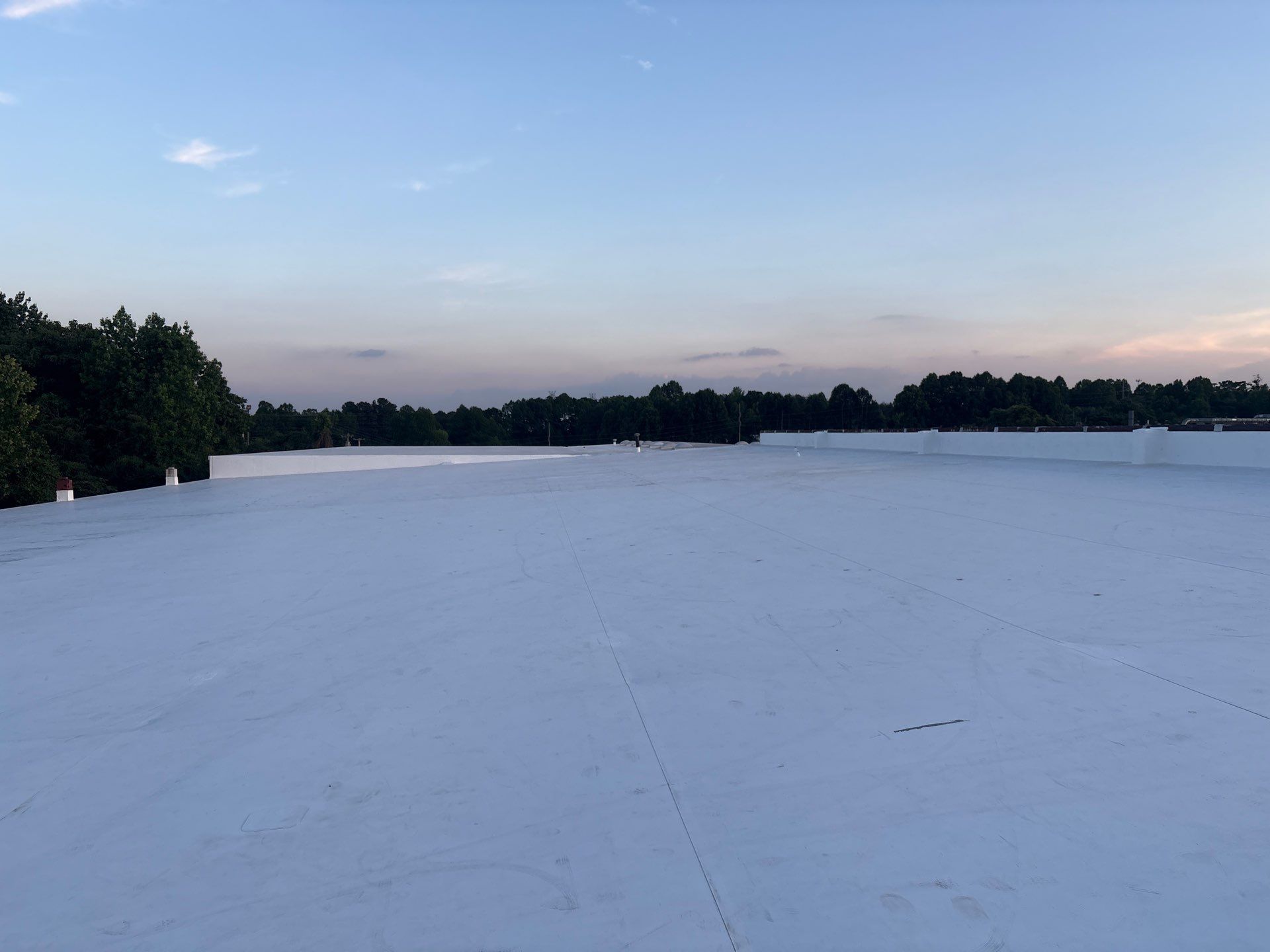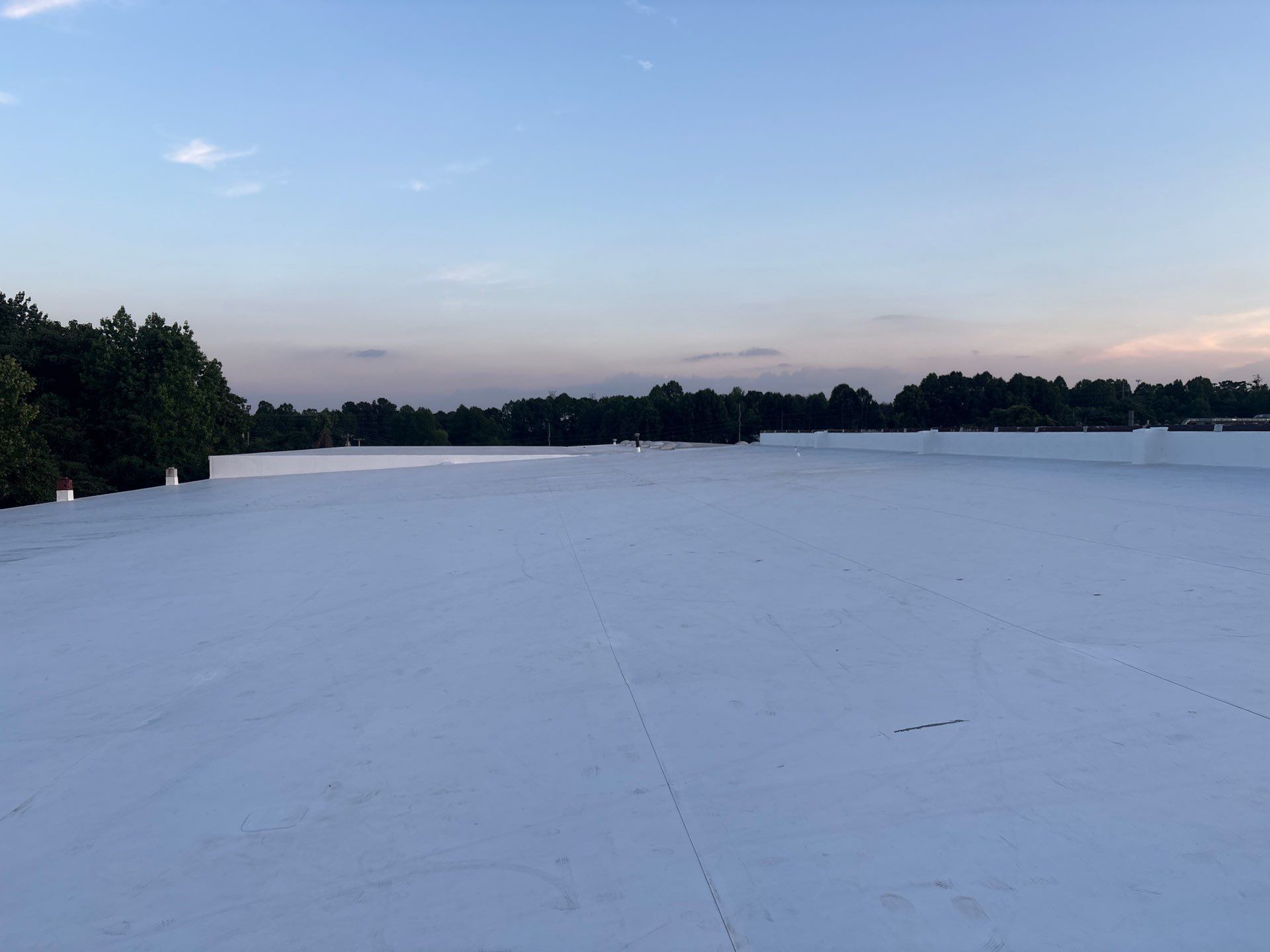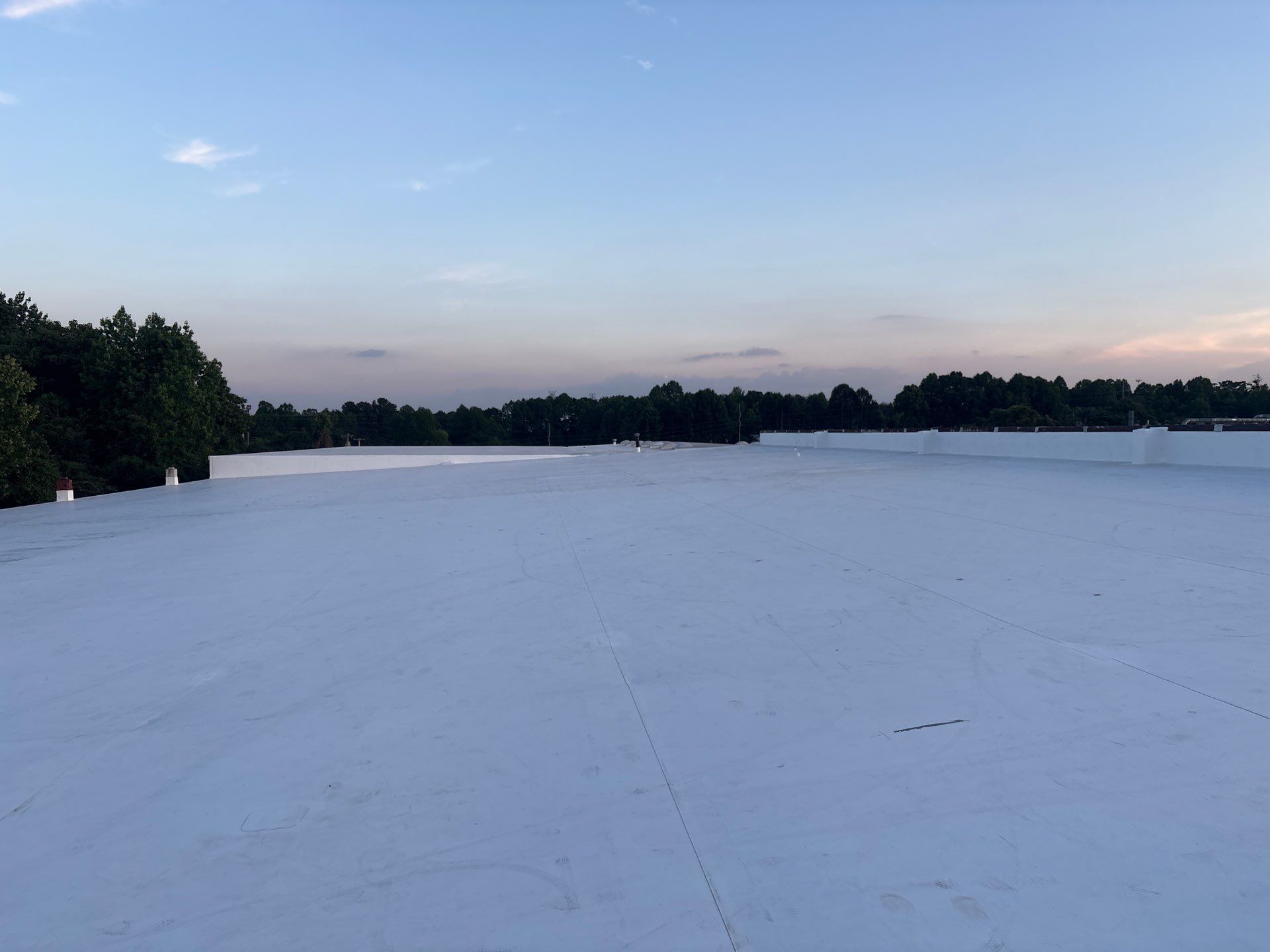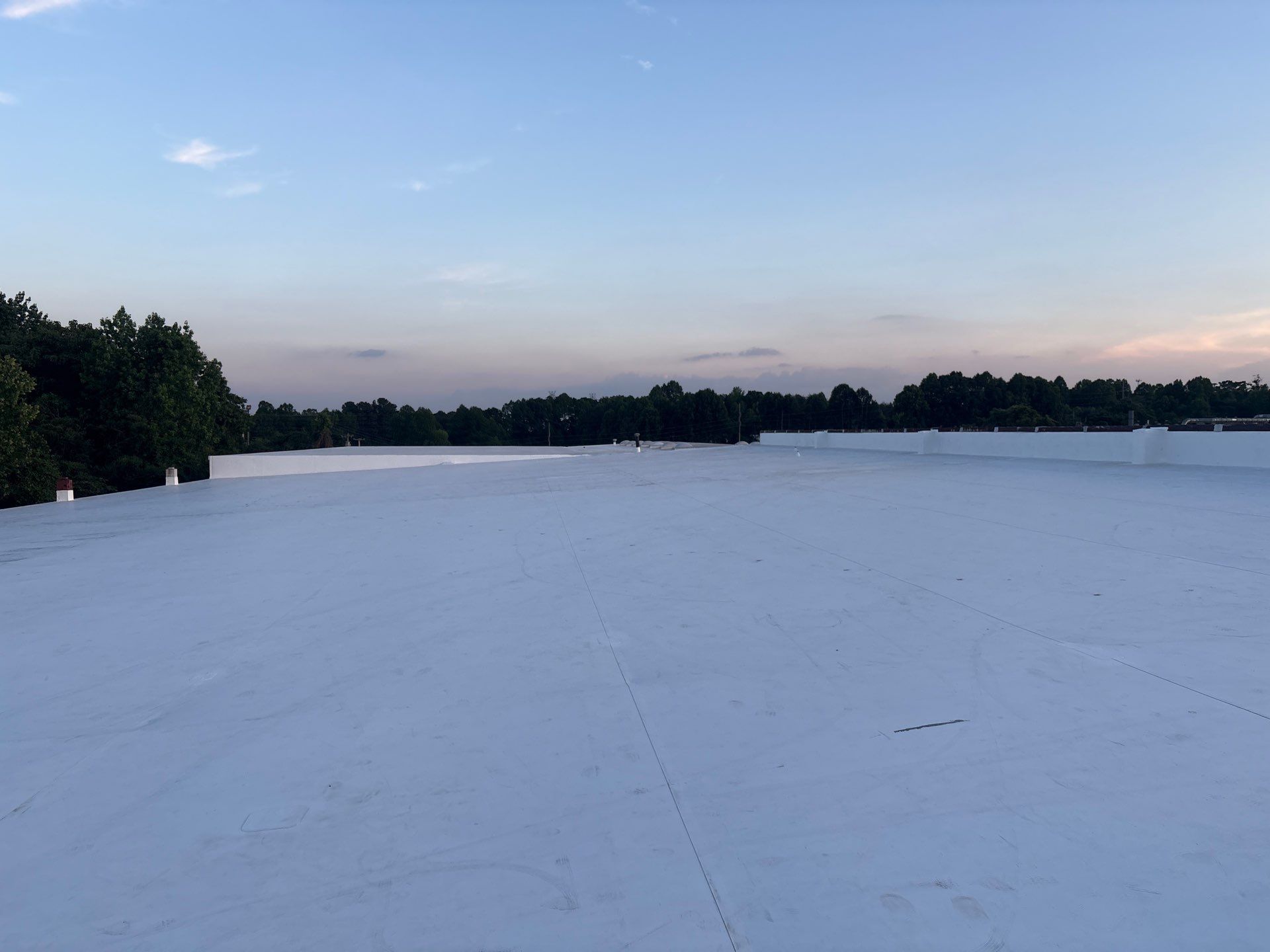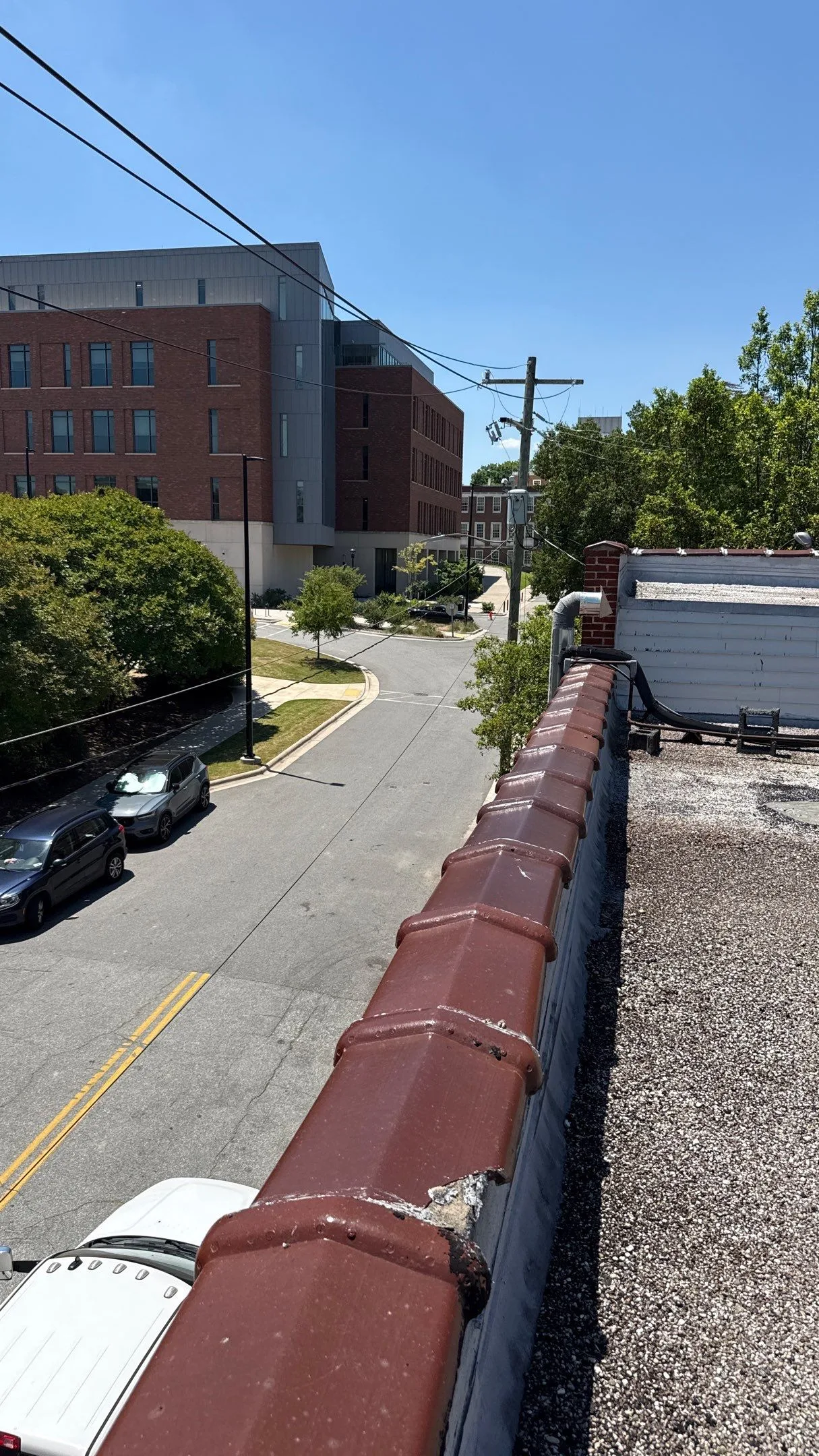

Sunny Sky Roofing recently completed a roof inspection in Lexington NC for a multi-story commercial building with a mix of brick and modern panel façades. The property featured visible flat roof sections with gravel ballast surfaces and drainage concerns that required detailed evaluation. We documented current conditions, identified early-stage issues, and provided the owner with a clear maintenance roadmap to extend the roof’s service life and prevent costly emergency repairs.

Why Lexington Commercial Roofs Require Regular Inspections
The Triad region experiences heavy spring rains and summer heat that accelerate wear on flat roof systems. Gravel ballast roofs can hide membrane damage underneath the stone layer for months. Standing water near drains creates constant moisture exposure that degrades seams and flashing over time. Power lines crossing roof areas indicate HVAC or electrical equipment that generates additional foot traffic and penetration stress. We found that buildings with mixed materials like brick and panel construction often develop differential movement that strains roof transitions. Property owners who skip annual inspections typically face repair costs three times higher than those who catch problems early.
What This Roof Inspection in Lexington NC Involved
We accessed all roof sections to evaluate membrane integrity and drainage performance. The inspection included core sampling through the gravel ballast to assess substrate condition and moisture content. We documented every penetration point, including utility crossings and equipment curbs. Drainage components received particular attention since the street-level view showed water patterns on adjacent pavement. We tested seam strength at high-stress areas near parapet walls and roof transitions. Our team photographed all findings and mapped locations using GPS coordinates for the owner’s records. The inspection also covered flashing condition at brick-to-panel transitions where thermal movement creates stress. We measured standing water depths in low areas and traced them to specific drain components.
Results: What Changed After This Inspection Project
- Owner received a detailed condition report with prioritized repair recommendations and budget planning timeline
- Early-stage membrane deterioration was documented before it progressed to active leaking
- Drainage improvements were mapped to eliminate standing water areas that shorten roof life
- Building management gained a maintenance schedule aligned with manufacturer warranty requirements
- Several potential leak points were identified at penetrations before interior damage occurred
- Property value was protected through proactive documentation for insurance and sale purposes
- Owner avoided emergency repair costs by addressing minor issues before they cascaded into larger failures
What Lexington Building Owners Should Know About Commercial Roof Inspections
Professional inspections cannot predict every future problem, but they dramatically reduce surprise failures. Most commercial roof warranties require annual inspections by qualified contractors to remain valid. We find that building owners who inspect roofs twice yearly—spring and fall—catch 90% of issues before they cause interior damage. Gravel ballast systems hide problems longer than exposed membranes, making professional inspection essential. The National Roofing Contractors Association recommends inspections after every major weather event in addition to scheduled visits. Flat roofs in the Triad should be checked for standing water within 48 hours after heavy rain. Inspection reports also provide documentation for insurance claims and property transactions. Property managers should request photo documentation and GPS-marked problem areas, not just written summaries.
Why Commercial Property Owners in Lexington Choose Sunny Sky Roofing
We provide honest assessments based on decades of field experience across all commercial roofing systems. Our inspections use moisture meters, core sampling, and infrared imaging when conditions warrant detailed analysis. We explain findings in plain language and prioritize repairs by urgency and budget impact. Many owners appreciate our willingness to recommend maintenance over replacement when roofs have remaining service life. We document every inspection with date-stamped photos and detailed condition reports that satisfy warranty requirements. Our team understands the difference between cosmetic wear and structural concerns that require immediate attention. We also coordinate our findings with your preferred commercial roof repair schedule or help plan for eventual commercial roof replacement. Sunny Sky Roofing serves all areas we service in the Triad with the same thorough approach. Contact us at (336) 523-2103 or visit our contact page to schedule your property’s inspection.
Frequently Asked Questions About Roof Inspection in Lexington
How often should a commercial roof in Lexington be inspected?
Commercial roofs in the Triad should be inspected at least twice annually—once in spring after winter weather and again in fall before winter. Buildings with equipment-intensive roofs or those over 15 years old benefit from quarterly inspections. Most manufacturer warranties require annual inspections by qualified contractors to remain valid. Additional inspections should follow any severe weather event including hail, high winds, or heavy snow.
What are the early warning signs that a commercial roof needs professional inspection?
Interior water stains on ceilings or walls indicate active roof problems requiring immediate inspection. Standing water that remains 48 hours after rain signals drainage failure. Visible membrane bubbling, cracking, or pulled seams all require professional evaluation. Energy bills that increase without explanation sometimes indicate wet insulation from hidden roof leaks. Any roof over ten years old should be inspected annually regardless of visible symptoms.
Can roof inspections be performed while the building is occupied?
Yes, professional roof inspections rarely disrupt building operations. Our team accesses roofs through external ladders or designated roof hatches without entering occupied spaces. The inspection process is quiet and does not affect HVAC or electrical systems. We coordinate timing with property managers to avoid disruption during critical business hours. Most inspections complete within a few hours depending on roof size and complexity.
How long can proactive inspection and maintenance extend a commercial roof’s life?
Regular inspection and timely repairs can extend roof life by several additional years beyond original design expectations. Catching small problems before they cascade into larger failures prevents the premature aging that leads to early replacement. Well-maintained commercial roofs often reach 25-30 years of service versus 15-20 years for neglected systems. The key is addressing minor issues during scheduled maintenance rather than waiting for emergency repairs. Documentation from regular inspections also helps maximize insurance claims and property valuations.