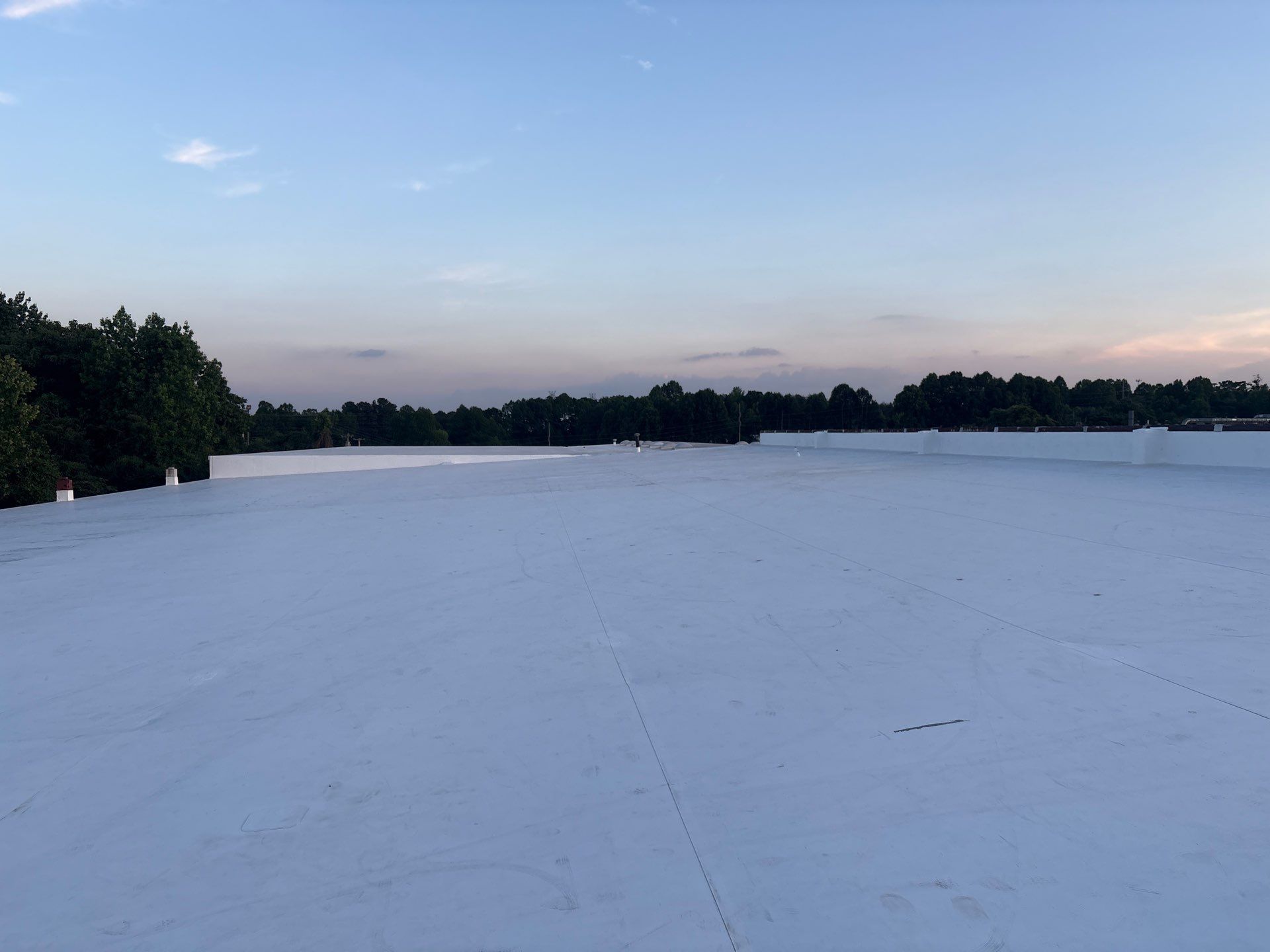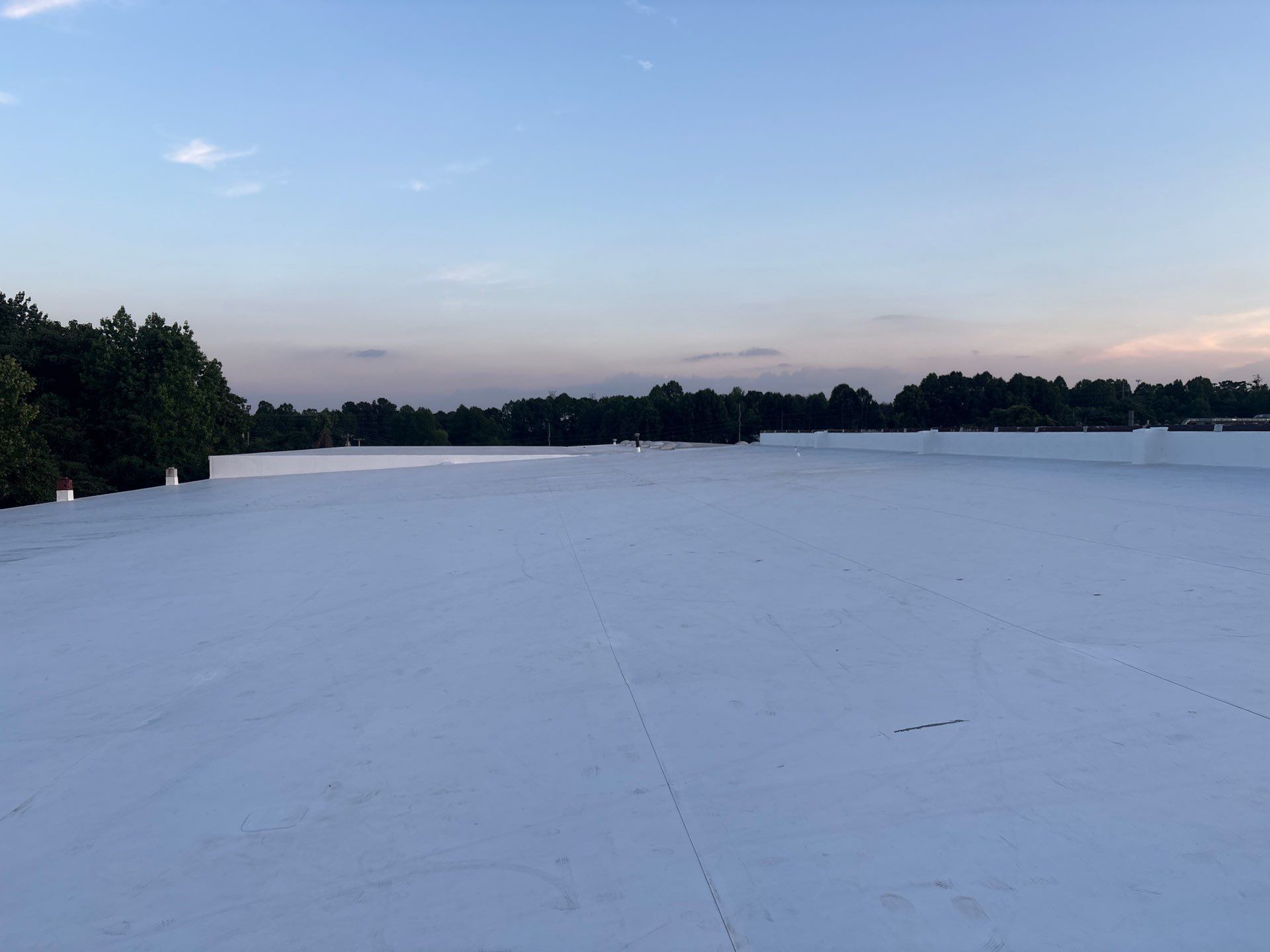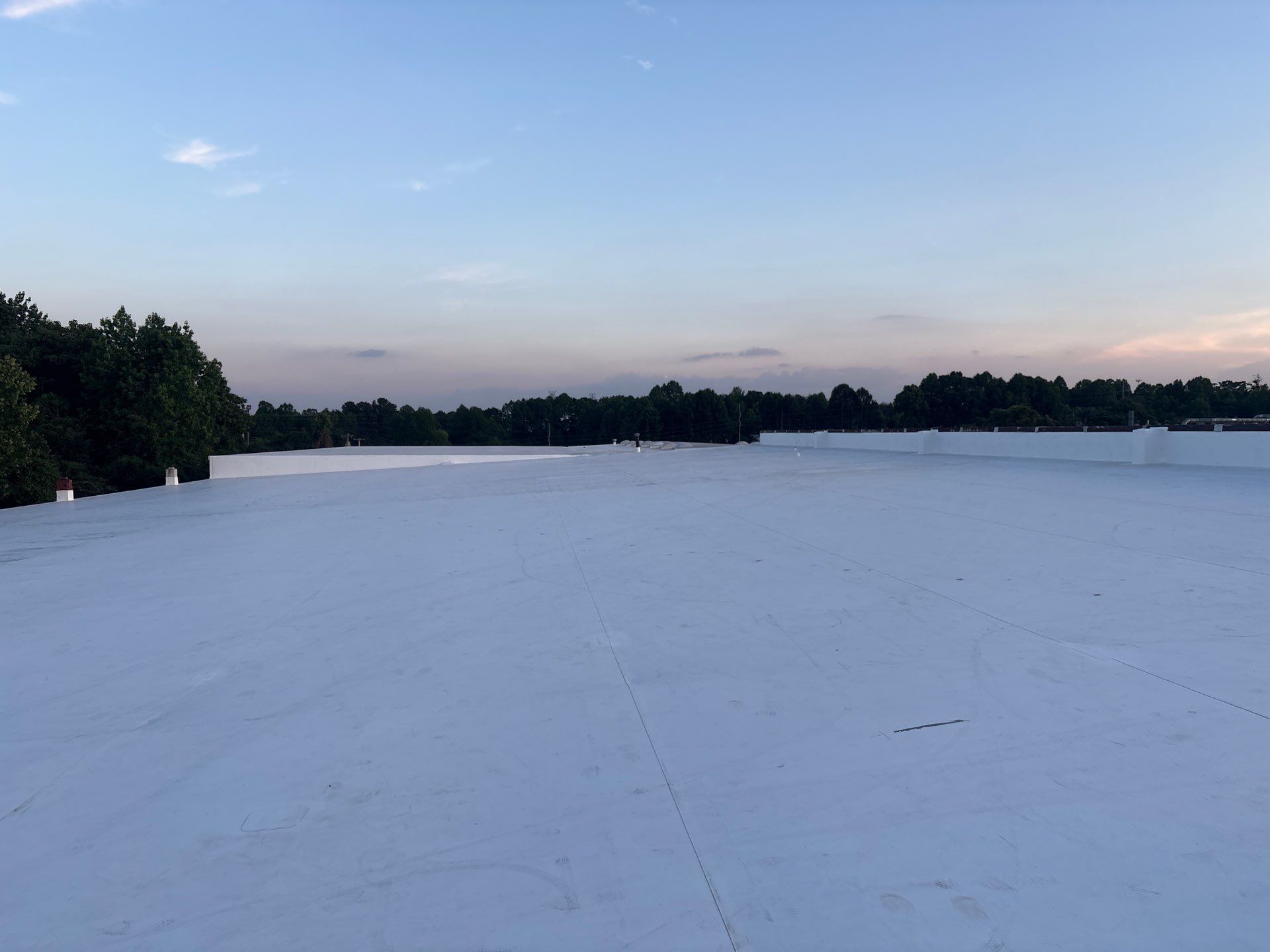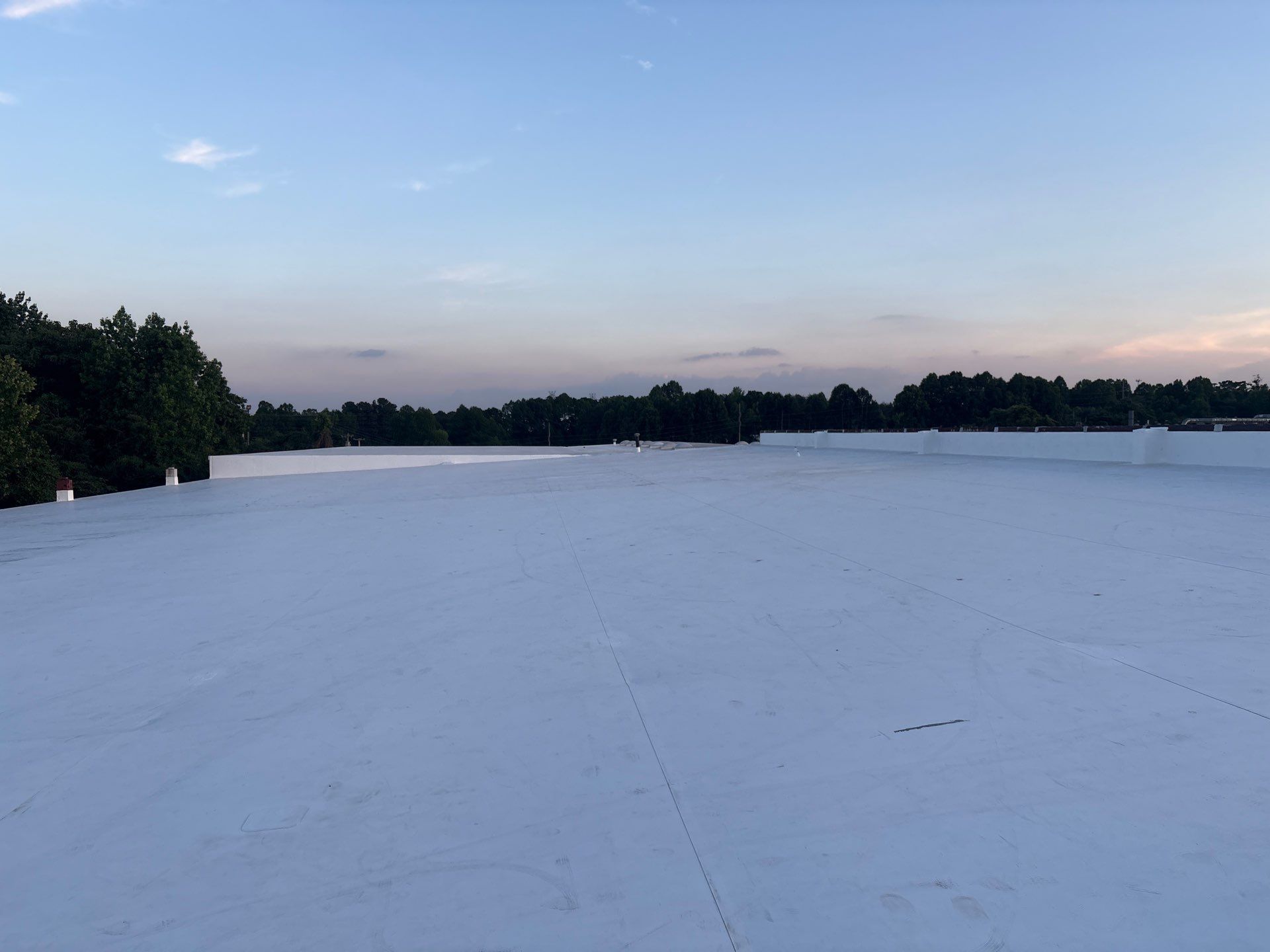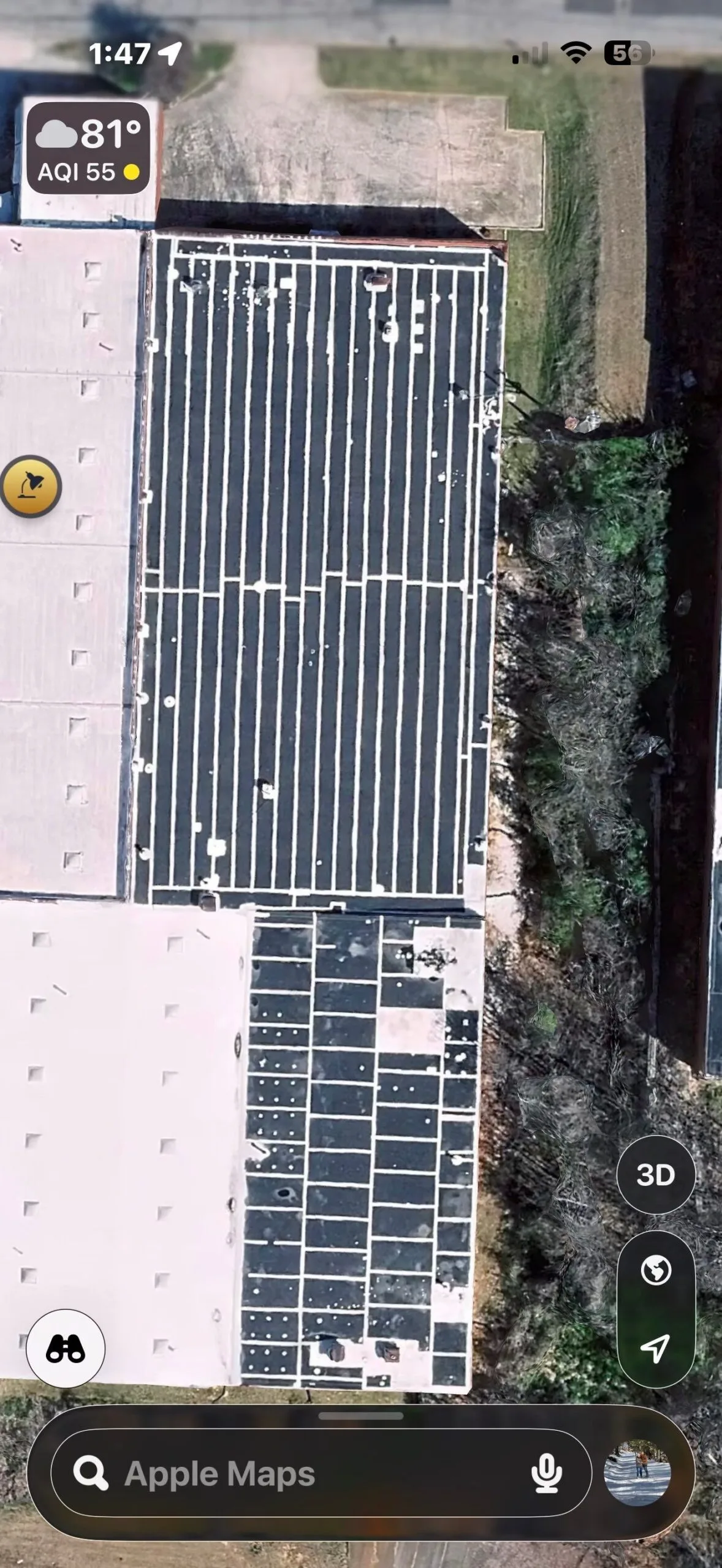

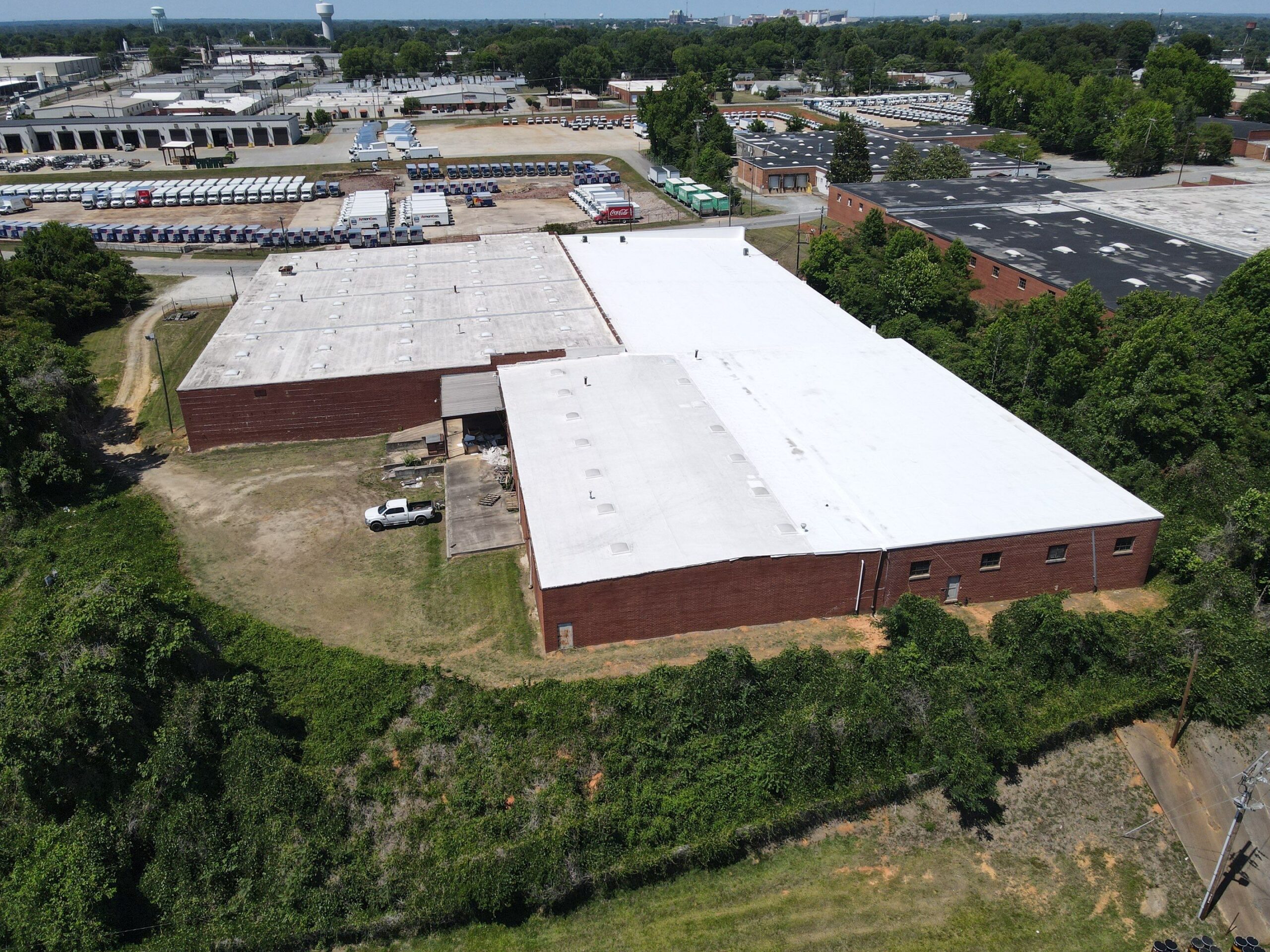
When a commercial property owner in Greensboro, NC needed reliable TPO roofing for their industrial warehouse on Progress Avenue, Sunny Sky Roofing LLC completed a full commercial roof replacement using white TPO membrane. The existing roof had reached the end of its service life with widespread ponding water, membrane deterioration, and multiple active leak points that threatened operations and inventory. Our crew installed a new TPO system with proper tapered insulation to correct drainage issues and restore long-term weather protection with a 20-year manufacturer warranty.


Why Greensboro Industrial Roofs Develop Drainage and Ponding Problems
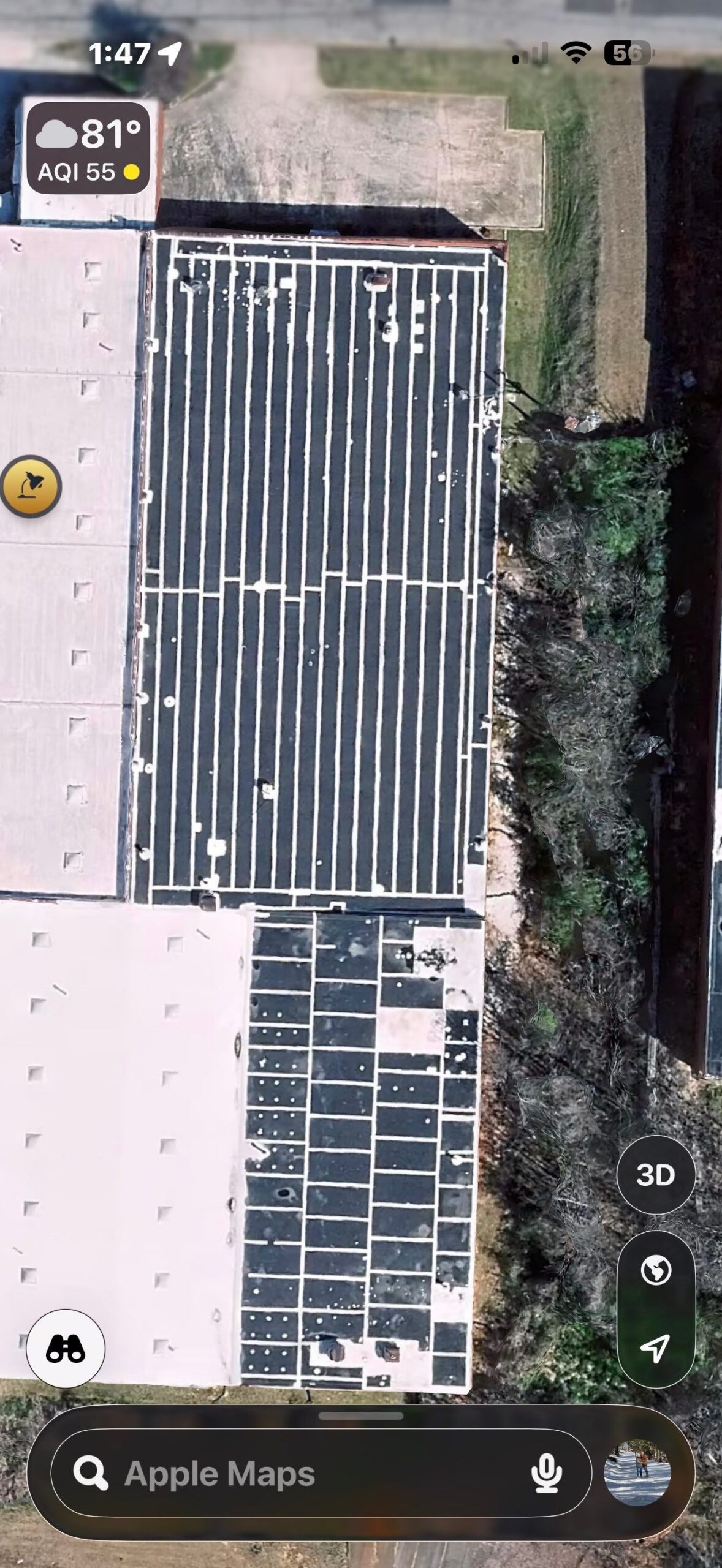
Low-slope commercial roofs in Greensboro face significant challenges from North Carolina’s heavy spring rains and summer thunderstorms. This warehouse exhibited classic signs of inadequate slope and settled roof deck areas. Water pooled in multiple locations across the roof surface, visible in our aerial inspection photos. Ponding water accelerates membrane breakdown by keeping seams submerged and preventing proper drying between rain events. UV degradation combines with standing water to create brittleness, cracking, and eventually punctures that allow water into the building envelope. The existing membrane showed advanced weathering with chalking, surface cracks, and failed seam adhesion in ponded areas. Without proper tapered insulation to direct water toward drains and scuppers, even quality membranes fail prematurely on flat or negative-slope roof sections.
What This TPO Roofing Project Involved
We began with complete removal of the failed roofing system down to the structural deck. Our crew inspected the metal deck for rust, corrosion, and fastener pullout before proceeding. We installed new tapered polyiso insulation designed specifically to create positive drainage toward existing roof drains and eliminate all ponding areas. The tapered system uses varying insulation thicknesses to build slope from zero to the required quarter-inch per foot minimum. Over the insulation, we installed a breathable cover board to protect the insulation layer and provide a smooth substrate for membrane attachment. The new white TPO membrane went down in full sheets mechanically fastened to the deck with corrosion-resistant plates and screws at engineered spacing. All seams received hot-air welding to create watertight bonds stronger than the membrane itself. We flashed all roof penetrations including HVAC units, exhaust vents, and pipe boots with TPO flashings heat-welded to the field membrane. Perimeter metal edge terminations secured the membrane and provided a finished appearance. Final inspection confirmed proper water flow to drains with no remaining low spots or ponding zones.
Results: What Changed After This Project
- Eliminated all active leak points that previously threatened interior operations and inventory storage
- Corrected drainage deficiencies through engineered tapered insulation system with positive slope to drains
- Restored building weatherproofing with mechanically attached TPO membrane and heat-welded seams
- Provided 20-year manufacturer warranty covering membrane and workmanship defects
- Improved building energy efficiency with new white reflective membrane and continuous insulation layer
- Extended roof service life expectancy by 20 to 30 years depending on maintenance practices
- Reduced risk of business interruption from weather-related roof failures during critical operations
What Greensboro Building Owners Should Know About TPO Roofing
TPO membrane performs well in North Carolina’s climate when properly installed with adequate slope and drainage. The material resists UV degradation, punctures, and chemical exposure better than many older single-ply systems. However, TPO requires professional installation with proper fastening patterns and heat-welded seams. Mechanical damage from foot traffic, HVAC maintenance, or debris impacts can puncture the membrane if not addressed quickly. Regular inspections twice yearly catch small problems before they become major leaks. Ponding water remains the biggest threat to any low-slope roof including TPO. If water stands more than 48 hours after rainfall, drainage improvements become necessary to protect your investment. Quality manufacturers like GAF commercial roofing systems offer proven TPO products when installed by experienced contractors. Membrane color affects building temperatures, with white TPO reducing cooling loads in our hot Carolina summers. Proper substrate preparation and insulation attachment prevent membrane movement and premature fastener pullout. Most TPO failures trace back to installation errors or deferred maintenance rather than material defects.
Why Commercial Property Owners in Greensboro Choose Sunny Sky Roofing LLC
Sunny Sky Roofing LLC brings two decades of commercial roofing experience across the Triad region. We diagnose the actual causes of roof problems rather than just treating symptoms. Our crews understand how North Carolina weather patterns stress commercial roofing systems. We provide honest assessments about whether commercial roof repair makes sense or when commercial roof replacement offers better long-term value. Every project receives proper planning for drainage, insulation, and fastening appropriate to your building type and use. We work throughout the areas we service in the Triad including Greensboro, High Point, and Winston-Salem. Our TPO Roofing installations meet manufacturer specifications to ensure full warranty coverage. If your commercial property needs roof evaluation or you face leaks and drainage problems, contact Sunny Sky Roofing LLC at (336) 523-2103. We’ll inspect your roof, explain what we find, and recommend solutions based on your building’s specific conditions. Visit our contact page to schedule your roof assessment.
Frequently Asked Questions About TPO Roofing in Greensboro
How often should a commercial roof in Greensboro be inspected?
Commercial roofs in Greensboro should receive professional inspections twice yearly, typically in spring and fall. These inspections catch minor issues like loose fasteners, damaged flashings, or debris accumulation before they cause leaks. After severe weather events including hail or high winds, schedule additional inspections to identify damage early. Regular inspections extend roof life and maintain warranty coverage.
What causes ponding water on flat commercial roofs?
Ponding water results from inadequate roof slope, structural deck deflection, or settled insulation creating low spots. Roofs need minimum quarter-inch per foot slope toward drains to prevent standing water. Building settlement, heavy rooftop equipment, or original construction errors create negative drainage areas. Tapered insulation systems correct these problems by building engineered slope into the roof assembly.
Does TPO roofing preserve my roof warranty?
New TPO installation includes a fresh 20-year manufacturer warranty covering membrane defects and workmanship. The warranty requires proper installation by certified contractors following manufacturer specifications. Regular maintenance and documented inspections help maintain warranty coverage throughout its term. Unauthorized repairs or modifications can void warranty protection.
How long can TPO roofing extend my roof’s life?
Quality TPO installation typically provides 20 to 30 years of service life when properly maintained. Actual lifespan depends on installation quality, drainage adequacy, and maintenance practices. Regular inspections, prompt repairs, and keeping the roof clean of debris maximize TPO performance. Building type, climate exposure, and rooftop traffic also affect longevity.