Lexington sits in the heart of Davidson County, where summers hit hard with NC heat and UV that bakes commercial roofs for months on end. We’ve worked on enough metal roofs and low-slope buildings around here to know that spray foam Lexington NC business owners depend on performs differently than roofing systems that just sit there and take the beating. When we spray polyurethane foam on a commercial roof in Lexington, we’re not just patching problems — we’re creating a seamless, insulated barrier that stands up to the weather patterns we actually get in this part of North Carolina.
What We Did on This Trinity Project
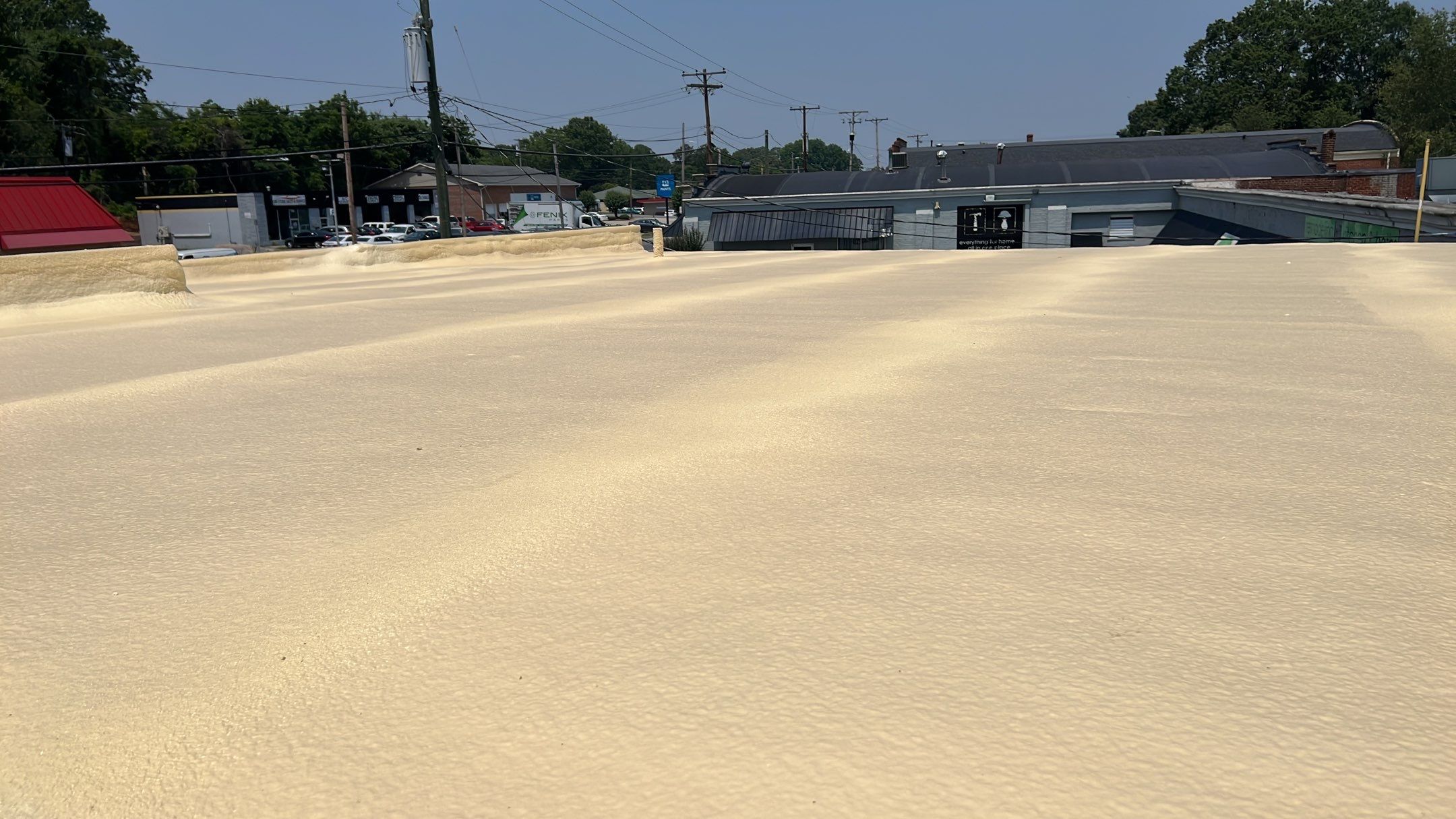
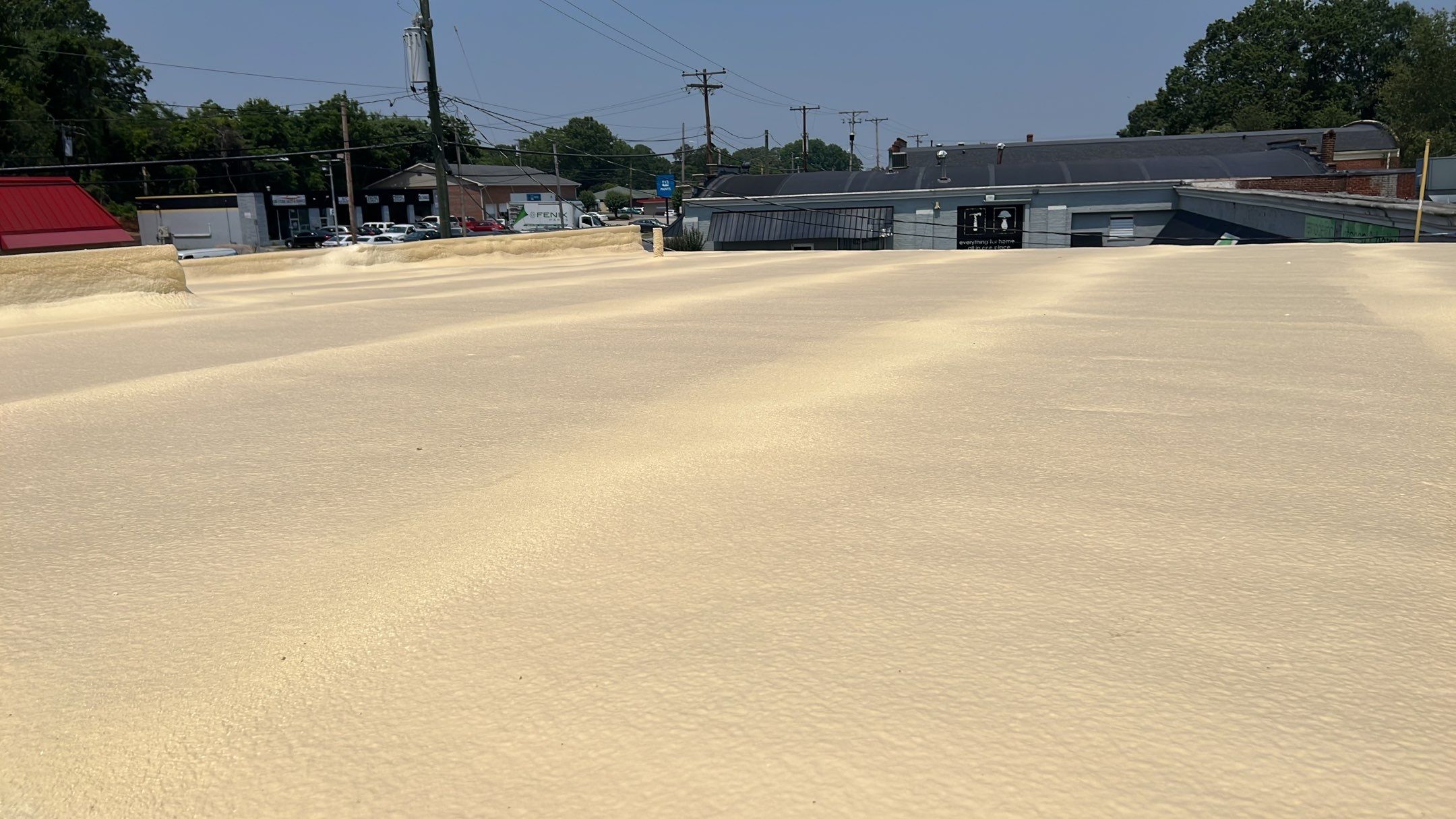
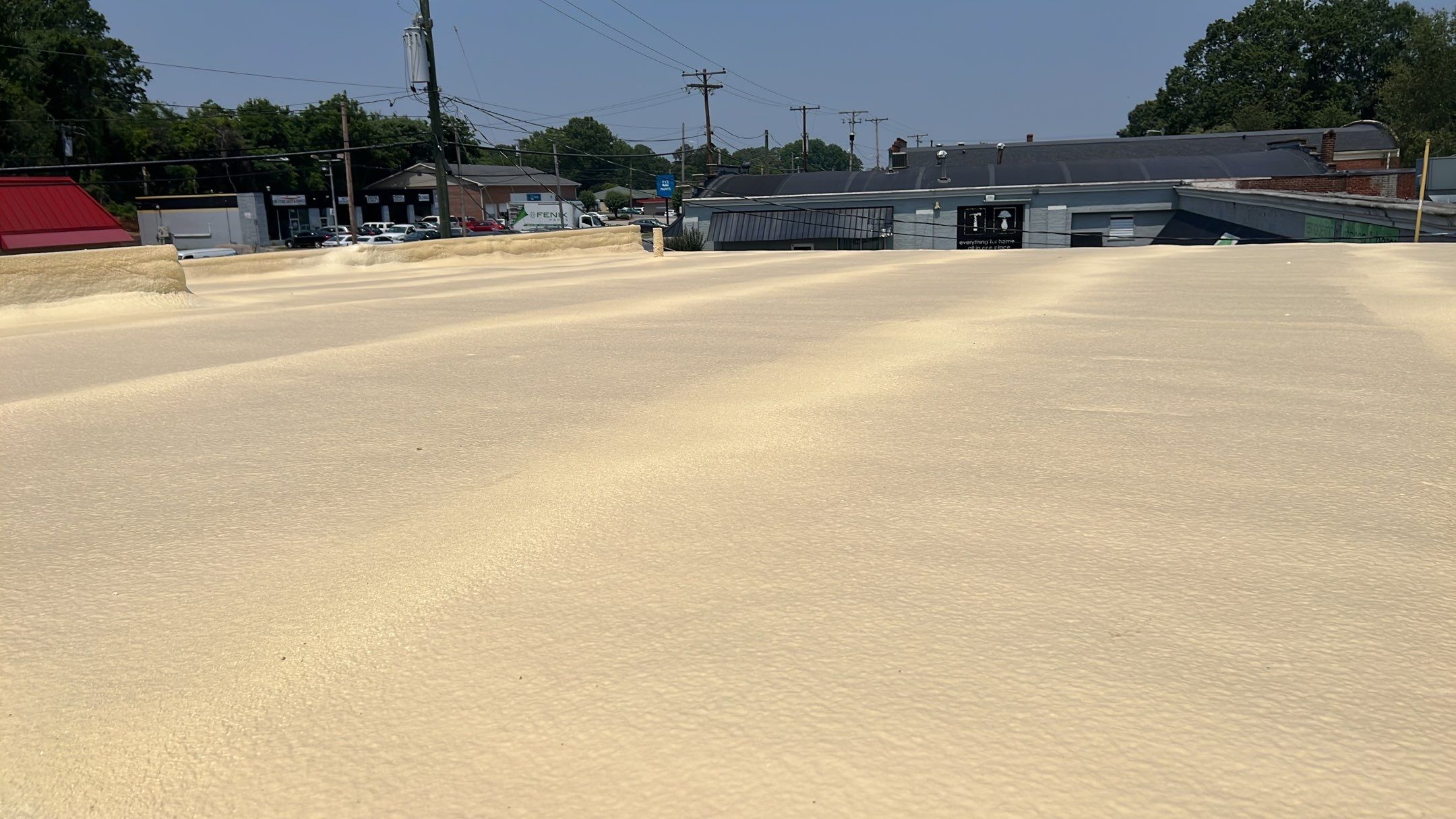
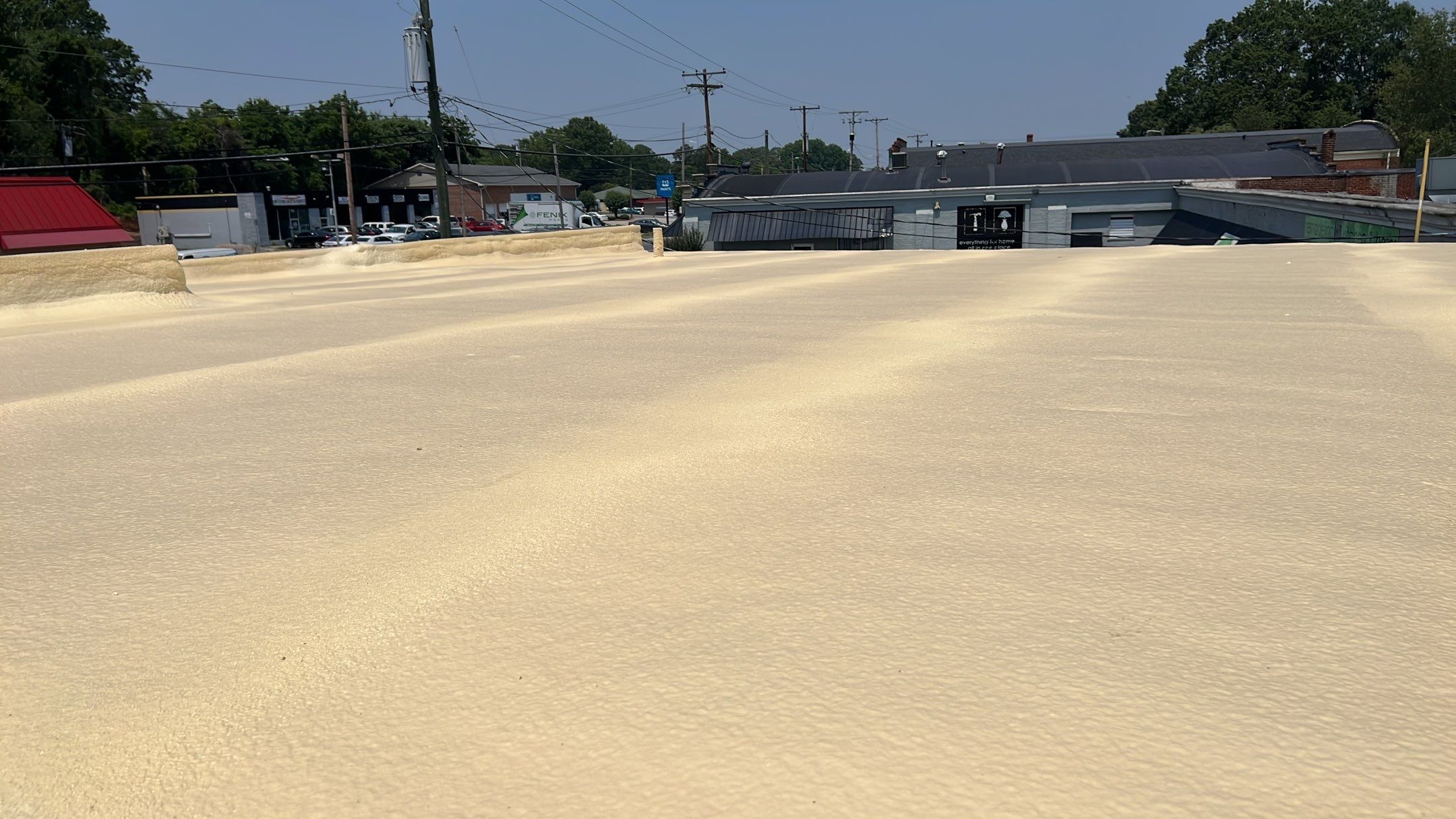
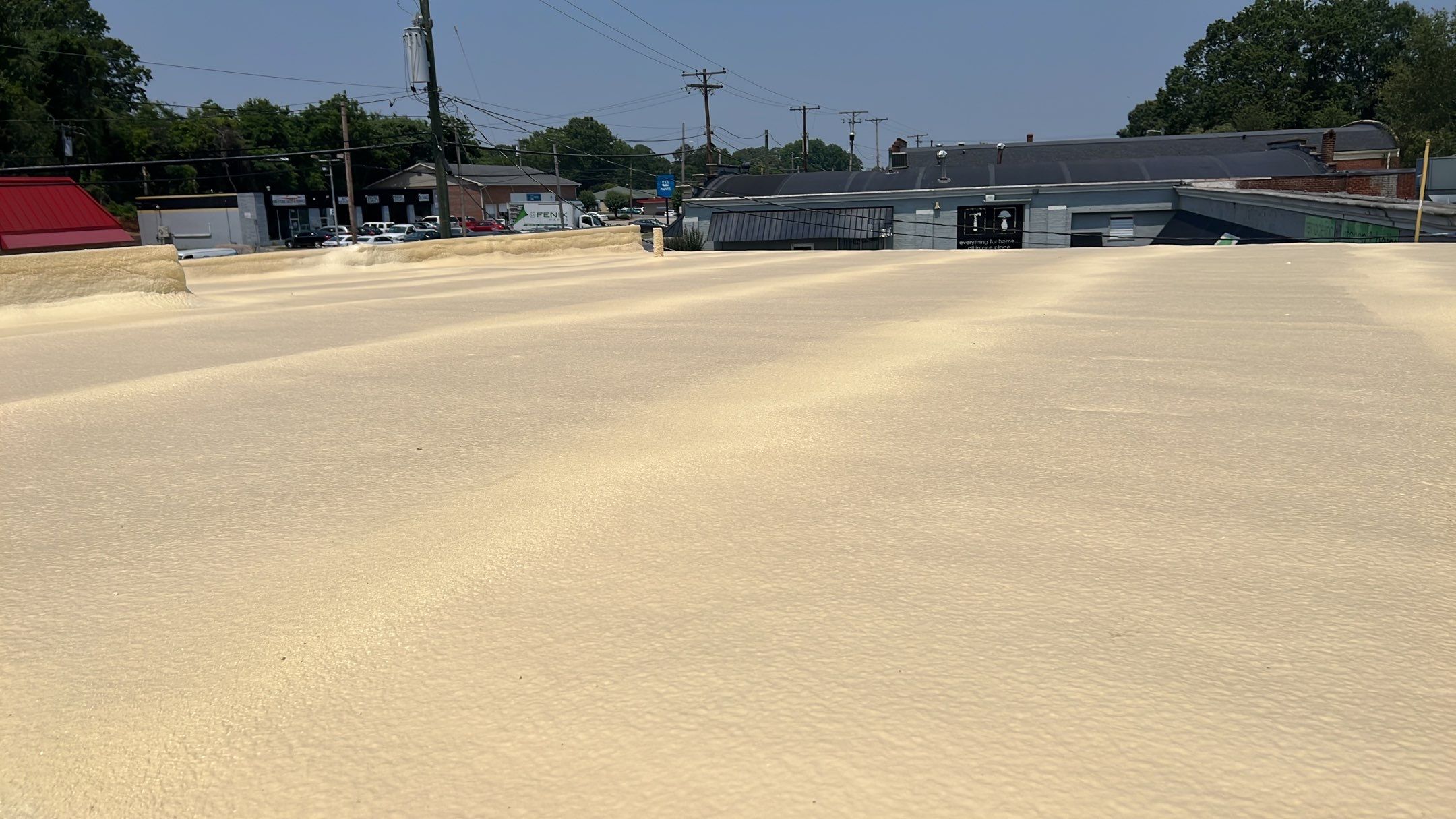
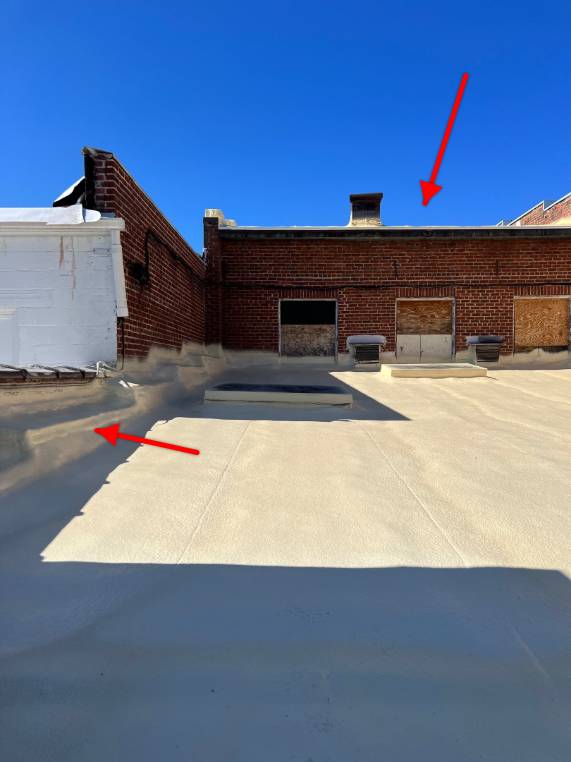
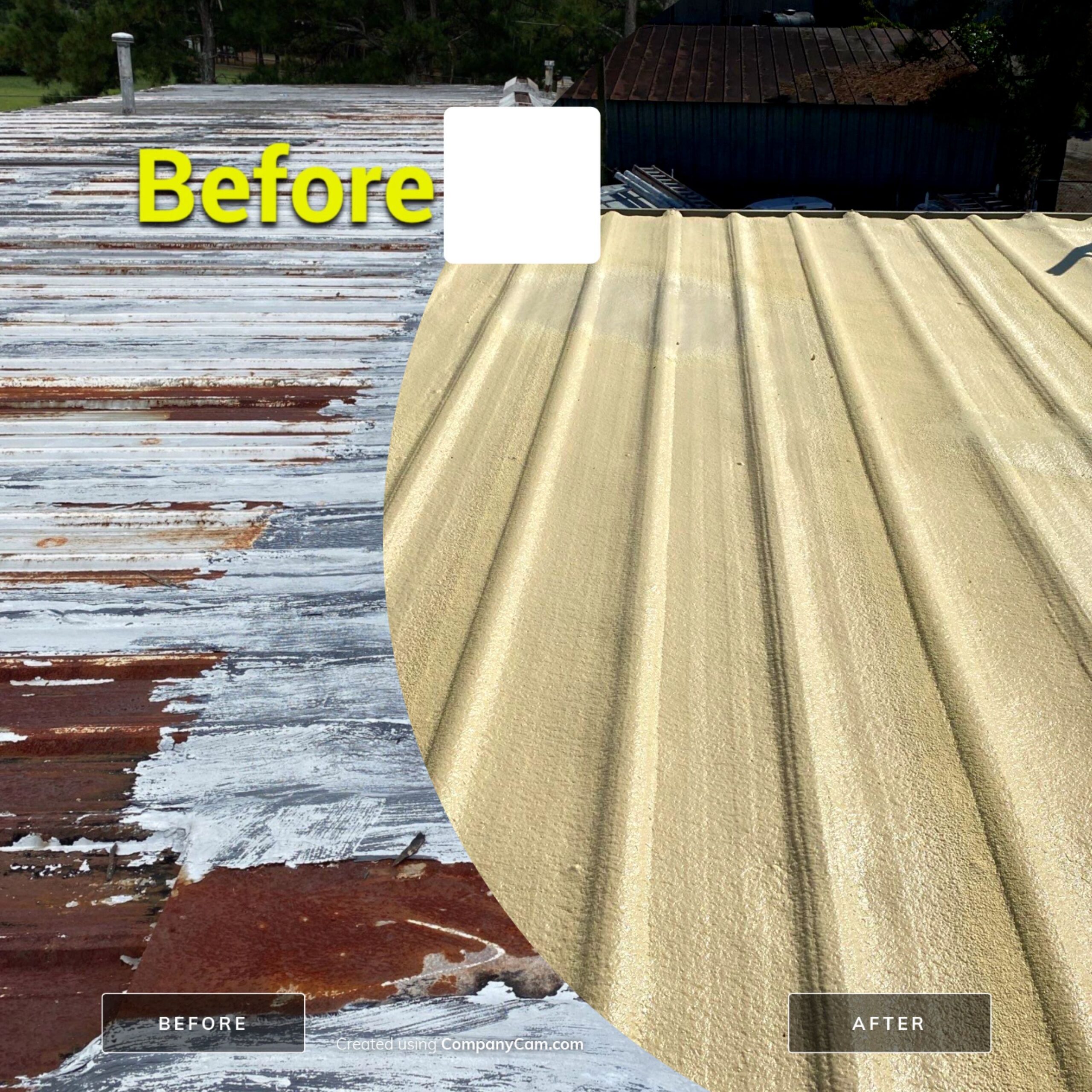
We recently wrapped up a spray foam restoration job in Trinity, just a short drive from Lexington. The building owner called us because the existing roof had reached that point where repairs weren’t cutting it anymore. Metal roofs around here age in predictable ways — fasteners back out, seams open up, and old tar patches dry out and crack. By the time we showed up, the roof had multiple issues that needed a real solution, not another round of temporary fixes.
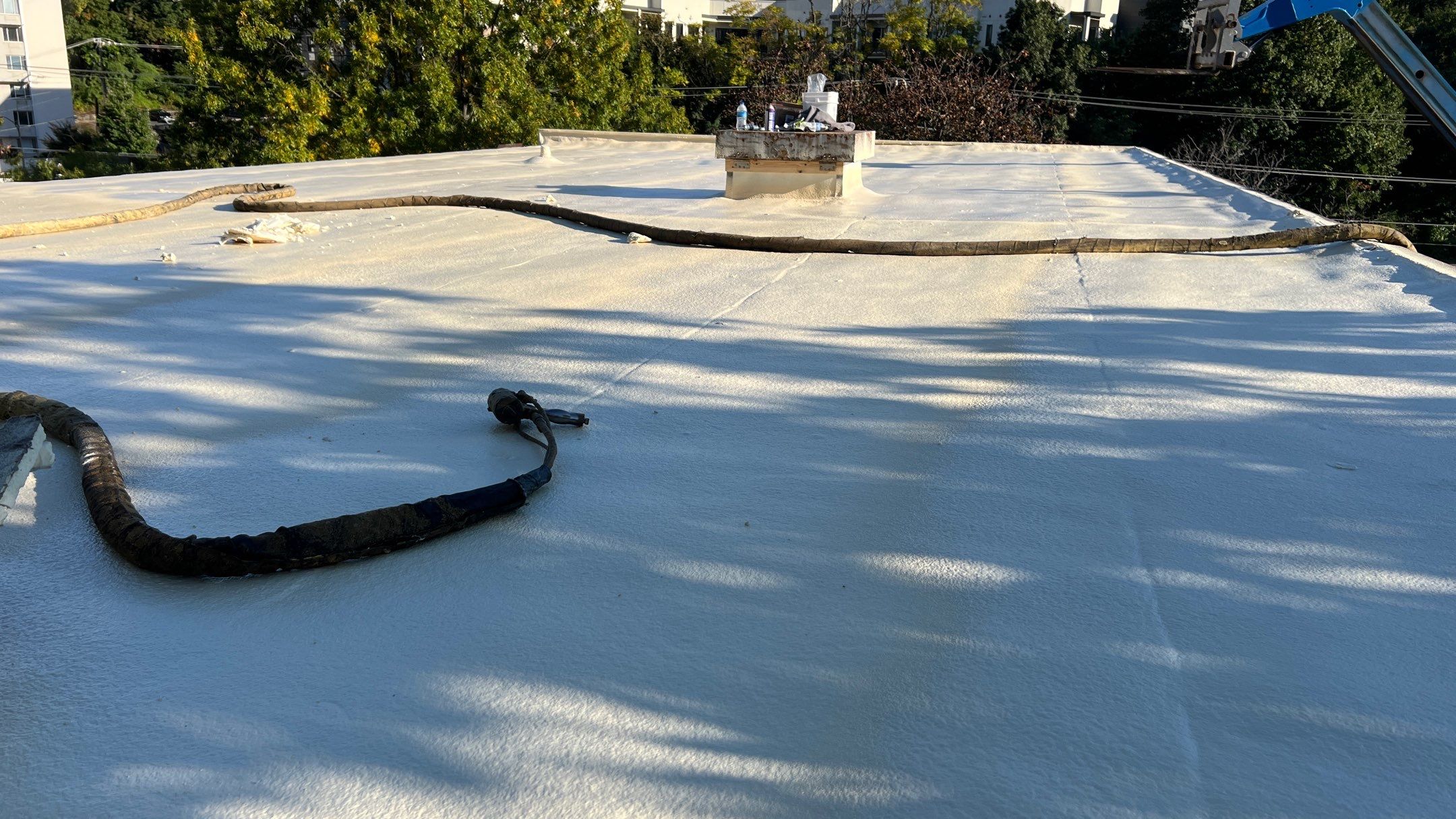
We cleaned the entire roof surface, removed loose material, and addressed every fastener that had backed out or rusted. Then we applied our Spray Foam services system — polyurethane foam sprayed directly onto the prepared substrate, building up thickness to create proper drainage and a monolithic seal. No seams means no seam leaks down the road.
After the foam cured, we applied a protective elastomeric coating designed for UV resistance. That top coat matters in Lexington’s climate. Without it, UV exposure would degrade the foam over time. With it, you’ve got a roof system that reflects sunlight, keeps the building cooler, and handles thermal expansion without cracking.
Why Spray Foam Lexington NC Building Owners Choose Makes Sense
Lexington gets the full North Carolina weather cycle. Hot, humid summers. Afternoon thunderstorms that dump rain fast. Occasional ice in winter. Your commercial roof has to handle all of it without failing.
Spray foam works here because it solves multiple problems at once. The foam itself is waterproof — completely. It fills every gap, crack, and fastener hole as it expands. Water can’t work its way through seams because there aren’t any seams after we spray. That’s a big deal when you’re dealing with the kind of afternoon downpours we get in spring and summer.
The insulation factor matters too. Spray foam has one of the highest R-values per inch of any roofing material. That means your HVAC system doesn’t work as hard to keep the building comfortable when it’s 95 degrees outside. Lower energy bills, better temperature control, and less strain on your equipment.
We also see fewer callbacks on spray foam roofs compared to traditional systems. When we restore a roof with foam, we’re adding years — often decades — of service life. It’s more cost-effective than full replacement, and it delivers performance that outlasts band-aid repairs.
The Spray Foam Process We Follow
Every spray foam job we do follows the same basic steps, but we adjust the details based on what we find when we inspect your roof.
First, we inspect everything. We’re looking for moisture in the decking, structural issues, areas where the substrate isn’t sound. Spray foam performs incredibly well, but only if we apply it to a properly prepared surface. If we find wet insulation or compromised decking, we address that before we spray.
Next comes surface prep. We clean the roof, remove any loose material, and make sure fasteners are secure. If tar patches have failed — and they usually have — we scrape them off. Tar dries out, cracks, and traps moisture underneath, which accelerates rust on metal roofs. We don’t spray over that kind of problem.
Then we spray the foam. We build it up in passes, creating the thickness we need for proper insulation and drainage. The foam expands as it cures, filling every gap and creating that monolithic seal. We shape the foam to direct water toward drains and off the roof.
After the foam cures, we apply the protective coating. This step is non-negotiable. The coating protects the foam from UV damage and gives you a finished surface that reflects heat. We typically use a white elastomeric coating that stays flexible as the roof expands and contracts with temperature changes.
The Spray Polyurethane Foam Alliance sets standards for application that we follow on every job. Proper training and certification matter when you’re working with these materials.
Signs You Need Spray Foam Roofing in Lexington NC
Here’s what we see on commercial roofs around Lexington that tells us spray foam is the right solution:
- Multiple leak locations — When you’re dealing with leaks in several areas, re-roofing with spray foam makes more sense than chasing individual problems
- High energy bills — Poor roof insulation shows up in your utility costs, especially during summer months
- Opened seams on metal roofs — Metal expands and contracts, and over time those seams separate and let water in
- Failed tar patches — If someone has been patching your roof with tar, those repairs have a limited lifespan before they dry out and crack
- Backed-out or rusted fasteners — This is common on aging metal roofs and creates hundreds of potential leak points
- Standing water after rain — Poor drainage accelerates roof deterioration; spray foam can be shaped to improve drainage
- HVAC units struggling to maintain temperature — When your roof isn’t insulating properly, your equipment works harder and costs more to run
- Visible daylight from inside — By the time you can see daylight through your roof deck, the roof has been leaking for years
We recommend annual roof inspections at minimum for all commercial buildings in Lexington. Catching problems early makes the difference between a manageable repair and a major restoration project.
Why Choose Sunny Sky Roofing LLC for Spray Foam in Lexington
Joe Yutzy started Sunny Sky Roofing LLC to do commercial roofing the right way — which means we don’t cut corners and we don’t disappear after we finish a job. We’ve built our reputation on work that lasts and service that makes sense for building owners who need straight answers.
We’re local to this area. We understand how roofs age in Davidson County’s climate because we’ve been working on them for years. When you call us about commercial roofing in Lexington, you’re talking to people who know the challenges your building faces.
Our spray foam work comes with real warranties that cover both materials and labor. We use quality products from manufacturers with proven track records, and we apply them according to specs that ensure long-term performance.
We also handle all the details that matter — proper insurance, trained crews, clear communication about timeline and what to expect during the project. Commercial building owners have enough to worry about without adding roofing drama to the list.
How long does spray foam roofing last in Lexington NC?
A properly installed spray foam roof system typically lasts 20 to 30 years or more in our climate, especially with regular maintenance. The key is recoating the top surface every 10 to 15 years to maintain UV protection. We’ve seen spray foam roofs perform well for decades when building owners stay on top of annual inspections and address minor issues before they become major problems. The foam itself doesn’t degrade — it’s the protective coating that takes the UV beating and needs periodic renewal.
Can you spray foam over an existing metal roof?
Yes, and we do it regularly around Lexington. Spray foam adheres directly to clean, dry metal and creates a seamless barrier over the existing roof. This approach avoids the cost and disruption of a complete tear-off. We first address any structural issues, secure loose fasteners, remove failed tar patches, and make sure the substrate is sound. Then we spray the foam right over the prepared metal surface. It’s more cost-effective than full replacement and often delivers better performance than the original roof.
Does spray foam roofing really reduce energy costs?
It does, and building owners usually notice the difference in their first summer after installation. Spray foam has an R-value of about 6 to 7 per inch, which is significantly higher than most traditional roofing systems. That insulation keeps heat from radiating into your building during Lexington’s hot months, which means your HVAC system doesn’t work as hard. The white coating also reflects sunlight instead of absorbing it. We’ve had customers report cooling cost reductions of 20 to 30 percent, though actual savings depend on your building, insulation elsewhere, and how you use the space.
What maintenance does a spray foam roof need?
We recommend annual inspections at minimum. During those inspections, we check the coating condition, look for any damage from foot traffic or debris, make sure drains are clear, and address small issues before they turn into leaks. The coating may need touch-ups in high-traffic areas or around penetrations. Eventually, you’ll need to recoat the entire roof to maintain UV protection — usually every 10 to 15 years. Keep tree branches trimmed back and remove debris regularly. Spray foam is durable, but it performs best when you treat it right.
Ready to Talk About Your Lexington Commercial Roof?
If your commercial building in Lexington needs a roof solution that actually solves problems instead of postponing them, let’s talk about spray foam. We’ll inspect your roof, explain what we find, and give you options that make sense for your building and budget.
Call Sunny Sky Roofing LLC at 336-523-2103 or contact us through our website. We serve Lexington and the surrounding Davidson County area with commercial roofing services that protect your investment for the long haul.